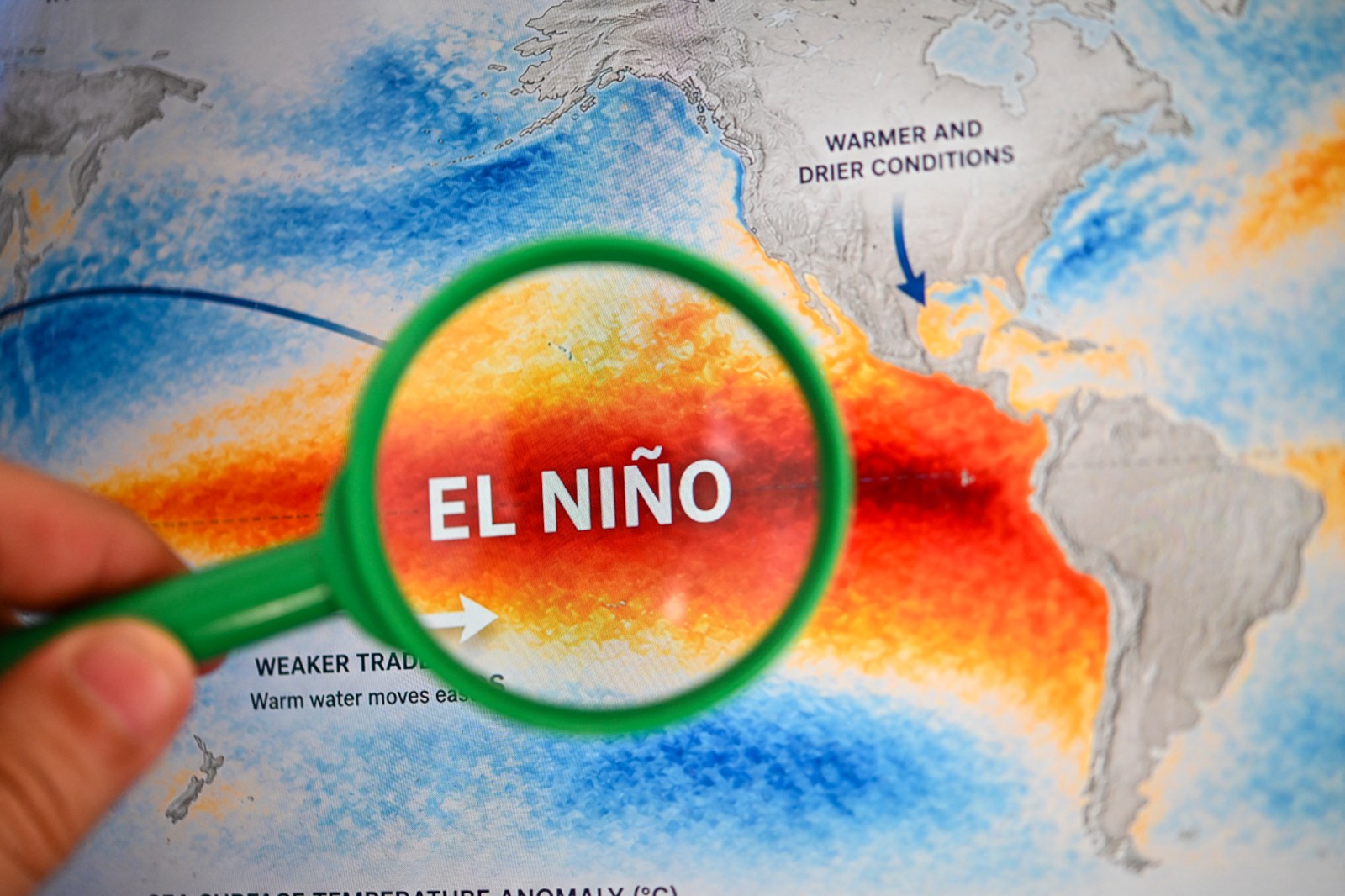
El Niño is intensifying across the tropical Pacific. Forecasters warn that the climate pattern may reach exceptional intensity, influencing weather through the winter and into 2027.
National and Global Predictions
The National Oceanic and Atmospheric Administration’s (NOAA) Climate Prediction Center has a greater than 90% chance of a very strong event during fall and winter. The World Meteorological Organization (WMO) expects El Niño to achieve significant intensity, potentially peaking near the end of 2026.
AccuWeather suggests it could become the strongest El Niño since at least 1950.
Understanding El Niño
El Niño represents the warm phase of the El Niño-Southern Oscillation (ENSO), a recurring Pacific climate pattern affecting global weather. Its counterpart, La Niña, is the cool phase. El Niño can lead to stormier weather across the Southern U.S., drier conditions in northern areas, and altered hurricane activity.
While “Super El Niño” is not a formal NOAA classification, it is commonly used to describe exceptionally strong events.
Current Forecasts and Predictions
NOAA’s Climate Prediction Center expects El Niño to strengthen through the end of 2026, with strong potential effects in the Northern Hemisphere’s fall and winter of 2026-27. A historic event surpassing past El Niños since 1950 has a 69% chance of occurring from October to December 2026.
El Niño is measured in the ENSO 3.4 region, a designated area in the Eastern Pacific where sea-surface temperatures are compared to climatology.
The WMO indicates El Niño is set to persist through February 2027. Exceptional warmth in the tropical Pacific suggests further strengthening, with a peak expected toward late 2026. Climate effects might continue into 2027.
The organization warns of potential shifts in rainfall and temperature patterns, including risks of floods, droughts, and extreme heat. Multi-model forecasts suggest above-normal temperatures for most land areas. However, El Niño’s strength alone doesn’t define the severity of its effects, as impacts vary by region and season.
AccuWeather Insights
AccuWeather’s experts anticipate “Super El Niño” conditions during the second half of the Atlantic hurricane season. The 2026-27 event may be the strongest since at least 1950.
El Niño will likely result in strong impacts across both the Atlantic and Pacific, affecting storm development and activity.
For the U.S., AccuWeather forecasts active southern storm tracks and above-average temperatures in northern parts during fall. Additionally, “extreme and exceptional” drought conditions may persist in parts of the West.
El Niño could become the strongest on record if it maintains its intensity for several consecutive months.
Leave a Reply