This Labor Day serves as a reminder that all individuals deserve an equitable chance at achieving the American dream. This involves securing a reliable job with fair wages to support a family and having the ability to retire with dignity. Numerous families are currently experiencing stress over every expense, attempting to stretch every paycheck to cover essential needs like groceries, rent, healthcare, and electric bills. Nearly 40% of adults are unable to cover a $400 emergency expense with readily available funds.
For Black workers and other workers of color, these challenges are even more pronounced. In 2023, Black unemployment experienced a historic low. However, Black workers are now facing significant impacts from a weakening economy. Black unemployment rose to 7% in the first half of this year, with Black workers being about twice as likely to be unemployed as their white counterparts. The Federal Reserve reported that only 60% of Black adults felt financially stable or comfortable in 2025, a decrease of 5 percentage points from the previous year, with many reporting job losses.
At the same time, those at the top of the financial hierarchy are prospering. According to the AFL-CIO’s latest Executive Paywatch report, the average CEO compensation for S&P 500 companies reached $22.8 million in 2025, a 21% increase from the previous year. This excludes Elon Musk’s extraordinary $158.3 billion compensation last year. Such growing economic inequality results from deliberate policy choices. Labor laws have weakened, making it easier to dismantle unions rather than form them. The wealthy and powerful often resist a strong labor movement. This is because unions challenge corporate elites and seek economic and racial justice, which are interconnected issues.
Growing up on the South Side of Chicago, my experiences taught me the difference a union can make. My mother worked as a domestic worker, taking long commutes to work in the suburbs, while my father took various jobs to support us. We lived in poverty until he obtained a good union job at an aluminum mill. That union role transformed our lives, granting us more stability and opportunities. My parents constructed a solid middle-class life, illustrating the benefits of union contracts, which include better wages, affordable healthcare, retirement security, safer working conditions, and fair treatment.
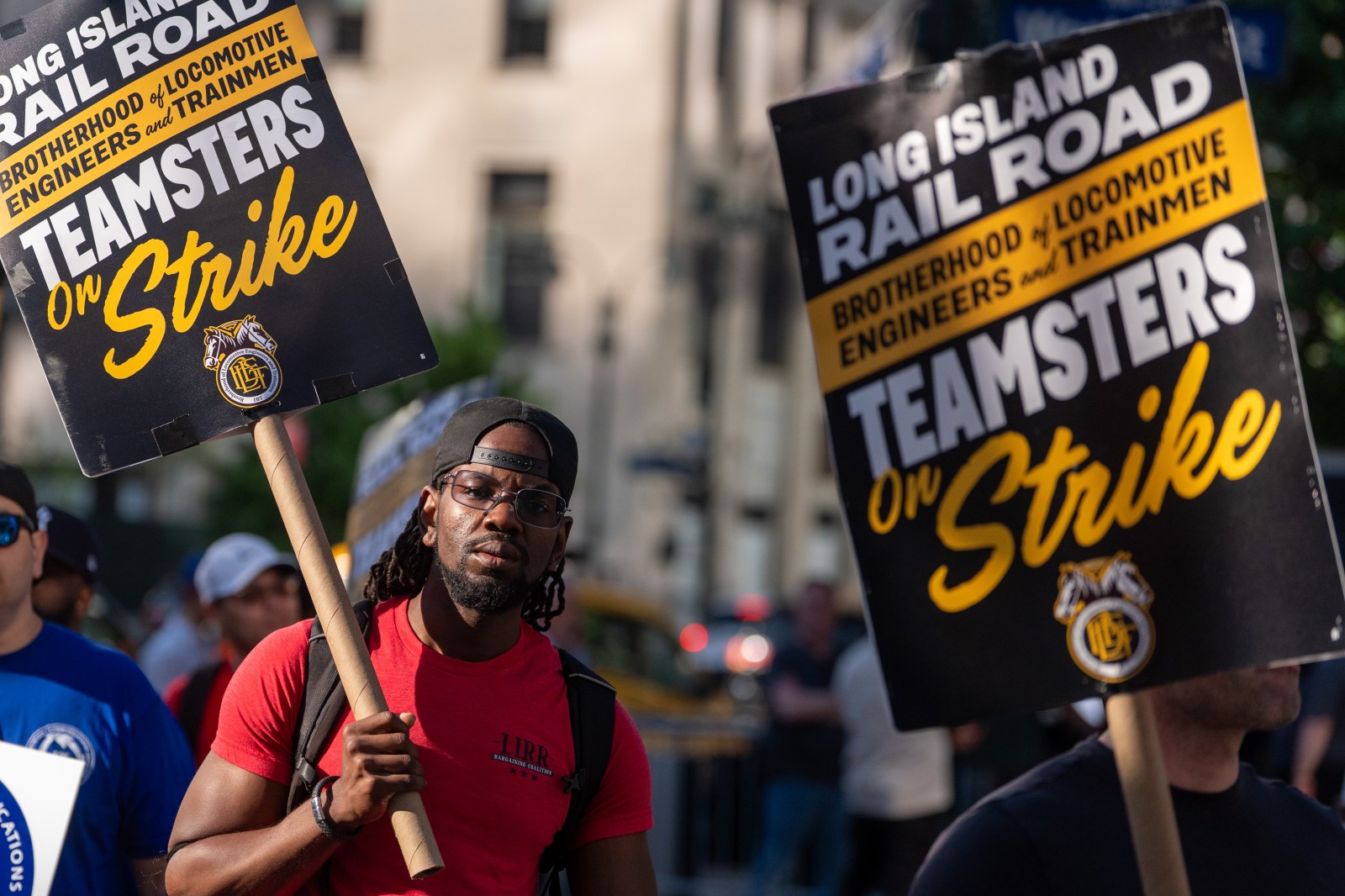
Union participation has widespread economic advantages for Americans, with Black workers in unions earning 12.6% more than their nonunion peers and Latino workers earning 16.4% more. Presently, women and people of color comprise about two-thirds of union members. Black workers continue to have the highest rate of unionization among major racial or ethnic groups, with expanded union representation in 2025 largely driven by workers of color. Union membership increased by 463,000 workers to 16.5 million, marking the highest figure in 16 years.
This fall, efforts extend beyond the workplace, with tens of thousands of union volunteers reaching out to union voters through various means, including in-person visits. These dialogues are central to the AFL-CIO’s election strategy, emphasizing on-the-ground engagement over AI-driven ads and misinformation. Everyday conversations among union members about family and life priorities epitomize the labor movement’s strengths, significantly impacting electoral outcomes. After over 50 years in the labor movement, my experience as a young steelworker in Chicago taught me the importance of unity. It is this collective strength that assured my family’s access to the American dream and enabled generations of Black workers and diverse working communities to forge America’s middle class. It is the same force that will secure this dream for future generations.
Fred Redmond, the highest-ranking African American labor official in history, currently serves as the secretary-treasurer of the AFL-CIO, the nation’s largest labor federation, representing 65 unions and nearly 15 million workers.
Leave a Reply