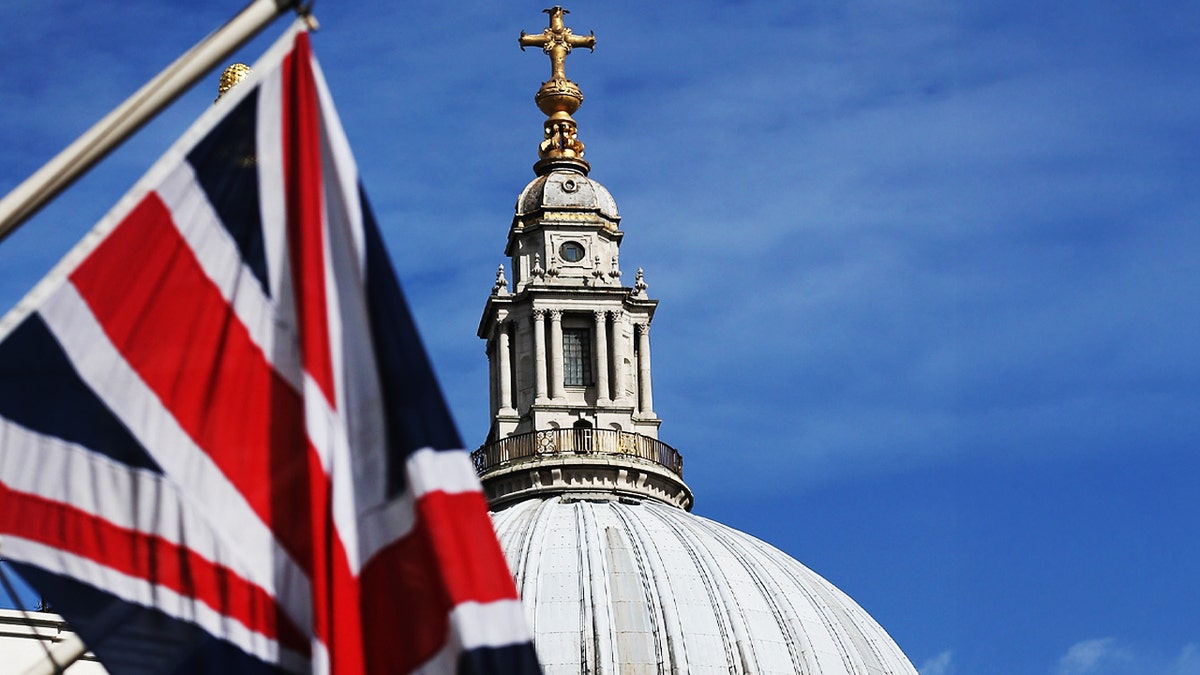
Bishop Robert Barron sharply criticized London’s historic St. Paul’s Cathedral on Monday due to its new collaboration with a nightclub company. He contended that the planned concert series jeopardizes the cathedral’s sacred status.
The Christian Post reported that the Church of England faces significant backlash after St. Paul’s Cathedral entered into a multiyear agreement with Fabric, a nightclub company, to host concerts within the cathedral. Fabric had lost its license around ten years ago owing to two drug-related deaths. While this isn’t the first collaboration between the cathedral and the nightclub company, this agreement incited widespread international controversy.
Despite the fact that St. Paul’s belongs to the Anglican Church rather than the Roman Catholic Church, Bishop Barron—a notable American Catholic bishop—expressed his concerns through a detailed social media post. He argued against such uses of the cathedral, stating, “Word has just come down that St. Paul’s Cathedral in London—the second most important church in the Anglican world—has imitated Canterbury Cathedral in permitting ‘raves,’ nightclub-like entertainments, to take place in its confines.”
Concerns Over Sacred and Secular Boundaries
Bishop Barron disparaged those defending the move. “The usual reasons for acquiescing to this have been trotted out: reaching out to the young, trying to get with the times, etc. But this development simply shows that the leadership of the Church of England has lost any sense of the crucial distinction between the sacred and the secular,” he stated.
He elaborated on the importance of sacred spaces being distinct from mundane, secular environments. According to him, these places are meant to guide individuals towards the divine. He explained, “In the properly sacred space, one is lifted out of the conventional and introduced into the numinous. This is why Christian cathedrals are filled with images of the saints and angels and why their interiors are meant first to disorient us and then to reorient us toward the divine.”
Bishop Barron warned that contemporary Western culture is at risk of eroding the boundary between the sacred and the secular, which is harming especially young people. He stressed that the Church should help individuals return to sacred practices, not merge sacred spaces with secular events.
Secular Events at St. Paul’s Cathedral
The BBC reports that the venue’s events will consist of concerts instead of raves. Under the agreement, Fabric will be the exclusive partner for such events until 2030. The first concert is scheduled for October 29, with the artist not yet announced.
Cameron Leslie, Fabric’s co-founder, described the partnership as a noteworthy collaboration between two distinct parts of London. Sandra Lynes Timbrell, the cathedral’s director of visitor engagement, expressed hope that an “exceptional concerts” program would attract new visitors.
Bishop Barron concluded with, “Having ‘raves’ in the nave of one of the most sacred spaces in the Christian world is, I’m sad to say, another sign of our pitiful surrender to ideological secularism.”
A prior event at Canterbury Cathedral in 2024 involved 90s “silent discos,” which were critiqued as “raves in the nave.” The cathedral also featured the “Hear Us” art installation, led by poet Alex Vellis and curator Jacquiline Creswell, inspired by working with marginalized communities.
Though cathedral leaders believe secular events might appeal to younger generations, some young believers argue otherwise. Catholic actor David Henrie stated young people are currently seeking more traditional faith expressions. He noted an increase in attendance at traditional Latin Mass services, as many young people seek a clear contrast to modern culture.
Recent data shows a rise in young adults valuing religion. A Gallup poll found a 14-point increase, with 42% of young men now saying religion is very important.
Leave a Reply