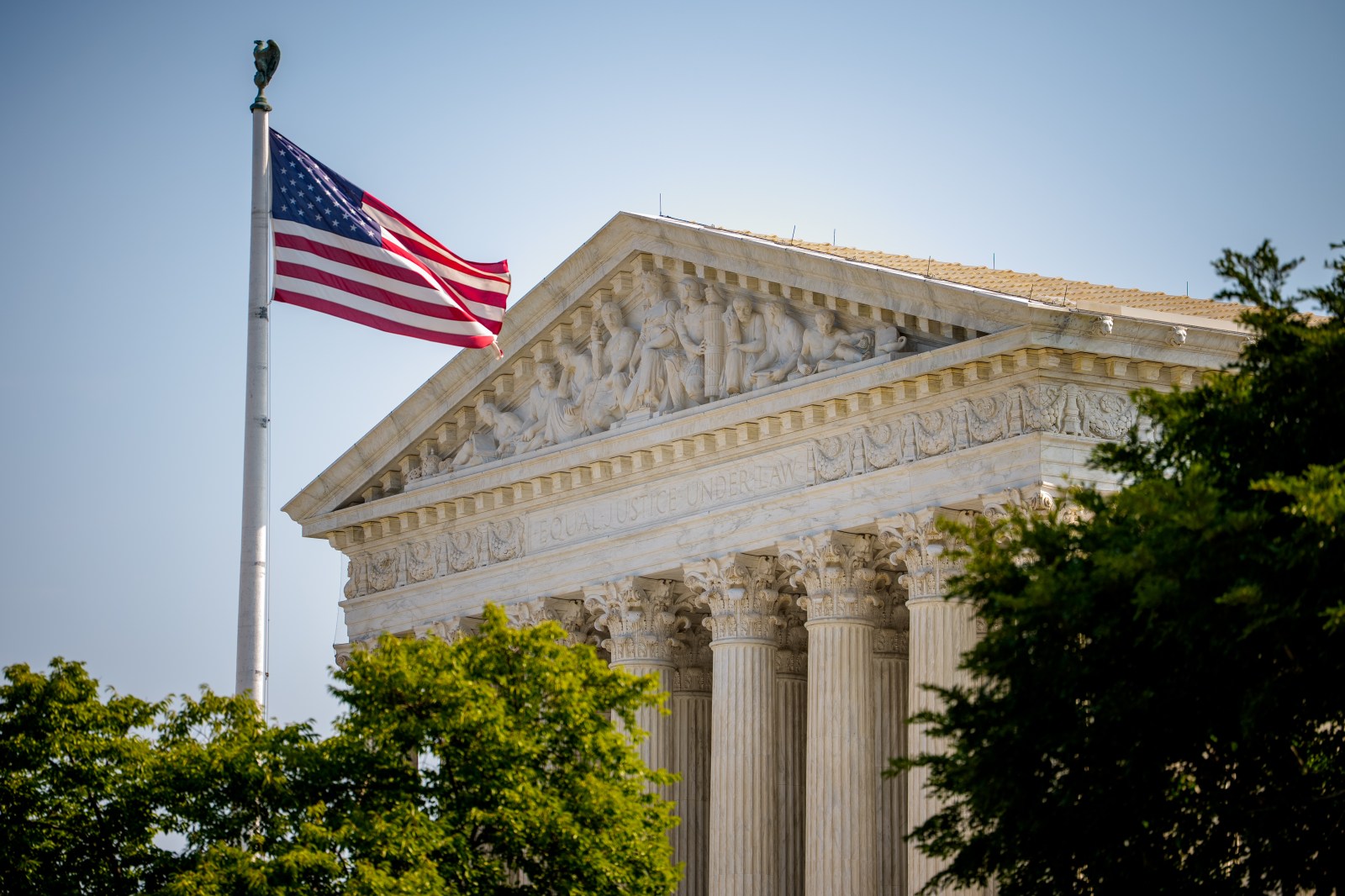
The U.S. Supreme Court refused an appeal from Missouri leaders on Tuesday, rejecting the use of a congressional map promoted by Donald Trump for November’s midterms. This case has gained significant attention due to questions about how late courts can alter congressional maps before an election and whether primary voters can be shifted between districts before a general election.
Missouri State Attorney General Catherine L. Hanaway argued that changing the maps at this stage would create an electoral chaos. Nevertheless, Justice Brett Kavanaugh denied Missouri’s request, leaving the state’s Supreme Court decision intact, which ordered using a 2022 map.
Abha Khanna of Elias Law Group commented that the decision respects Missouri’s constitution, stressing that Missourians should decide on congressional maps rather than accepting extreme changes influenced by Trump. According to Khanna, this supports democracy and honors over 300,000 Missourians who signed a petition against the gerrymandered HB 1 map.
The implications of the case extend nationwide as other states might face similar issues with altering congressional maps.
The decision reinforces that people, not politicians, will determine when they vote on Proposition A this November,said Richard von Glahn, executive director of People Not Politicians Missouri.
Background of the Missouri Case
In September 2025, Missouri passed House Bill 1, replacing the 2022 map, which was later used in the August 2026 primaries attended by 1.2 million voters. Activist group People Not Politicians, led by von Glahn, opposed the measure, seeking a statewide vote. This sparked legal fights over Missouri’s referendum rights concerning redistricting laws.
The legal battle escalated until September 3, when the Missouri Supreme Court ordered an injunction against the new map, reverting to the 2022 version for future elections.
Missouri’s Arguments for Supreme Court Involvement
According to Missouri’s Supreme Court filing, voters might end up voting in districts they didn’t help nominate candidates for if maps are altered post-primary elections. The state argued that shifting district boundaries was impractical, aligning with a trial court’s opinion that making changes at this point was impossible.
Kavanaugh’s denial doesn’t address the merit of Missouri’s legal claims but rather denies immediate intervention. The outcome imposes that Missouri follows its Supreme Court’s ruling to maintain continuity in election administration.
Constitutional Issues in Debate
The appeal points to constitutional concerns, including the Elections Clause, arguing that a referendum process shouldn’t overturn a map supported by Missouri’s legislature and governor. Republicans asserted that the decision allows around 3.3% of voters to pause legislative decisions.
Furthermore, Missouri claimed changing districts post-primaries violates Article I and equal-protection principles, treating voters inconsistently if moved to different districts. Republican bodies called the situation an electoral crisis instigated by a minority of voters.
Nonetheless, supporters of the Missouri Supreme Court’s ruling maintained that state laws necessitate the suspension while citizens seek a public vote on the map.
Implications Beyond Missouri
The case holds broader national importance by questioning the timing of court interventions in altering congressional maps. Missouri, along with national Republican groups, warned that similar legal conflicts could surface in other states close to elections without federal restrictions, disrupting the electoral calendar.
Elections experts frequently reference the Purcell principle, advising against significant election changes near election times to avoid confusion and administrative challenges. Missouri echoed these points in their appeal.
While Kavanaugh offered no reason for denying immediate intervention, the case underscores tensions among state referendum practices, legislative control over mapping and judicial roles in election management. For now, Missouri will abide by its Supreme Court’s decision as elections officials, candidates, and voters anticipate the unfolding of this closely monitored electoral law dispute.
Leave a Reply