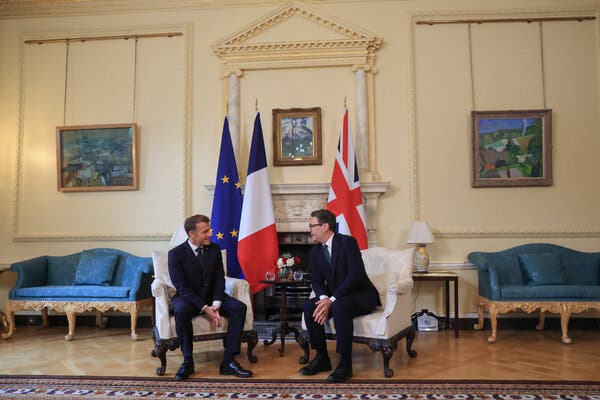
Britain has traditionally followed France’s lead in pressuring Israel, but recent developments show a shift in approach. Under Prime Minister Andy Burnham, Britain is now leading opposition to Israeli settlements, potentially challenging its relationship with the United States.
In September, Britain recognized a Palestinian state, following France’s earlier indications that it would take this significant step. On Tuesday, Britain announced its decision to cease trading with Jewish settlements in the West Bank, a move quickly echoed by France and Canada. This action includes accusations against certain settlers of “ethnic cleansing” of Palestinians.
This change in diplomatic strategy partially stems from the domestic political landscapes of these countries. French President Emmanuel Macron, nearing the end of his term, sought to solidify his legacy. Similarly, Prime Minister Andy Burnham aims to address Labour Party members’ concerns about the plight in Gaza and Britain’s perceived inadequate response.
The unity among European powers in applying pressure on Israel is notable. It has strained relations between Israel and Europe, leaving Israel isolated from its former military allies and subject to potentially serious economic repercussions.
“The idea of boycotting goods from settlements or treating them differently regarding customs and duties has been discussed, but little action has been taken,” explained Daniel C. Kurtzer, a former U.S. ambassador to Israel. “Even the concept of clearly labeling goods from settlements to differentiate them from ‘Made in Israel’ has not gained momentum.”
Mr. Kurtzer, now teaching at Princeton, emphasized, “This could deliver a significant economic impact to the settlements and any Israeli government supporting them.”
The implications of Britain’s stance are substantial, not only for its relations with Israel but also in terms of broader geopolitical interactions, including relations with the United States.
Leave a Reply