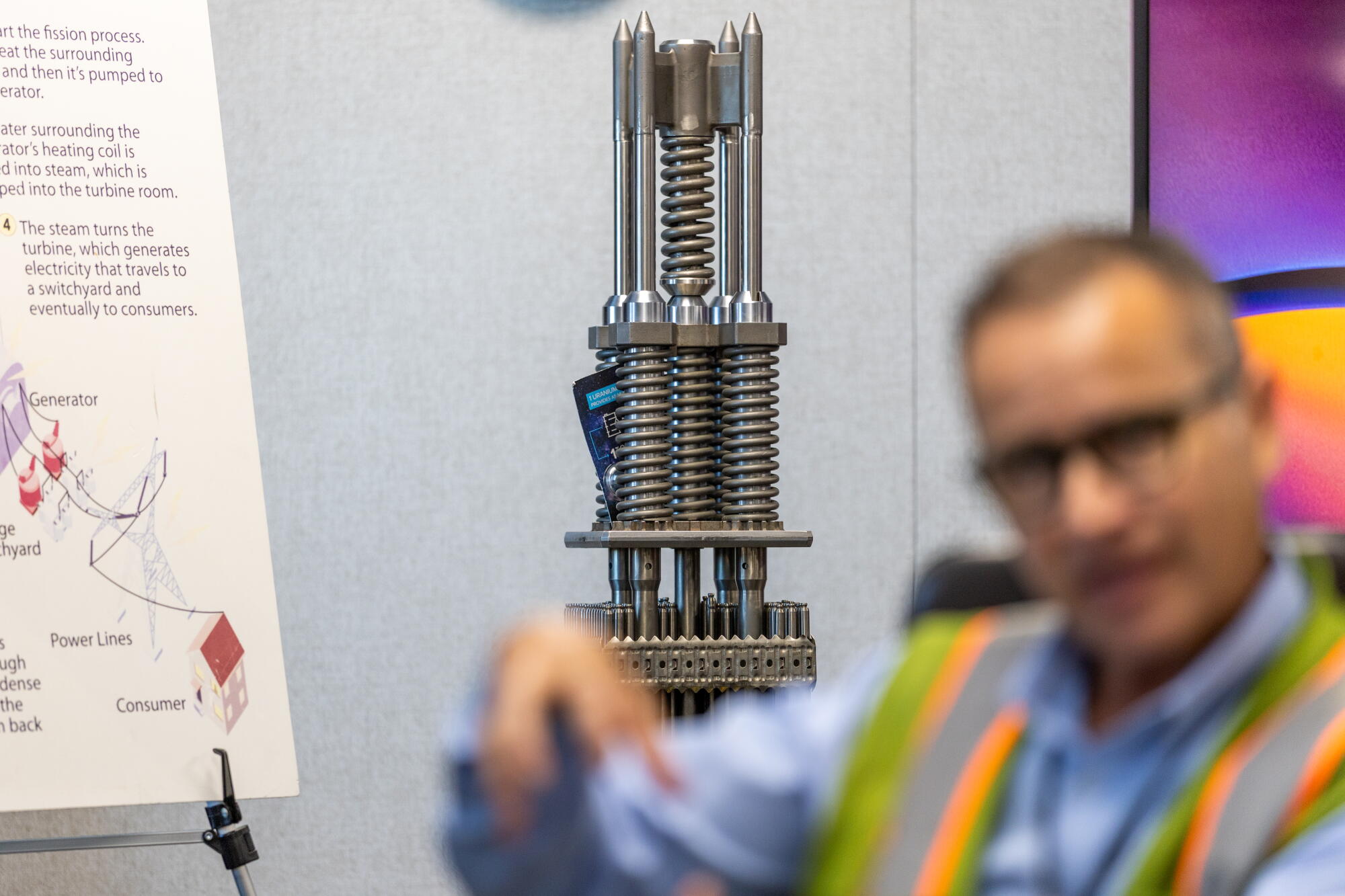
Recent severe weather has eroded parts of the Southern California coastline. This has reignited concerns for oceanographer Kim McCoy over nuclear waste stored near San Clemente. The waste is secured at the closed San Onofre nuclear power plant, just 100 feet from a protective walkway.
Potential Risks and Measures
Many experts believe the immediate risk to the storage system is low. Southern California Edison, the plant’s owner, has assured the California Coastal Commission it will relocate the waste if necessary due to sea level changes. However, the recent hurricane-triggered waves have brought attention back to the long-term security of the nuclear waste.
“At the moment, it is under control, I think it’s essential to say that,” stated James Day, a UC San Diego geology professor. “But geologically, we must be thinking long term. The waste lasts for hundreds, if not thousands of generations.”
Visible from the highway, San Onofre appears operational. Yet, the site is in demolition, with secured waste still on-site. Of note, 3.6 million pounds of high-level waste remains.
Expert Opinions and Additional Concerns
The plant sits in an active earthquake zone on relatively young rocks, raising safety concerns. Beach slope erosion could increase vulnerability to tsunamis, and the ocean air may corrode canisters.
According to Manuel Camargo from Edison, the current tsunami risks remain low. The plant is reinforced to endure significant seismic activity. State data indicates the seawall should withstand conditions until at least 2050.
Economic Considerations
From 1982 to 2014, customers paid into a federal fund for a permanent storage solution. With the Yucca Mountain project halted, utilities now sue annually for storage costs, costing taxpayers significantly.
The Department of Energy plans to develop waste storage “campuses” across several states to address this. States like Utah and Tennessee are exploring hosting possibilities, but community engagement remains limited.
International Examples and Future Steps
Finland leads globally with a near-completion of a deep geological storage site. Sweden and Switzerland are also progressing with similar plans.
Edison hopes the U.S. can establish a permanent facility within 10 to 15 years. If not, they may need to replace storage canisters by 2103.
Leave a Reply