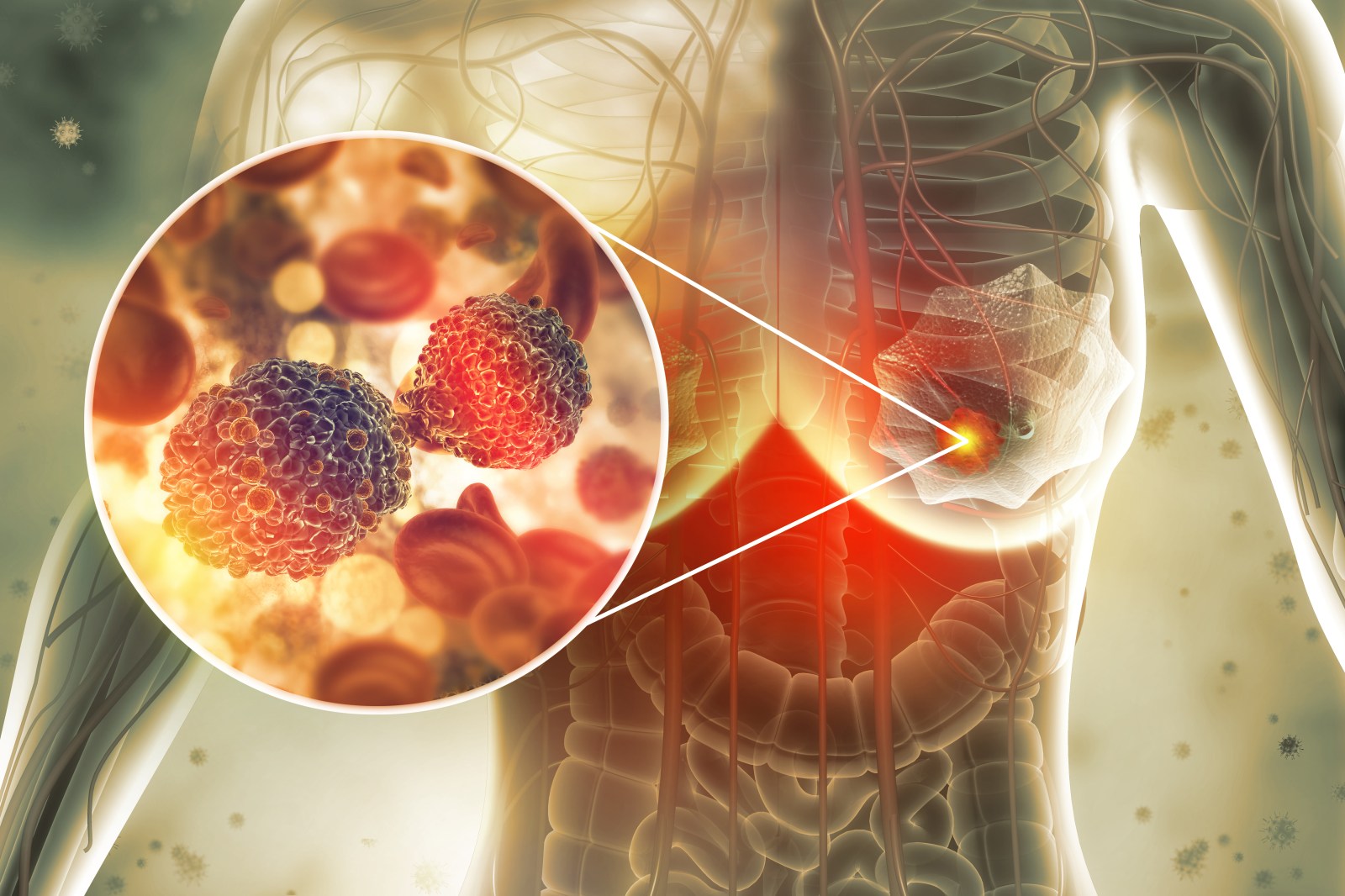
Researchers at UC San Francisco have identified a potential mechanism explaining why dense breast tissue elevates the risk of developing breast cancer. This discovery could aid in preventing tumor formation rather than only detecting it once it has occurred.
Breast cancer frequently develops in dense tissue, which poses challenges for cancer screening. Dense tissue appears as solid white on mammogram images, complicating the detection of tumors. According to the Mayo Clinic, individuals with dense breast tissue face a higher breast cancer risk.
Dense tissue is stiffer than normal tissue and draws immune cells to the breast. These immune cells release chemicals that can lead to mutations in DNA. This DNA damage increases the likelihood of cancer developing.
“We’ve long known that dense breast tissue raises cancer risk, but not why,” said Mary-Kate Hayward, the study’s first author, in an interview with Newsweek. “Our study shows that the physical stiffness of dense tissue alters the behavior of immune cells called macrophages, causing them to release reactive chemicals that damage nearby cells’ DNA. This mechanism may help explain how dense tissue drives cancer development.”
How the Study Unfolded
The study, published in the journal Cancer Cell, involved examining tumor samples, measuring tumor stiffness, and imaging collagen proteins. The results showed that the stiffer tumor areas had more collagen, macrophages, scarring, and DNA mutations.
Researchers bred tumors in gels and used mouse models to determine that a stiff environment activates STAT3, a pathway associated with cancer development. This activation results in the recruitment of macrophages that may assist in cancer progression.
These macrophages produce reactive oxygen species (ROS), well-known markers of cancer. ROS typically are short-lived, creating uncertainty about their role in long-distance DNA damage. Researchers found that ROS caused oxidative damage to fats in macrophages, converting them into mobile, DNA-damaging chemicals.
Hayward explained to Medical Xpress, “What was striking was that the macrophages were producing chemicals that could travel to nearby cells and damage their DNA. We tend to think of chemicals in the environment as DNA-damaging and cancer-causing, yet we found macrophages could also produce DNA-damaging chemicals right within the tissue.”
Further experiments confirmed that dense, stiff breast tissue contained more macrophages, aldehydes, DNA damage, and more advanced disease. The researchers plan to investigate drugs capable of preventing aldehyde formation in macrophages.
In a statement to Newsweek, Hayward said, “The exciting part is that this gives us something to target. If we can block these damaging chemicals, we might be able to get ahead of cancer in high-risk tissue before a tumor even has the chance to form.”
Leave a Reply