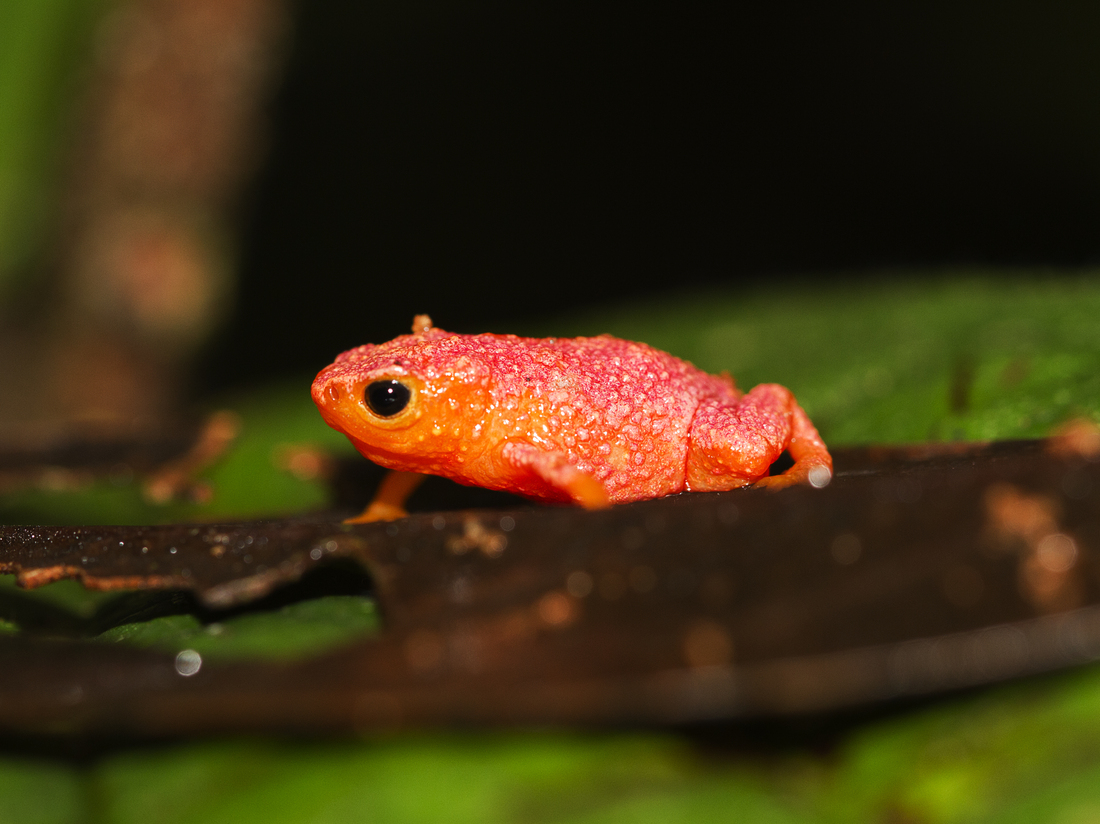
Brachycephalus ephippium, known as pumpkin toadlets, are tiny amphibians native to the rainforests along the Atlantic coast of southeastern Brazil. These creatures, as adults, reach only the size of a chickpea, showcasing the intriguing adaptations and limitations that come with their miniature size.
One notable aspect of these diminutive frogs is their inner ear, which is so small that it hinders their ability to move with precision. This limitation leads to movements that appear somewhat random, a stark contrast to the characteristic agility associated with frogs. Despite these challenges, pumpkin toadlets thrive in their natural habitat.
Atlantic science writer Katie Wu brings attention to this unique species by questioning the identity of a frog that struggles to jump effectively. Her analysis highlights the fascinating balance between the advantages of being small, and the challenges it presents. Wu’s article in The Atlantic, titled A Frog So Small, It Could Not Frog, delves deeper into the characteristics defining this species.
For those interested in observing pumpkin toadlets in action, the Florida Museum provides a video showcasing their movements. The video offers a glimpse into the everyday life of these frogs, as they navigate their environment with their unique adaptations.
This episode, which explores the pumpkin toadlet, was produced by Rebecca Ramirez, edited by Gabriel Spitzer, and fact-checked by Rachel Carlson.
Leave a Reply