After three years of negotiations, lawsuits, and appeals, the Illinois Supreme Court will hear arguments this week in a case involving the Chicago Police Department (CPD) and the Fraternal Order of Police. The case centers on whether officers accused of serious misconduct can have their disciplinary cases decided by a third-party arbitrator, as opposed to the Chicago Police Board.
This case highlights the conflict between using a third-party arbitrator, standard for other municipal employees, and the Chicago Police Board, which has managed these cases since 1961. The hearing is scheduled for Thursday in Springfield, and a decision might arrive before the year ends. However, the implementation of a new discipline system remains uncertain.
Choosing the next CPD superintendent adds complexity, with many disciplinary decisions pending. Advocates for police accountability point to past scandals, like the 2014 shooting of Laquan McDonald, warning against secret hearings. They argue that private proceedings could undo much of the progress made in tackling police misconduct.
“Secrecy breeds impunity for police officers,” wrote attorneys for a coalition of police reform groups in a June brief to the Illinois Supreme Court. They argued that arbitration could reverse considerable efforts toward transparency and accountability.
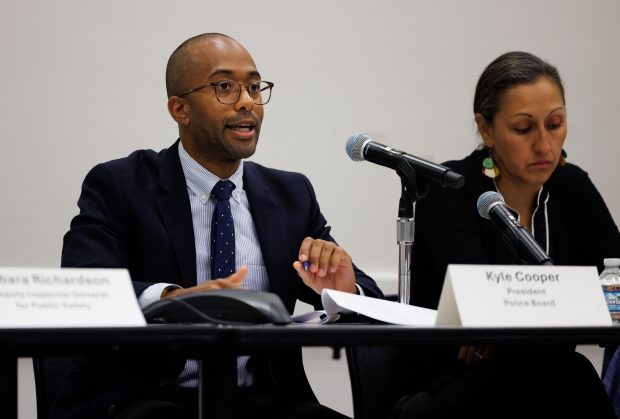
The debate also touches on whether officers facing termination should be paid during the adjudication process. Police Board President Kyle Cooper emphasized the need for timely resolutions for both officers and alleged victims, stating the current delays serve no one.
Since fall 2023, the city’s method for handling these cases has largely stalled due to the ongoing legal battle. The Fraternal Order of Police argues that the city aims to enforce public attendance at grievance arbitration hearings for the first time. The city counters that removing public access could damage trust and reform efforts.
City attorneys assert that public hearings on significant misconduct cases are vital for building trust, especially in a city where many residents distrust the police. The union claims the city’s stance centers on political arguments rather than established public policy. Craig Futterman, a law professor, pointed out that a previous attempt by the union to destroy misconduct records was rejected by the Supreme Court for conflicting with state public policy.
The dispute began in summer 2023, when the City Council separated the new collective bargaining agreement from the FOP. An arbitrator had ruled that severe disciplinary cases could be privately arbitrated. However, an appeal in Cook County Circuit Court led to a ruling that such cases should be public. The FOP appealed, but the Illinois Appellate Court agreed with this ruling, while also allowing that officers facing dismissal can be paid during the process.
As the legal battle continues, officers can still opt for hearings before the Police Board. Despite the option, only four of 31 officers have chosen this path. Meanwhile, ongoing investigations by the Civilian Office of Police Accountability (COPA) and CPD’s internal affairs are happening, though the method for final decisions is unclear.
Data from COPA shows over 650 misconduct findings since September 2023, including 22 related to police shootings. The internal affairs bureau found misconduct in another 463 instances. Although CPD has aimed to dismiss 26 officers, most cases remain stalled by the legal conflict.
Efforts to address disagreements between COPA and the CPD’s legal affairs office have continued, with Police Board members settling many disputes. Former police Superintendent Larry Snelling supported the idea of open hearings to enhance accountability and public confidence.
“Ensuring the community knows how complaints and misconduct are handled strengthens public confidence,” Snelling stated in 2025. He emphasized transparency in the investigation process to maintain trust in the police force.
Leave a Reply