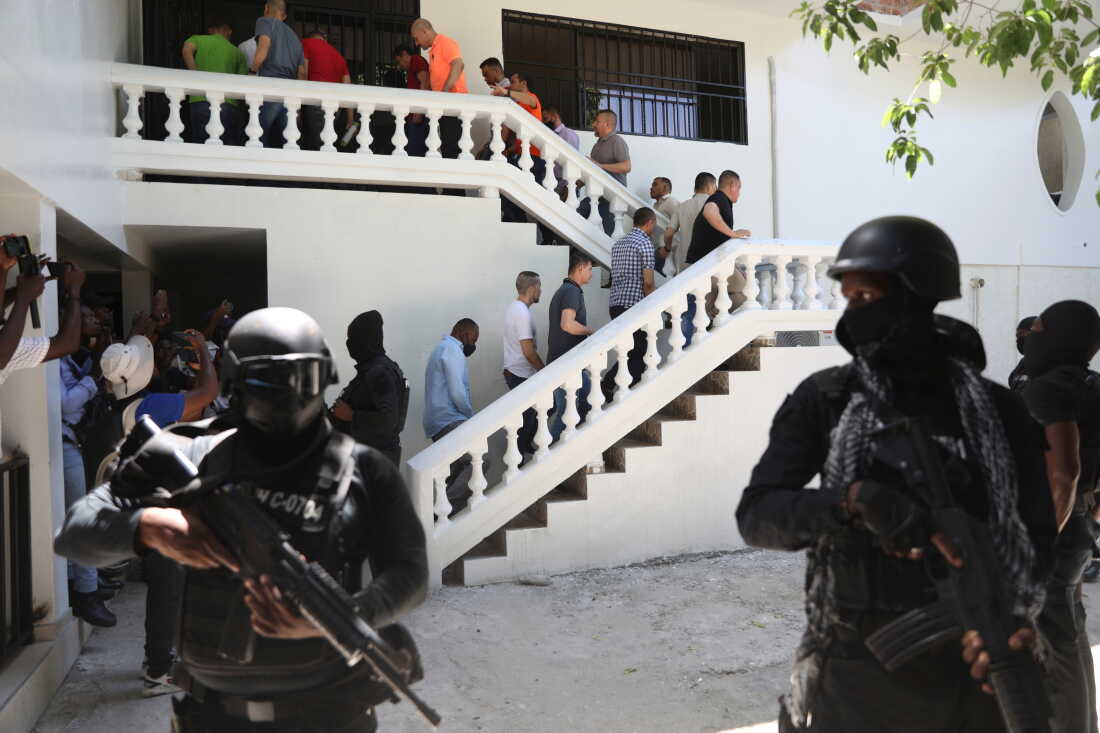
The 2021 assassination of Haitian President Jovenel Moïse led to the arrest of 18 suspects. On Sunday, these individuals were extradited to the U.S., aligning with a prolonged judicial process in Haiti. This extradition signifies a crucial step in ensuring accountability for this act, with the suspects to face justice in Florida.
Jason Reding Quiñones, U.S. Attorney for the Southern District of Florida, emphasized the commitment to follow evidence against those involved in the assassination. He stated that even five years later, the pursuit of justice continues. Quiñones did not identify the suspects publicly. Additionally, the U.S. Department of Justice remained silent on further comments.
Key Suspects and Proceedings
The suspects in question include 17 Colombian soldiers and Joseph Badio, a former employee of Haiti’s Ministry of Justice. Badio, deemed a critical suspect, was apprehended in 2023 after evading capture for over two years. U.S. defense attorneys claim Badio orchestrated the plan to arrest and then assassinate Moïse.
Some authorities suggested a coup was envisioned, rather than an assassination. Colombian soldiers claimed they experienced coercion, including beatings and signing unfamiliar documents under duress.
Extradition Reactions
Family members, like Diana Marcela Arbeláez Llano from Colombia, expressed shock over the sudden extradition. She conveyed concerns about the health conditions of the detained Colombians, who had suffered in Haiti’s prisons. Despite hoping for improved conditions in the U.S., uncertainty persists.
Prolonged delays in Haiti’s judiciary have frustrated the families. Efforts to advance the investigation faced obstacles due to gang violence and threats. In 2025, Haitian officials sought aid from the U.S. and Canada after a court ordered another investigation into the assassination.
U.S. Legal Actions
The U.S. is actively prosecuting and sentencing involved suspects. In Florida, a jury convicted four men of participation in the plot. Several have admitted guilt, receiving life sentences. Among those convicted are Arcángel Pretel Ortiz and others, found guilty of conspiracy and material support for the assassination.
Christian Sanon, a Haitian-American, remains untried. He was allegedly chosen to succeed Moïse, with plans to award contracts related to infrastructure and security. Notable figures in these contracts included Ortiz and Intriago, leaders of various security firms in South Florida. Some suspects earlier admitted guilt, including a Colombian officer and a businessman with past U.S. government ties.
Dimitri Hérard, once a prison security head, remains at large after a gang raid in Haiti.
Leave a Reply