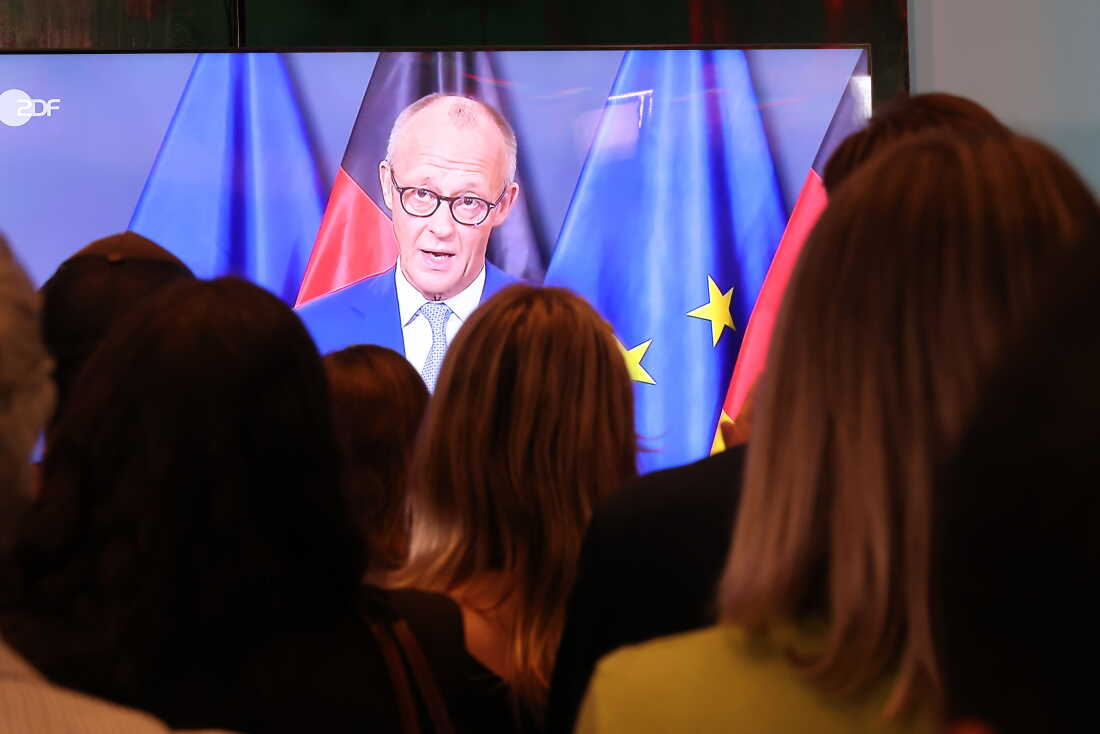
Supporters of the Christian Democratic Union (CDU) had a challenging night on September 20, 2026, as exit polls from state elections in Germany revealed unprecedented results for the party. Instead of attending the United Nations General Assembly in New York, Chancellor Friedrich Merz was at the CDU headquarters in Berlin, facing the aftermath of these elections.
Elections took place in the states of Mecklenburg-Western Pomerania and the city of Berlin. In both regions, the far-right Alternative for Germany (AfD) saw significant improvements since the last elections in 2021 and 2023, capturing 38.2% of votes in the northeastern state and 16.3% in Berlin. The far-left Die Linke led in Berlin with 25.7%, outpacing the CDU by seven percentage points.
The CDU faced an alarming result in Mecklenburg-Western Pomerania, receiving only 4.9% of the vote, failing to meet the threshold required to enter parliament. Despite this, Merz dismissed speculation about resigning, although his party had also suffered a recent defeat in Saxony-Anhalt.
Chancellor Merz, facing criticism, insisted on continuing with his federal agenda focused on tax and welfare reforms. He emphasized the necessity of “backbone, steadfastness, and patience” to counter authoritarianism and reaffirmed his commitment to these reforms as the country’s leader.
In Berlin, the mood among AfD supporters was notably upbeat. Party leader Alice Weidel expressed that Merz’s leadership struggles only benefited her party. She stated, “Friedrich Merz is the wrong chancellor for the CDU, and he is dragging the party down with him.”
Despite the AfD leading over Merz’s coalition partners, the Social Democrats (SPD) in Mecklenburg-Western Pomerania, it remains unlikely for the AfD to secure coalition partners. The SPD’s Manuela Schwesig, securing 35% of votes, is expected to maintain her position through alliances.
Similarly dramatic, Berlin’s election saw the far-left Die Linke achieve its best result ever, with its leader Elif Eralp vowing to address housing affordability by potentially introducing a rent cap and reassessing ownership of large corporate real estate holdings, drawing parallels to New York politics.
Germany’s election model involves both winner-take-all and proportional representation formats, necessitating coalition formation for governance. Eralp must work with two other parties to become Berlin’s mayor. Nationally, Merz’s coalition efforts face similar challenges, with think tank German Marshall Fund’s Sudha David-Wilp noting Merz’s desire to remain in power despite growing pressure.
As the political landscape fragments, complicating coalition dynamics and policy implementation, the AfD positions itself as a potential contender in future federal elections.
Leave a Reply