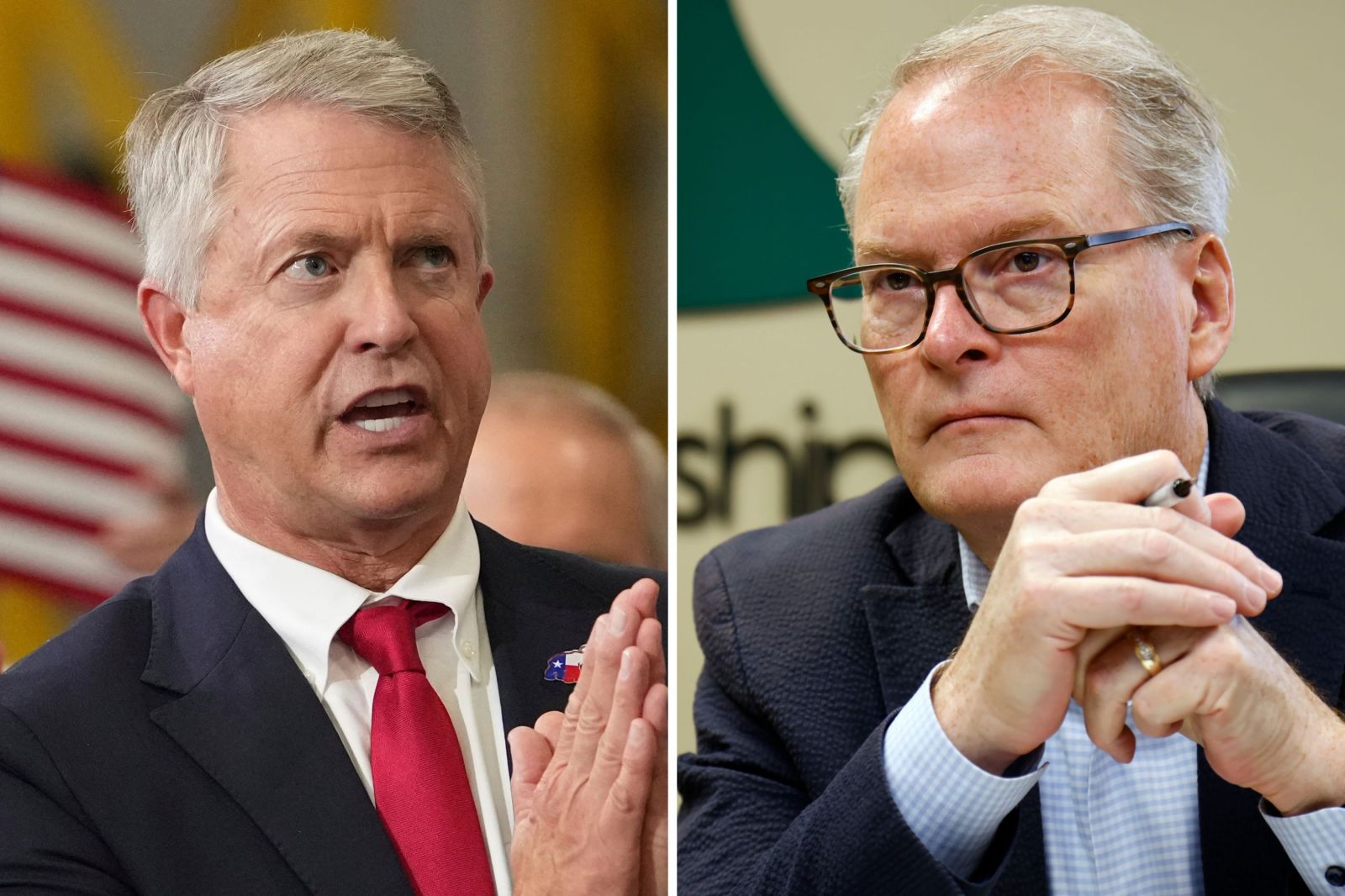
The Senate race in Kansas is becoming unexpectedly competitive. For nearly a century, Democrats haven’t secured a Senate seat in this state. A new Emerson College Polling/Nexstar Media survey positions Democrat Adam Hamilton slightly ahead of Republican Senator Roger Marshall. The poll puts Hamilton at 45 percent and Marshall at 43 percent, with libertarian David Graham at 4 percent. Conducted on September 15-16, this is the first independent survey in this election cycle showing Hamilton in the lead.
Marshall is running for a second term, while Hamilton, the founder of the country’s largest United Methodist Church, aims to break the long-standing Republican hold since 1932. Vice President JD Vance plans to visit Olathe, Kansas, to support Marshall.
Examining Polls and Predictions
Despite the Emerson College poll indicating a tight race, Marshall remains the frontrunner. Spencer Kimball from Emerson College Polling remarks that Democrats have a significant opportunity, partially due to Hamilton’s 15-point appeal to independents.
Previous surveys present Marshall as leading. An earlier co/efficient poll from early September of 915 likely voters showed Marshall at 49 percent and Hamilton at 44 percent, with a margin of error of plus or minus 3.22 percentage points. Another poll by Global Strategy Group in mid-August had Hamilton narrowly ahead, making the race tighter.
The Cook Political Report has shifted the classification from ‘solid Republican’ to ‘likely Republican.’ Yet, prediction markets like Kalshi and Polymarket still show a strong preference for Marshall, giving him a winning probability of around 74 percent.
Independents Influence the Numbers
The Emerson poll highlights independents as crucial for Hamilton’s competitiveness. Hamilton leads independents 42 to 27 percent, unlike the governor’s race where independents favor Republican Ty Masterson. Marshall’s unfavorable rating is at 48 percent, compared to Hamilton’s at 30 percent. Hamilton has room to grow his support, as 13 percent of voters lack a definitive opinion of him.
In Kansas, President Trump’s approval rating stands at 40 percent, with disapproval at 53 percent. Governor Laura Kelly has a 46 percent approval. The economy is the leading concern for 48 percent of Kansas voters, surpassing other issues such as healthcare and education.
The Cook Political Report adjusted the Senate race forecast shortly after Hamilton’s primary victory, moving from ‘Solid Republican’ to ‘Likely Republican.’ Kansas has a Cook Partisan Voting Index of R+8.
A Red State with a Blue Governor
Kansas has a history of Republican Senate victories, with Marshall consistently winning by single-digit margins. However, political dynamics are more complex in gubernatorial races. Governor Laura Kelly has secured two terms, and a 2022 ballot measure to remove abortion protections was overwhelmingly rejected.
Marshall emphasizes the strengths of the Republican coalition targeting rural voters and warns that Hamilton’s win could aid Democrats’ control of the Senate. Hamilton promotes himself as a centrist and seeks to unite voters from diverse political backgrounds.
Profile of Adam Hamilton
Adam Hamilton, a newcomer in the political field, established the Church of the Resurrection, now the nation’s largest United Methodist Church. Starting in 1990 with a small congregation, he built it to a 25,000-member community.
Hamilton, campaigning as a faith-driven moderate, secured the Democratic nomination in August. His campaign raised $3.6 million in its early stages. He aims to appeal to Kansas’s conservative tendencies with centrist values.
Marshall accuses Hamilton of being ‘too woke for Kansas.’ However, Hamilton maintains his moderate stance with a congregation nearly equally divided among political affiliations.
Roger Marshall’s Legal Controversy
Roger Marshall’s medical career includes lawsuits against over 700 patients for unpaid bills. The New York Times reported cases of arrest due to missed court appearances. Half of the lawsuits were in Marshall’s name, involving his medical practice in Great Bend.
Patients from Barton County, where poverty and uninsured rates are high, faced a steep 18 percent annual interest on unpaid bills. Marshall’s legal actions involved garnishing bank accounts.
His campaign defends these actions, asserting that Marshall provided care irrespective of payment capability and that the legal system enforced these measures. His campaign also highlights the hospital’s “uncompensated care” and adherence to standard billing and collection processes in Kansas.
Leave a Reply