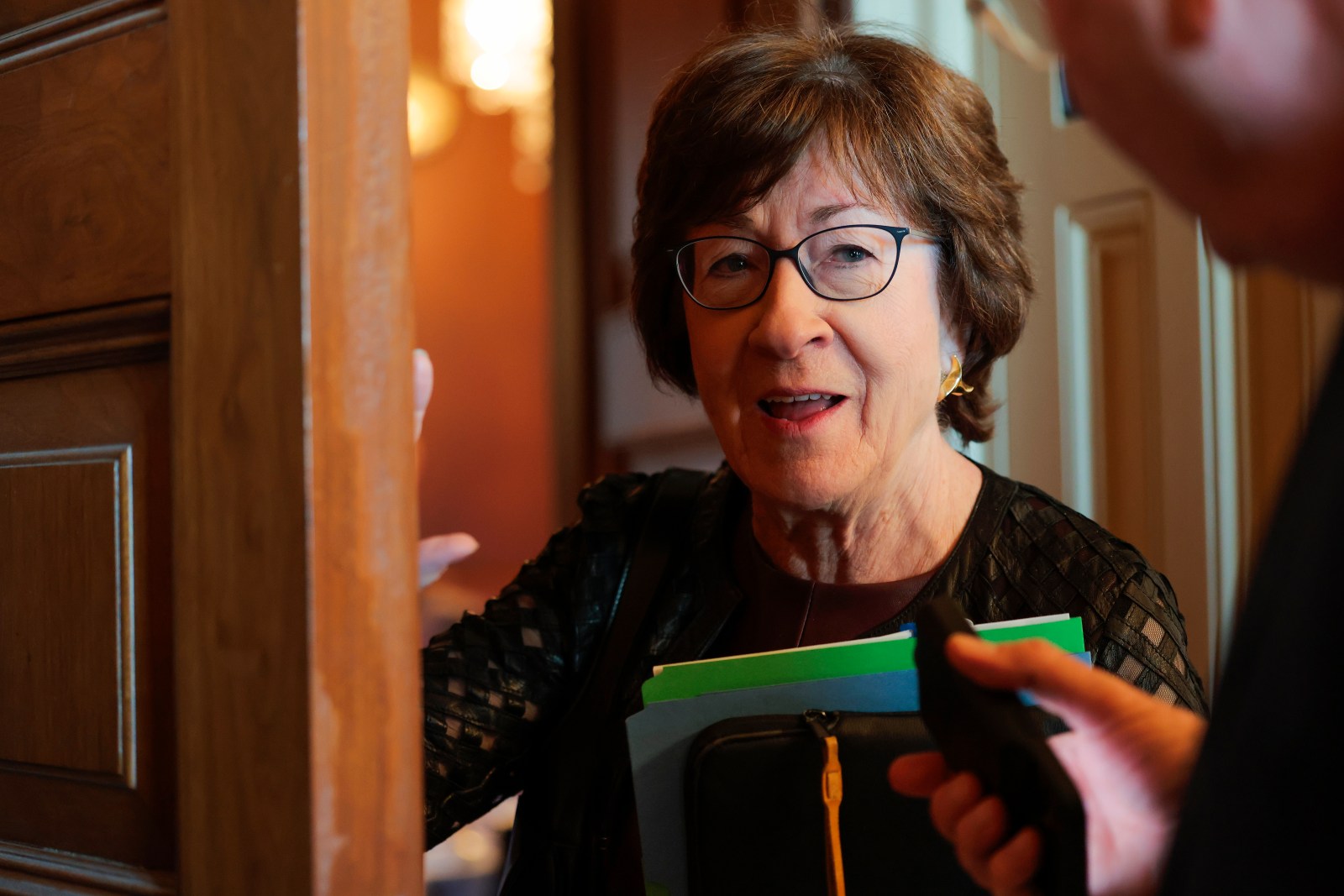
The upcoming Maine Senate race has intensified, focusing on Senator Susan Collins’ reputation as an independent voice. Facing competition from Troy Jackson, a Democrat and former Maine Senate President, Collins is in a challenging position as the November midterms approach.
Collins’ Record and Campaign Strategy
Democrats aim to associate Collins, a Republican, with former President Donald Trump, who does not have strong support in Maine. They claim she often votes against him only when her vote is not decisive. However, Collins highlights several significant votes where she opposed Trump’s agenda on key issues.
Despite Maine’s Democratic leanings, Collins has previously won reelection due to her popularity and bipartisan image. Whether Mainers still view her as independent remains crucial for her reelection, with the election just weeks away.
Blake Kernen, a spokesperson for Collins, emphasized her consistent voting record and independence. According to Kernen, Collins has never missed a vote and holds the longest perfect voting streak in American history. He also noted her acknowledgment as a bipartisan member of the Senate by institutions like Georgetown and the nonpartisan Lugar Center.
Kernen contrasted her record with her opponent, describing Jackson as a partisan politician. Jackson’s spokesperson, Maggie Amjad, countered, accusing Collins of aligning with Trump in critical moments, highlighting her support for Supreme Court justices who overturned abortion rights and her votes for significant tax cuts.
Analysis of Collins’ Voting Patterns
CQ Roll Call reported that Collins sided with Trump 95% of the time in 2025, making her less supportive compared to only a few other Republican senators. Yet, Democrats stress her high alignment with Trump, with Jackson criticizing her voting record.
Collins faced criticism from Maine Democrats, particularly for confirming Brett Kavanaugh to the Supreme Court and her stance on judges perceived to oppose abortion rights. However, she did oppose some major Trump initiatives, such as the repeal of the Affordable Care Act in 2017 and Trump’s tariffs.
On significant issues like the Iran War and the One Big Beautiful Bill, she has shown independence. She has voiced criticism of Trump’s approach to Tehran and opposed legislation impacting Medicaid. Although Collins voted against a procedural step for the One Big Beautiful Bill, Democrats have highlighted her initial support in procedural votes.
Independent Actions Against the Trump Administration
Collins has voted against certain nominations during Trump’s administration, including Defense Secretary Pete Hegseth and Attorney General Todd Blanche, citing concerns over their qualifications and departmental politicization. She also opposed FBI Director Kash Patel citing political activities as problematic for his nomination.
Trump and Collins have not aligned closely, with her refusing to vote for him in the 2016 and 2024 elections and voting to impeach him after the Capitol riot in 2021.
Her independence includes challenging efforts to politicize federal health funding, as reported by the Washington Post regarding a potential Trump executive order.
Vice President JD Vance has expressed frustration with Collins but acknowledges her alignment with Maine’s independent spirit.
Current Polls and Campaign Developments
Polls indicate a tight race between Collins and Jackson. Recent publications show Collins with a slight advantage, while others indicate Jackson leading, especially among independent voters.
This week, a ProPublica report alleged interactions between Collins and a major campaign donor, leading to calls for an investigation. While Collins’ office denies any wrongdoing, Jackson has called these allegations corrupt.
Importance of the Maine Senate Race
The Democrats’ path to winning the Senate majority includes flipping the Maine seat. The outcome in Maine is vital for regaining control in an evenly divided Senate, with competitive races in other states also contributing to the overall outlook.
The Maine Senate race remains a key battleground for the midterm elections. Candidates will focus on convincing undecided and independent voters to support their platforms.
Leave a Reply