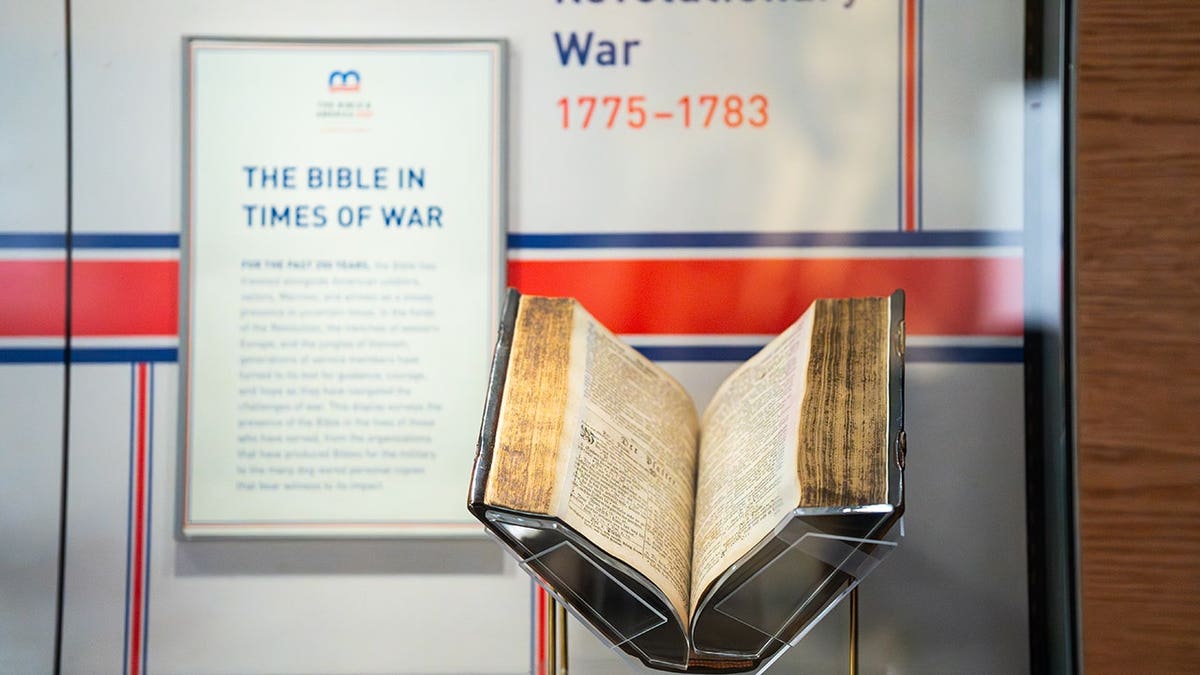
For many generations, American service members have carried Bibles in their uniform pockets while heading into uncertain situations. The Bibles varied, with some returning from war battered, others filled with prayers from family members wishing for their safe return. Some Bibles even had metal covers, designed to be worn over the heart.
As the U.S. celebrates 250 years since the Declaration of Independence, the Museum of the Bible’s ‘Bible in Times of War’ exhibit showcases how these Bibles have been a source of strength and hope for American soldiers throughout many conflicts.
Historic Bible Exhibit at the Museum
The exhibit, located in Washington, D.C., displays artifacts that tell stories of ordinary Americans during wartime. One notable artifact is the ‘Heart Shield Bible,’ a small pocket-sized Bible with a thin metal cover carried by some American soldiers in World War II and the Korean War. Relatives often purchased these Bibles for their loved ones going to war, hoping they would provide protection.
Curator Wesley Viner, a Marine veteran, explains that although these metal covers were not likely to stop bullets, they served as symbolic protection for the soldiers and their families.
“It was a source of protection. It was a source of strength. It would keep them safe.” – Wesley Viner
The exhibit also includes Bibles marked with personal inscriptions from loved ones expressing hope and prayers for the soldier’s safety.
Remembering Unseen Histories
One Bible belonged to Union soldier John Weissenheimer of the 107th Ohio Volunteer Infantry, a unit that fought in key Civil War battles. Although his personal story is not fully known, the Bible provides a glimpse into his life and service, showing how these artifacts preserve histories that might otherwise be forgotten.
The exhibit includes Bibles carried not only by soldiers in combat but also by those in non-combat roles, such as Navy chaplain Peter Boal during Antarctic missions in the 1950s. Each Bible in the exhibit tells a different story of faith and hope.
Legacy of the ‘Gun-Wad Bible’
One intriguing artifact is a German-language Bible from 1776, known as the ‘Gun-Wad Bible.’ Despite myths about its use in military muskets, these stories reveal the Bible’s historical significance as perceived by people of that era.
The collection shows that while confronting dangers of war, many service members turned to Scripture for strength and solace. These messages, whether written inside the covers or expressed through the act of carrying a Bible, reflect timeless themes of hope and resilience shared by families and soldiers alike.
Visitors can explore these artifacts on the second floor of the Museum of the Bible in the Bible in America section.
Leave a Reply