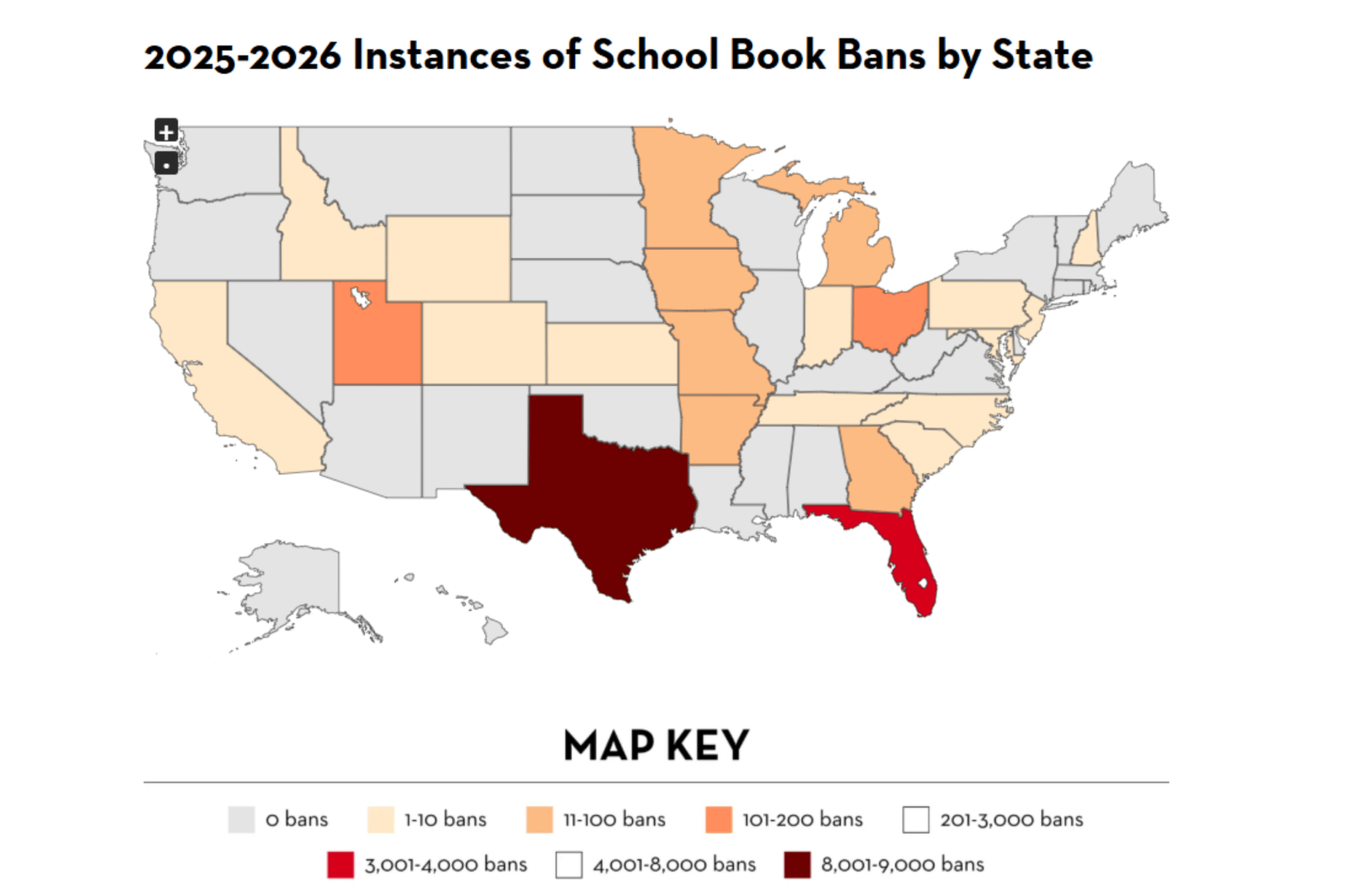
A recent PEN America report states that U.S. public schools removed nearly 12,000 books in the 2025-26 school year, the highest number recorded since 2021. The organization highlights 11,982 banned books, with 7,370 being unique titles. Among the banned were classics like Jane Eyre by Charlotte Brontë and modern works such as Lessons in Chemistry by Bonnie Garmus and the Tokyo Ghoul manga by Sui Ishida.
State-Specific Bans
Texas and Florida topped the list, with Texas recording over 8,000 bans and Florida over 3,000. Advocates for these bans argue for the community’s right to determine age-appropriate content in schools. They focus on removing books with sexual content, graphic images, or mature themes, believing these are matters of suitability rather than restriction of speech.
PEN America’s Concerns
PEN America describes Texas and Florida’s actions as models for educational censorship. They note the collaboration of special-interest groups, laws, and politicians pressuring schools to restrict access to certain books. Over half of the banned books were young-adult novels, with over 80 percent being fiction. A total of 114 school districts imposed bans in the year.
Reasons Behind Bans
PEN America identifies state laws and advocacy group pressure as key factors in the bans. In 72 percent of districts, bans linked directly to state policies. Their reviews reveal a pattern of targeting books featuring LGBTQ+ characters, people of color, and sexually themed content. Manga and graphic novels also face scrutiny, often judged by isolated images rather than their full context.
Famed manga creators, such as Hajime Isayama (Attack on Titan), Atsushi Ohkubo (Fire Force and Soul Eater), and Rumiko Takahashi (InuYasha) have works frequently banned.
AI and Book Censorship
The report also notes an increasing use of AI in book review processes. Some districts use AI to comply with state laws, recommending removals based on prior bans rather than actual content analysis. This could lead to a “snowball effect,” where bans spread due to previous decisions, not independent reviews.
Supporters’ Viewpoint
Those advocating for removals call for processes to evaluate materials deemed sexually explicit or inappropriate. Texas’ SB 13 requires reviews of materials with potentially “indecent” content. However, PEN America argues that removing books limits access to diverse perspectives and knowledge crucial for students.
PEN America stated: “Book bans impede the freedom to read, cutting students’ access to a diversity of views, voices, perspectives, and literature they deserve to encounter.”
The Ongoing Debate
This rise in bans has spurred a nationwide debate on censorship, parental rights, and free expression. Illinois Governor JB Pritzker, a vocal opponent, enacted a law to prevent book bans in libraries, framing it as a defense of free speech. Authors like Margaret Atwood and Judy Blume have expressed concerns, comparing current trends to past censorship efforts.
As book bans in schools peak, the contentious debate over access to diverse literature continues unabated. PEN America and advocacy groups on both sides remain engaged in this evolving discourse on educational freedom.
Leave a Reply