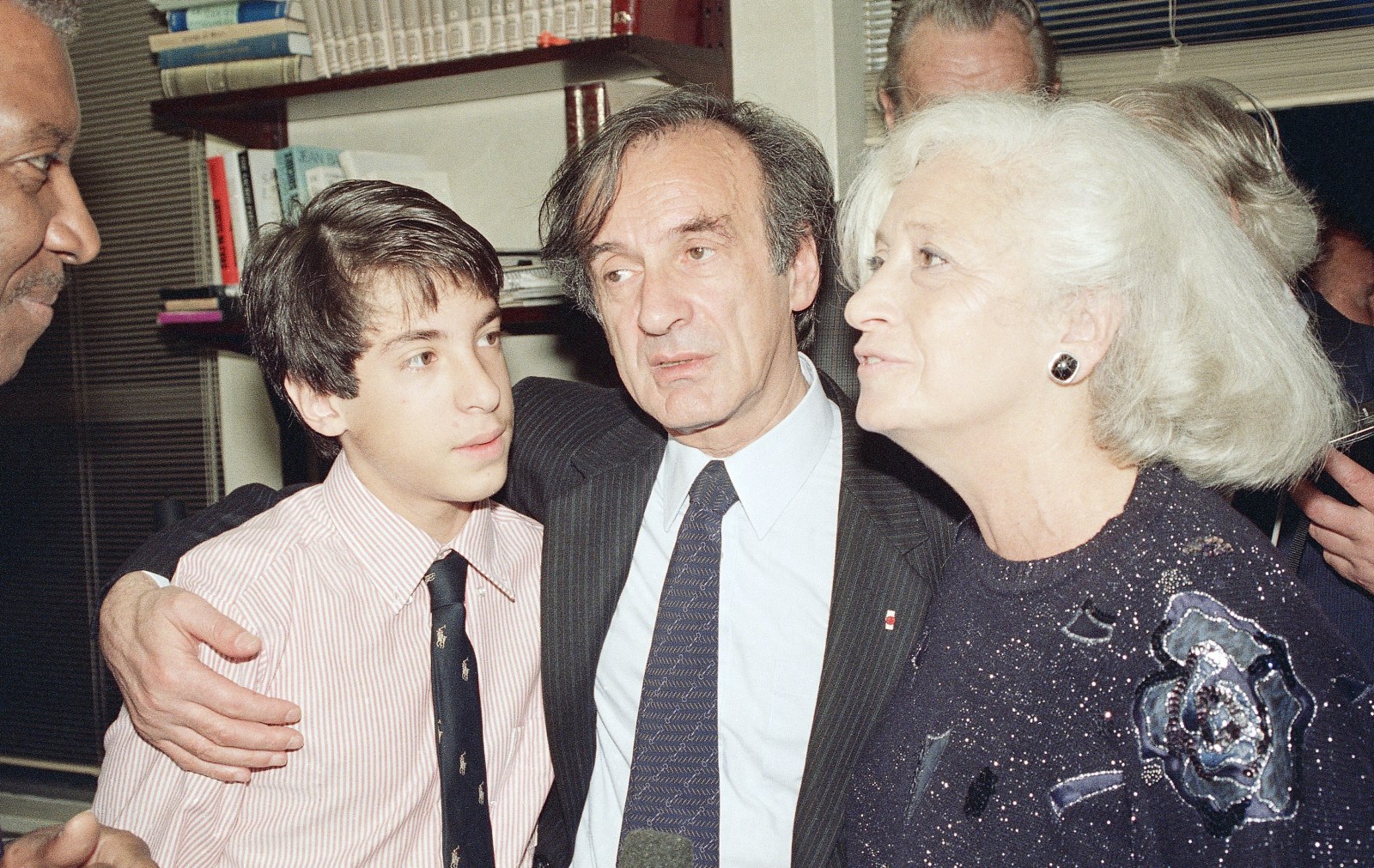
For Elisha Wiesel, the son of Holocaust survivor and Nobel laureate Elie Wiesel, a pivotal date for Jewish life in America is October 8. Speaking to Newsweek, Wiesel explained that this day, rather than October 7, marked a turning point in the perception of antisemitism in the United States. On October 8, he noted, friends and allies of the Jewish community shifted their view from seeing Jews as victims of attack to perceiving them as enemies.
The Context of Recent Antisemitism
Wiesel shared his insights with Newsweek ahead of the 2026 Elie Wiesel Prize in Ethics Awards Ceremony. This annual event challenges young people to consider conscience, responsibility, and moral courage—central themes in Elie Wiesel’s life work. This year’s theme, “Silence, Conscience, and Responsibility,” was timely, according to Elisha. The years following October 7, when Hamas attacked southern Israel, have exposed not only a rise in antisemitism but also a failure by some institutions to recognize the dangers of silence and indifference.
Elisha has spent his life managing his father’s legacy. Elie Wiesel dedicated his efforts to witnessing the Holocaust and warning against unchecked hatred fueled by indifference. Elisha remarked, “My father said antisemitism has never gone away. But I’ve never seen it like this.” He highlights the recent uptick in antisemitic incidents and what he perceives as a breakdown in education systems meant to prevent such resurgence.
Challenges in Holocaust Education
Wiesel expressed concerns about the effectiveness of Holocaust education. “We in the Jewish community went all in with Holocaust education,” he stated, yet the empathy generated has not consistently translated into support for living Jews. This lack of empathy, he argues, underscores the significance of October 8. The aftermath of October 7, characterized by violence against Jews, quickly devolved into suspicion of Israel and Jews.
He referenced accusations against Israel as echoing historical falsehoods. “Our enemies have always spread lies,” he said, citing a 1978 piece by his father about the Jews accused of committing the atrocities faced by them. Now, the portrayal of Jews as genocidal emerges after the conflict, with a Gaza Health Ministry report noting over 74,000 deaths from Israel’s military actions in Gaza.
Jewish Institutions and Identity
Elisha Wiesel called for Jewish institutions to be more assertive. He critiqued organizations centered on Holocaust memory for retreating from the current debate on Israel. Institutions, he argued, need to take clear moral stands against current atrocities just as they have done historically.
His criticism also targets internal challenges within Jewish communities. He believes many Jews are depicted as uniformly white and colonial, which goes unchallenged. Jewish education, he insists, should not conclude with Holocaust museums and books on prejudice. Instead, young Jews should engage with global Jewish communities, understanding that Jewish identities extend beyond America’s racial categories.
Political Affiliation and Jewish Identity
Elisha highlighted the growing political divisions among Jews. He pointed out that political affiliation often precedes Jewish identity, which has been troublesome. “Somewhere between Obama and Trump, it became clear that Republicans supported Israel while Democrats questioned it,” he said, acknowledging former President Joe Biden’s positive stance on Israel during most of his term.
This division becomes evident on college campuses. As Wiesel’s children reach college age, they have encountered environments increasingly inhospitable to Jewish students. He credited the Trump administration for addressing Jewish students’ concerns during this time.
Hope and Resilience
Despite the challenges, Wiesel sees October 7 as a moment that awakened a deeper awareness of Jewish identity. He recalled the frantic calls to family in Israel, highlighting the rationale behind the increased consciousness of Jewish history and identity among his children.
Wiesel concluded with a hope that this wave of antisemitism will strengthen Jewish communities and American society. A new generation of activists, he hopes, will emerge to contribute positively, just as their parents did.
Leave a Reply