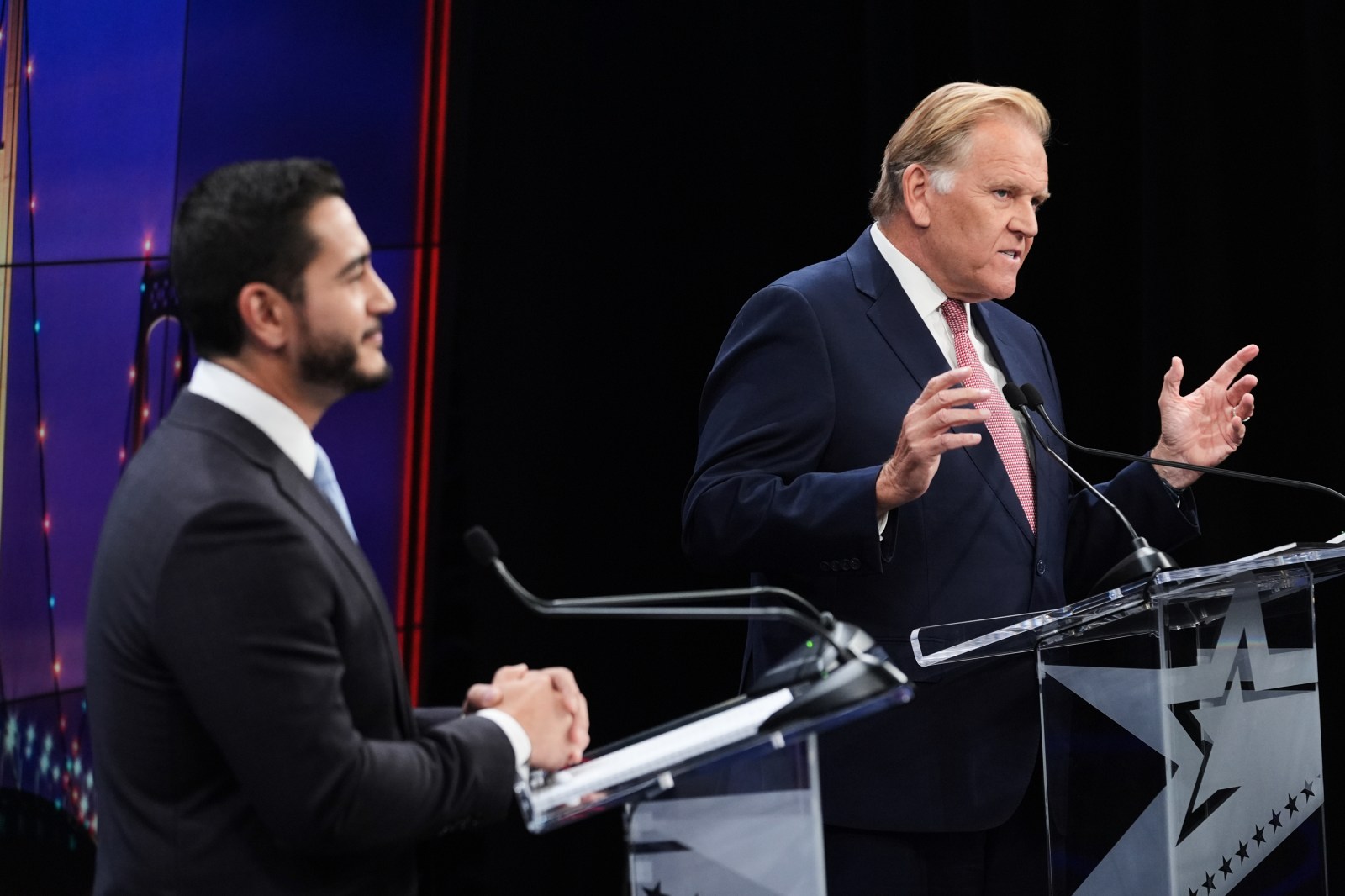
The highly anticipated debate in Michigan’s Senate race between Republican Mike Rogers and Democrat Abdul El-Sayed intensified as the candidates repeatedly interrupted each other. The debate focused on critical issues such as healthcare, tariffs, immigration, Israel, data centers, and the war with Iran. Held in Grand Rapids, this first debate in the general election campaign was hosted by NewsNation and WOOD-TV. Moderator Rick Albin had to intervene several times due to the heated exchanges, remarking that the candidates’ continued arguing during a commercial break was unprecedented in his 30 years of moderating.
The contentious nature of the debate provided Michigan voters with a clear view of the contrasting visions of the candidates. Rogers portrayed El-Sayed as a far-left progressive with policies too costly for Michigan. In contrast, El-Sayed linked Rogers to former President Donald Trump, corporate interests, and foreign engagements. Rogers warned that voters “cannot afford Abdul,” highlighting El-Sayed’s support for Medicare for All. Meanwhile, El-Sayed accused Rogers of flip-flopping on issues and failing to prioritize the state’s economic concerns. This debate was the first of two scheduled before Election Day, taking place in one of the year’s most competitive Senate races.
Debate Highlights
The debate was marked by a lack of detailed policy discussions, instead focusing on campaign attacks. A significant point of contention revolved around Rogers’ change in stance concerning Trump’s trade war with Canada. Moderator Rick Albin questioned Rogers about accusations of reversal, with El-Sayed arguing that Rogers altered his position due to political pressures. Despite this, Rogers insisted on the consistency of his stance, citing discussions with the White House to resolve the issue.
Healthcare was another hot topic. Rogers criticized Medicare for All, asserting, “We cannot afford Abdul.” He claimed El-Sayed supported “death panels.” El-Sayed responded by ensuring families could keep private insurance and emphasized universal health coverage without incurring medical debt.
Personal attacks also permeated the debate. Rogers questioned El-Sayed’s use of the title “doctor,” while El-Sayed criticized Rogers’ financial gains after Congress, raising questions about Rogers’ yacht ownership. Surveillance technology, particularly Flock cameras, sparked another clash, with Rogers citing terrorism watchlists, prompting El-Sayed to challenge this line of discussion.
Rogers and El-Sayed’s exchanges remained tense until the end, with Rogers contesting the expiration of his speaking time. Despite the charged atmosphere, both candidates shook hands before exiting the stage.
Perceptions of the Debate
No official winner emerged, as partisan perspectives inevitably influence voters’ views of the debate. Rogers concentrated on branding El-Sayed as overly liberal, questioning the feasibility of his healthcare and tax plans.
El-Sayed redirected the conversation to the economic issues affecting voters, such as gas prices and healthcare expenses. He emphasized affordability, stating, “My opponent is going to try to make this about him and about me. It’s about whether you can afford your gas, your groceries, and can see a doctor.”
Polling Overview
Polls preceding the debate highlighted a close race, with El-Sayed slightly in the lead. A Quantus Insights poll from October showed El-Sayed ahead by one percentage point. Similarly, a YouGov poll reported El-Sayed’s lead at one point. Other surveys indicated a modest lead for El-Sayed, with Mitchell Research & Communications and Fox News polls suggesting similar margins.
Despite differing margins, most polls indicated either a tie or a single-digit gap, highlighting the race’s significance in the 2026 midterms.
Recent Developments and Significance
In the weeks leading up to the debate, exchanges between the candidates intensified both online and on the campaign trail. The race has become one of the country’s most competitive Senate battles. Rogers, who narrowly lost the 2024 Senate race, aims to break a Republican losing streak in Michigan Senate races dating back to 1994.
El-Sayed, having emerged from a competitive primary, seeks to consolidate party support while appealing to independents and previous Trump voters. Increased involvement from national Democrats, like former President Barack Obama, has bolstered El-Sayed’s campaign. The debate also followed Rogers’ public disagreement with Trump over tariffs, a prominent debate topic.
The candidates navigate distinct challenges: Rogers tries to attract moderates while retaining Republican support without Trump on the ballot, whereas El-Sayed persuades swing-state voters to consider a progressive platform.
The open seat, left by Democratic Senator Gary Peters, heightens Michigan’s importance in the Senate control battle. Republicans hope Rogers can be the first Michigan Senate winner from their party in decades. For Democrats, it’s a test of whether El-Sayed’s policies can resonate enough to hold the seat. A second debate on October 21 will offer another chance for both to convey their programs.
Leave a Reply