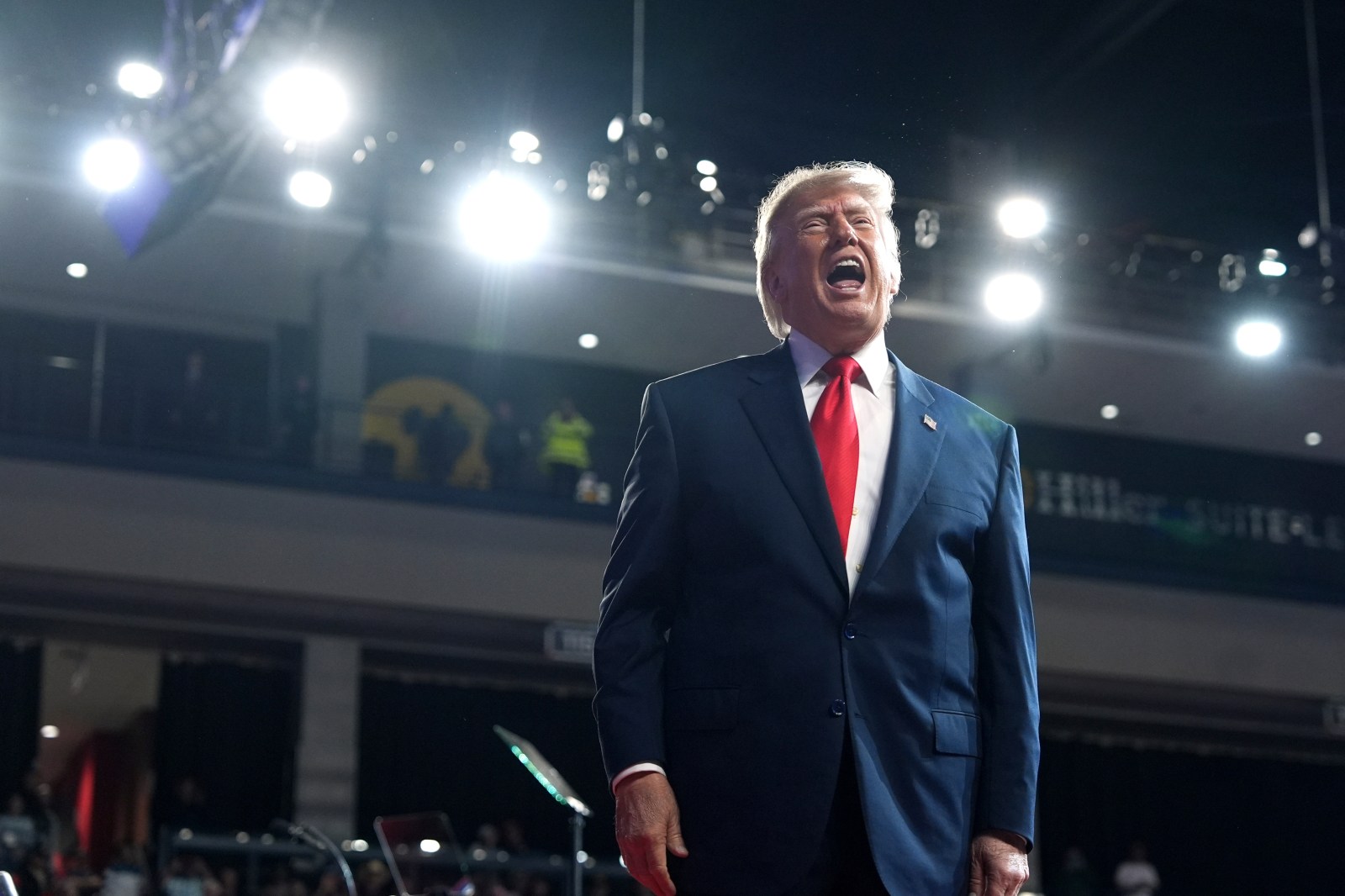
Trump Advocates for $5,000 Checks
President Donald Trump recently reiterated his promise to provide $5,000 checks to adult U.S. citizens. He criticized Democratic economic strategies, suggesting Republican control of Congress would yield direct financial benefits for Americans. In a video shared on Trump’s X account, he asserted, “I’m going to give all adult citizens in the United States of America $5,000.” He blamed Democrat policies for potential tax increases and economic decline.
Trump claimed that a Democratic victory would lead to economic downturn, while Republicans would ensure financial gains. He tied a previous proposal to the upcoming midterm elections, promising checks if Republicans maintain control of the House and Senate. However, no legislation authorizing these payments exists, and no detailed eligibility rules or payment schedule have been provided.
Details of the $5,000 Check Proposal
Trump introduced the $5,000 check initiative at a Republican Party convention in Dallas. He linked the payments to Republican success in both congressional chambers. Although he described the initiative as a dividend, he hasn’t clarified recipient qualifications. Vice President JD Vance indicated potential exclusions for higher-income individuals, but no official income limits have been specified.
CNBC noted that congressional approval is needed for such payments. Trump, though, expressed his administration’s belief that a congressional vote might not be necessary.
Key Highlights and Timeline
- September 9: Trump announced the proposal, conditioned on Republican control.
- September 10: Republican Thomas Massie criticized the proposal, citing potential inflation and electoral concerns.
- October 3: Trump reiterated the promise, again tying it to Republican success.
- October 12: Trump promoted the proposal while warning against Democratic policies.
Bipartisan Opposition to Trump’s Plan
Lawmakers from both parties oppose the proposal. Massie criticized its electoral angle and potential economic impact. Republican David Schweikert pledged to oppose the plan, citing concerns over interest rates. Democrats echoed criticisms, with Robert Garcia dismissing the proposal and Jamie Raskin labeling it a “political bribe.” Some Republicans, like Ohio’s Bernie Moreno, support the idea and plan legislative action.
Economic Concerns Over $5,000 Checks
Economists have raised concerns about costs and inflation impacts. Kent Smetters estimated costs at about $1.35 trillion, potentially reduced under income limits. CNBC calculations estimate similar costs. Spending projections suggest increased inflation, with potential increases in headline and core inflation rates.
Michael Strain and Marc Goldwein warned against inflationary risks and fiscal impacts. Goldwein highlighted the lack of budget surpluses for such expenditures.
Legal and Political Implications
The legality of linking payments to elections raises questions. Some argue it violates vote-buying laws, while others view it as protected political speech. Legal experts have noted that the proposal doesn’t require individual Republican votes, linking payments to overall Republican control.
Trump’s narrative frames the midterms around economic stewardship, complicating GOP messages on government spending. Some Republicans express dissent given the proposal’s size.
Uncertainty Surrounding the Proposal
Currently, the $5,000 checks remain a proposal with no legislative approval or payment schedule. Trump continues to leverage the proposal in his arguments for Republican control ahead of upcoming elections. Critical questions about the financing, effects on inflation, and federal budget impacts remain unresolved.
Leave a Reply