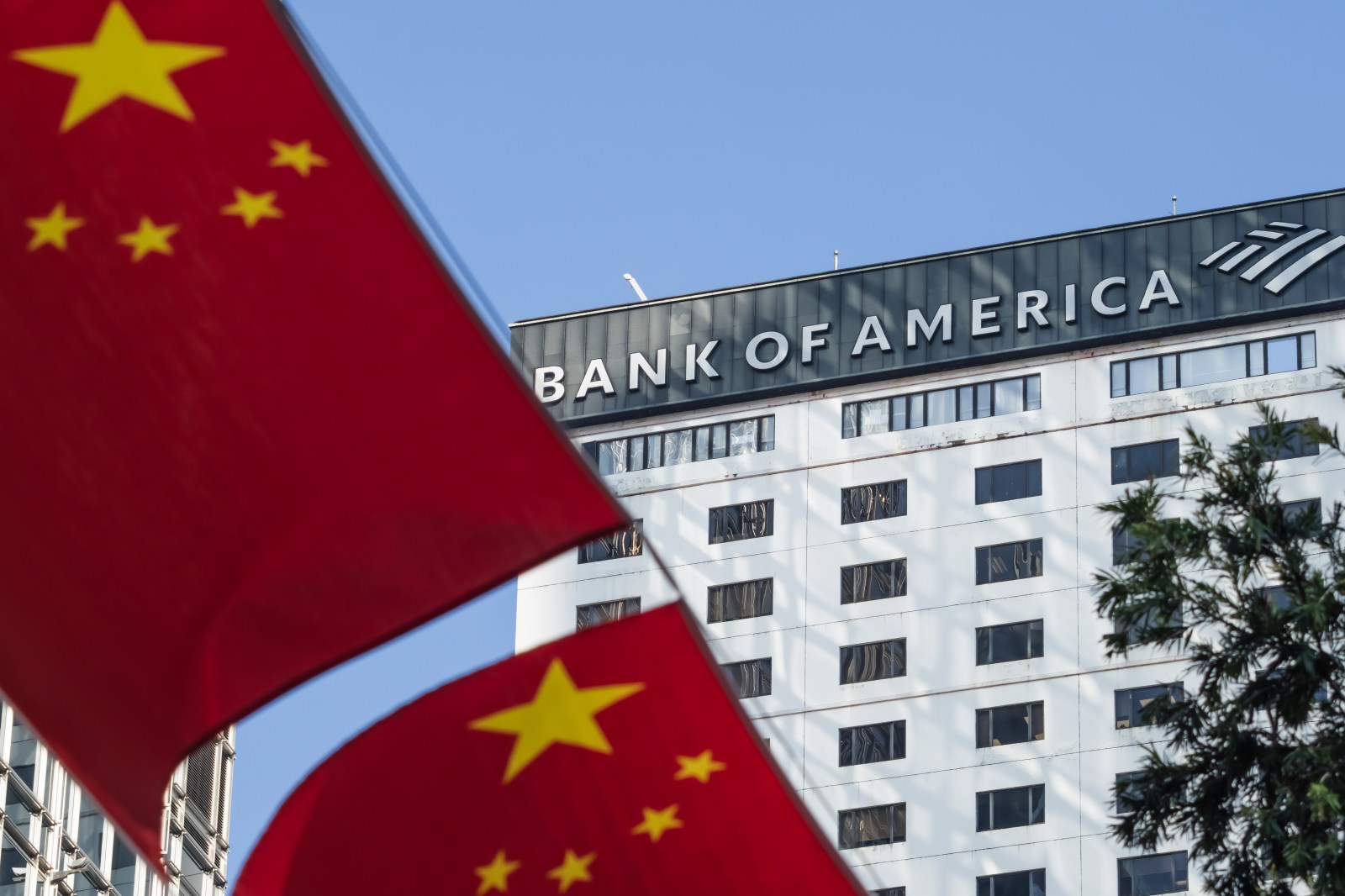
Bank of America received a $1.2 billion penalty from federal regulators due to failing to report suspicious transactions amounting to billions. This settlement ranks among the largest financial enforcement actions by the U.S. Treasury. The Financial Crimes Enforcement Network (FinCEN) announced the penalty as the third-largest in its records. Only Binance and TD Bank faced larger penalties in 2023 and 2024, respectively.
Treasury Secretary Scott Bessent emphasized the broader risks from these failures, stating, “When a bank of this size fails to meet its anti-money laundering and sanctions obligations, the consequences extend far beyond its own walls, exposing the entire U.S. financial system to significant illicit finance risks.” Such findings have highlighted significant financial penalties imposed on banks, some reaching tens of billions.
Details of the Penalty
FinCEN discovered that Bank of America did not report over $5 billion in suspicious transactions. These included activities tied to Chinese money-laundering networks and illicit finances along the U.S.-Mexico border. The bank knowingly violated the Bank Secrecy Act, which mandates financial institutions to safeguard against money laundering and report suspicious actions.
An $11.6 million settlement was also reached with the Office of Foreign Assets Control over apparent sanctions violations involving countries like Iran and Russia. Separately, the Office of the Comptroller of the Currency imposed a $750 million penalty, which will be credited against the $1.2 billion FinCEN fine, not added to it.
Comparative Analysis of Penalties
This $1.2 billion penalty stands out in anti-money-laundering cases, yet it’s smaller than other significant banking settlements with U.S. authorities. Unlike FinCEN penalties, these covered broader financial misconduct including mortgage-related fraud and sanctions violations.
- Bank of America: In August 2014, agreed to a $16.65 billion settlement related to mortgage-backed securities sales before the 2008 crisis, which included $7 billion in consumer relief.
- JPMorgan Chase: A $13 billion settlement in November 2013 due to misleading investors about mortgage-backed securities, including $4 billion in relief for affected homeowners.
- BNP Paribas: In June 2014, paid $8.9 billion for processing transactions on behalf of countries under U.S. sanctions, violating sanctions laws.
- Deutsche Bank: A $7.2 billion settlement in January 2017 over misleading investors regarding residential mortgage-backed securities.
- Citigroup: Reached a $7 billion settlement in July 2014 over its handling of mortgage-backed securities prior to the financial crisis.
Placement Among Treasury Penalties
When compared to FinCEN’s largest penalties, Bank of America’s $1.2 billion fine ranks significantly. The most substantial penalty was against cryptocurrency exchange Binance, which paid $3.4 billion in November 2023. This was part of a broader settlement agreement exceeding $4 billion. Changpeng Zhao, Binance’s founder, admitted to failing to maintain an effective anti-money-laundering program.
The second-largest penalty was against TD Bank, which faced $1.3 billion fines in October 2024. TD Bank admitted widespread failures in its anti-money-laundering controls, paying around $3.1 billion in combined penalties. Bank of America’s penalty now ranks third but wasn’t accompanied by a Justice Department criminal action, unlike the Binance and TD Bank cases.
Response and Future Steps
Bank of America acknowledged its compliance failures, indicating investment in enhanced technology and personnel to address financial crime. The bank will experience ongoing regulatory scrutiny as it implements corrective measures, including an independent review of its anti-money-laundering program.
Concerns remain as prior issues persisted despite a December 2024 enforcement order. The Office of the Comptroller of the Currency pointed out failures such as inadequately trained compliance staff, delays in reporting suspicious activities, and weaknesses in detection systems for illicit transactions.
This settlement showcases the magnitude of financial penalties regulators impose when large institutions fail legally. It also raises concerns about the deterrence capability of billion-dollar fines for misconduct at major financial institutions.
Leave a Reply