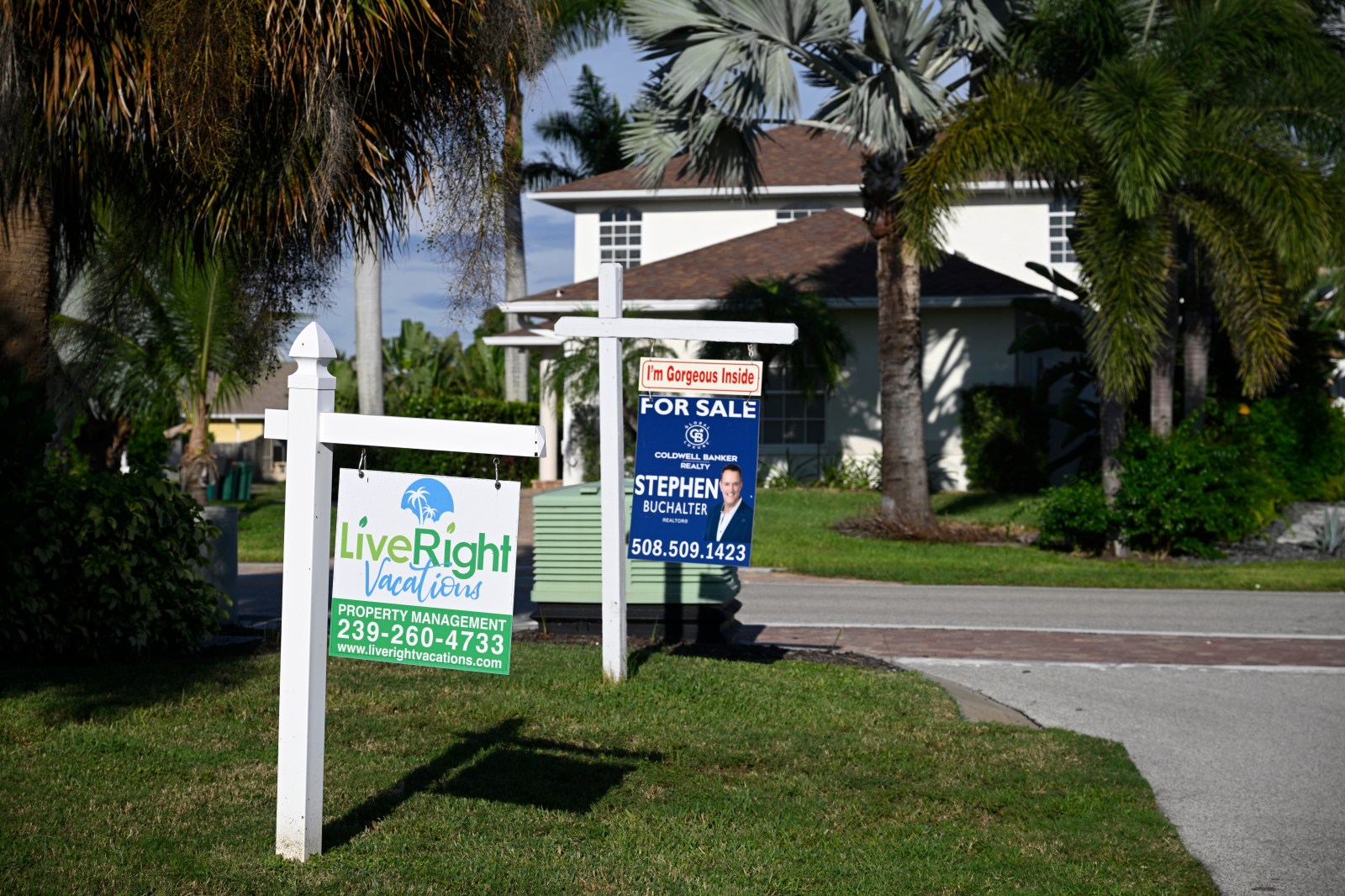
The U.S. housing market has seen a significant shift, with sellers outnumbering homebuyers by 63 percent, according to recent data. Rising mortgage rates and economic concerns have driven many potential buyers away. The number of buyers last month reached its lowest since Redfin, a real estate brokerage, began tracking data in 2013. The count fell to approximately 928,892, a decrease of 2.4 percent from the previous month. Conversely, the number of sellers reached a peak not seen since March 2020, when low borrowing costs spurred a buying frenzy. In September, over 1.5 million sellers emerged in the U.S. housing market, marking a 1.2 percent increase month-over-month.
The current disparity between buyers and sellers is the largest since the post-recession housing crash, highlighting the challenges for U.S. buyers. Despite these challenges, Americans are in better financial positions compared to the 2008 crash. Factors beyond the pandemic are influencing the market. A surplus of sellers appeared as summer ended, riding on the wave of climbing mortgage rates and inflation, driven by rising gasoline and diesel prices. In August, the seller-buyer gap stood at 56.9 percent, growing nearly 6 percent by the next month.
Reasons Buyers Withdraw
At the close of last year, experts anticipated lower mortgage rates through 2026 to enhance housing affordability. Until late February, rates decreased gradually. However, after joint strikes by the U.S. and Israel in Iran, the average 30-year fixed-rate mortgage hit 5.98 percent. Economic instability fears and growing U.S. inflation, caused by global oil market disruptions, led to an increase in mortgage rates. The Federal Reserve’s interest rate hike for the first time in three years last month added to this upward trend.
By October 8th, the 30-year fixed-rate mortgage reached an average of 7.4 percent, rising from 6.30 percent a year earlier.
Impact of the Gap on Buyers
For those still in the buying market, conditions could be favorable. Forty-one of the 50 largest metropolitan areas are now buyer’s markets, where prospective buyers have leverage in negotiations. Redfin categorizes a buyer’s market where sellers exceed buyers by 10 percent. Asad Khan, a senior economist at Redfin, noted that buyers have significant negotiating powers, as many potential buyers are deterred by pricing or economic worries. Those who can afford a purchase possess a unique opportunity to be selective and negotiate favorable deals. The irony lies in these favorable supply conditions arriving amid high costs that limit affordability for many.
Areas with the Biggest Advantage for Buyers
Miami experienced the largest seller-buyer gap, with buyers surpassing sellers by 158.9 percent. In Miami, 26.9 percent of listings reduced their prices last month. The median sale price rose 4.8 percent from a year before, reaching $649,691. Nashville followed, with a surplus of 152.3 percent, where 38.3 percent of homes saw price cuts, and the median home price decreased by 1.1 percent year-over-year to $464,779. Houston had a 134.6 percent gap, with 35.8 percent of homes experiencing price cuts and a median price of $341,837, down 2.3 percent from the previous year.
These cities, along with others like them, share a commonality: they are in the Sun Belt. Here, new housing constructed since the pandemic caused a market overflow. Domestic migration slowed significantly, with many unable to move due to workplace return orders. Many locals were priced out by rising home values, taxes, association fees, and insurance premiums, leading to accumulating inventory.
Seller Markets
Boston, Chicago, New Brunswick, and Providence are balanced markets. Meanwhile, five populous U.S. metros are seller’s markets: Nassau County, Montgomery County, Newark, Milwaukee, and San Francisco. These areas have maintained low inventory through limited home construction against constant demand.
San Francisco stands out due to the AI boom, driving home sales. The market dynamics reflect a mix of economic forces, pandemic effects, and regional differences.
Leave a Reply