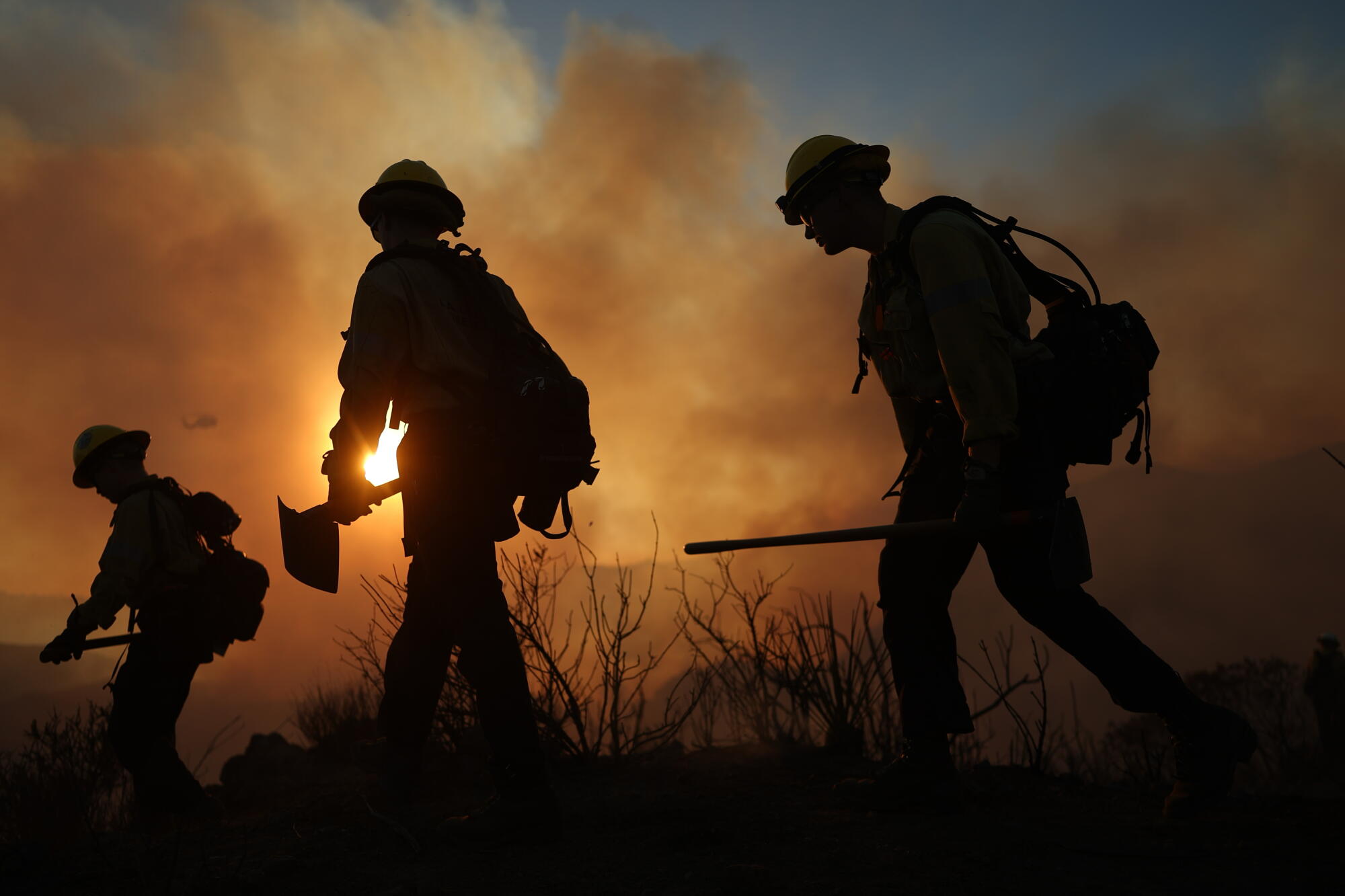
Early Thursday morning, Malibu High School students speculated about potential school cancellations. Parents heard their children’s hopeful predictions, fueled more by desire than information. Questions arose about power outages and fires.
By afternoon, the Santa Ana winds intensified. Malibuians felt the gusts battering their homes. Southern California Edison cut power across town, plunging many into darkness. Around 5 p.m., Watch Duty notifications buzzed with a stark alert: a fire had ignited on the mountains’ other side. Winds drove it towards the coast.
At the Trancas Country Market parking lot, Local Brigade volunteers gathered, awaiting orders from the L.A. County Fire Department. A column of smoke, tinted red by the setting sun, emerged over the hills. Malibu, a town marked by residents who have survived fires, experienced a familiar sense of anticipation.
Here we go again.
By Friday morning, it was evident the Bryson fire would not become another Woolsey or Palisades disaster. Yet, it triggered deep emotions. Many residents, seasoned by past traumas, turned to personal practices for solace. They meditated, swam in the ocean, or joined support groups. The constant threat of loss exhausted even the most resilient among them.
Kim Devane, who lost her home in the 2018 Woolsey fire and properties in the 2025 Palisades fire, expressed the burden of starting over. “It took me six years to rebuild … doing that again is unthinkable,” she said while pacing the country market lot with her dog, Dino.
Others shared their stories at the market, with many thanking local and private firefighters. Despite the chaotic weather, tales of community unity emerged. Residents offered each other support, food, and shelter in camper vans, as generators hummed across the pavement.
Forrest Stewart, with decades of Malibu fires behind him, partnered with his 93-year-old retired fire chief neighbor to educate newer, wealthier families. His teachings included fundamental safety practices for preserving life and property.
Meanwhile, Stewart’s friend, Karly Sierka, recounted the emotional toll of losing her childhood home. Her memories were laden with images of burned childhood mementos and displaced wildlife.
Nearby, Keiren Clasby and Cheri Caleb from Malibu Fig Ranch highlighted the “unraveling” of trauma through collective dialogue. The ranch hosted community dinners after the Palisades fire to comfort those who suffered similar losses. Survivors from Woolsey offered insight and support.
Clasby shared a poignant story of a woman who lost everything to fire—a home, a livelihood, even pets. Her trauma led her away from Malibu, illustrating the heavy emotional toll fires take.
Home hardening and defensible space emerged as critical practices in fire preparation. Residents cover vents, secure homes, and clear combustible materials. However, these measures merely reduce risk without eliminating it.
Many in Malibu understood that staying offers the only true protection. Devane noted the necessity of being physically present to ensure home survival.
Stewart prepared his property by leaving ladders accessible for neighbors to extinguish roof ember fires. Sierka credited vigilant neighbors for saving her home during the Woolsey fire.
This approach posed risks. Fire officials condemned staying behind, emphasizing its dangers and the strain on responder resources. Yet, it remained prevalent in Malibu, a deeply ingrained practice in their community fabric.
Keegan Gibbs, co-founder of the Local Brigade, reflected on Malibu’s local brigade program, formalized by L.A. County in 2023. Volunteers pledged obedience to fire officials, assisting evacuations and spot fire control.
Gibbs found his peace through this active community involvement. The work with the brigade offers peace. It grants residents a measure of control over their fate, despite inevitable fires,
he stated.
A heli-tanker continued water drops over the Bryson fire, aiding ground crews as they tackled hot spots, participating in the ongoing battle to protect Malibu.
Leave a Reply