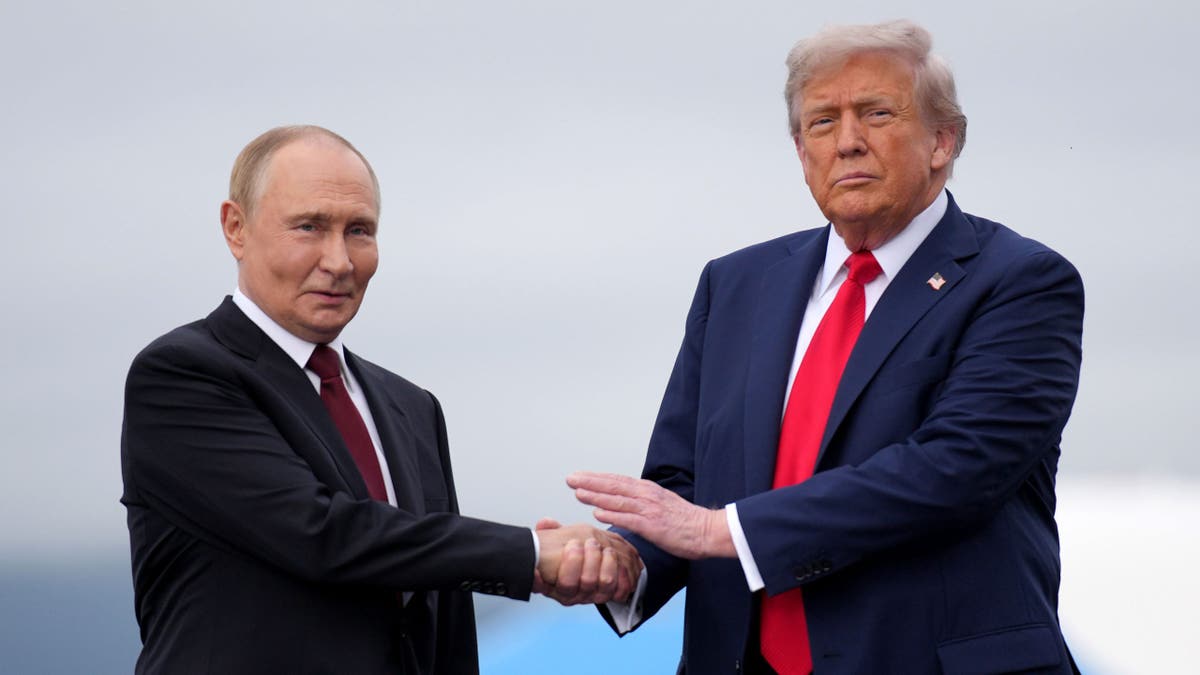
President Donald Trump’s decision to ease certain economic pressures on Russia aims to bring President Vladimir Putin closer to a peace agreement. This strategy challenges whether economic incentives can influence Moscow where years of sanctions have not succeeded.
A significant move involves temporarily easing restrictions on Russian diesel, a decision met with criticism from Republicans in Congress. There is skepticism concerning whether this action will effectively reduce diesel prices for Americans. Despite the policy shift, Russia has shown minimal public concessions.
Six Republicans joined Democrats this week in urging reversal of the decision, while a bipartisan letter from five House members opposed the Treasury authorization.
This resistance arises as Washington prepares for an October 18, 2026 deadline to implement a comprehensive new sanctions law. This crucial legislation, approved overwhelmingly by Congress, seeks to increase economic pressure on Russia.
The Trump administration maintains that reintroducing Russian diesel to global markets will help lower prices for American consumers and showcase the economic benefits Russia may achieve through better relations with the United States. Trump defended the agreement, emphasizing that the Russian fuel, even if not directly reaching the U.S., could still benefit American consumers by boosting the overall diesel supply.
Energy analysts, however, doubt the impact of these volumes on prices. Russia continues its strikes on Ukrainian energy infrastructure despite Trump announcing an immediate energy ceasefire.
John Hardie, deputy director of the Russia Program at the Foundation for Defense of Democracies, commented that the diesel deal might be more sensible if part of a reciprocal agreement. This would involve Moscow and Kyiv ceasing attacks on each other’s energy infrastructure.
Hardie noted, “The Ukrainians could tolerate it if it were part of a mutual energy truce.” Yet, he criticized Trump for pushing Ukraine to stop its refinery strikes without achieving similar restraint from Putin.
Trump announced the diesel agreement following a call with Putin, ensuring over 300,000 metric tons of diesel for the global market, with more to follow depending on the condition of Russian refineries.
General License 135 was issued, temporarily authorizing dealings involving Russian-origin diesel through April 2027.
Meanwhile, Ukraine resumed attacks on Russian oil infrastructure due to Moscow’s failure to uphold the energy ceasefire. Russian attacks on Ukraine’s energy system have intensified, leaving many Ukrainians without power as winter approaches.
Trump envoys engaged in talks with Ukrainian officials to revitalize peace negotiations. While these discussions aim to signal openness to further engagement, analysts remain skeptical about Russia’s capacity to provide significant new diesel supplies.
Masha Kotkin from the Center for Strategic and International Studies stated, “The amount of diesel Russia can provide is negligible in the face of global demand,” arguing it might not significantly affect U.S. diesel prices.
Sergey Vakulenko, a senior fellow at the Carnegie Russia Eurasia Center, indicated that sanctions relief could benefit Russian exporters but cautioned against viewing the deal as significant new revenue for Moscow.
Vakulenko explained, “The sanctions relief might provide Russian exporters with better terms and lower shipping costs, equating to tens of millions of dollars monthly.” He added that Ukraine’s strikes have hindered Russia’s supply capabilities.
Hardie emphasized that signs of division between the U.S. and Ukraine could embolden Putin to intensify military pressure.
Previously, the administration presented sanctions relief as incentive benefits that Russia could unlock through negotiations.
Hardie warned that offering such benefits too soon might weaken the potential for a negotiated settlement, suggesting it could lead Putin to persist in demanding more.
Congress is moving in contrast to the administration’s stance. Six Republican senators joined Democrats calling on Trump to rescind the diesel deal, arguing it would not significantly impact energy costs.
A bipartisan group of 22 House members petitioned Trump to revoke the diesel authorization and enforce the new sanctions law.
The White House maintains its position, advocating for reduced costs for Americans while pursuing peace talks.
Hardie questioned the efficacy of economic incentives, proposing that Putin’s motivations are rooted deeper in legacy and grievances than in economic considerations.
“Putin is motivated more by Ukraine and his legacy than Russia’s GDP or well-being,” Hardie suggested.
The diesel agreement tests Trump’s leverage strategy, positing whether the promise of economic benefits can lead Putin toward peace or if easing pressure could encourage Moscow to demand more.
Leave a Reply