America stands at a pivotal point in its technological journey. Future progress may hinge on political decisions in upcoming elections. Speaking in September at the White House, Elon Musk projected that artificial intelligence (AI) and advanced robotics could lead to an ‘age of abundance,’ providing better medical care than even the wealthiest individuals have today.
Trump’s Vision of a Technological Golden Age
The Trump administration has positioned American leadership in AI as a key economic focus. Through initiatives like the AI Action Plan and executive orders, efforts are aimed at removing regulatory hurdles, building data centers, and expanding energy infrastructure to support an AI boom. Treasury Secretary Scott Bessent has emphasized that AI and automation could revitalize U.S. manufacturing by making it economically viable again.
Imagine a future where robotics enhances domestic manufacturing competitiveness, AI drives medical advancements, and innovation spurs economic prosperity. Yet, there are important questions about how society might adapt to these changes.
Opposition from the Far Left
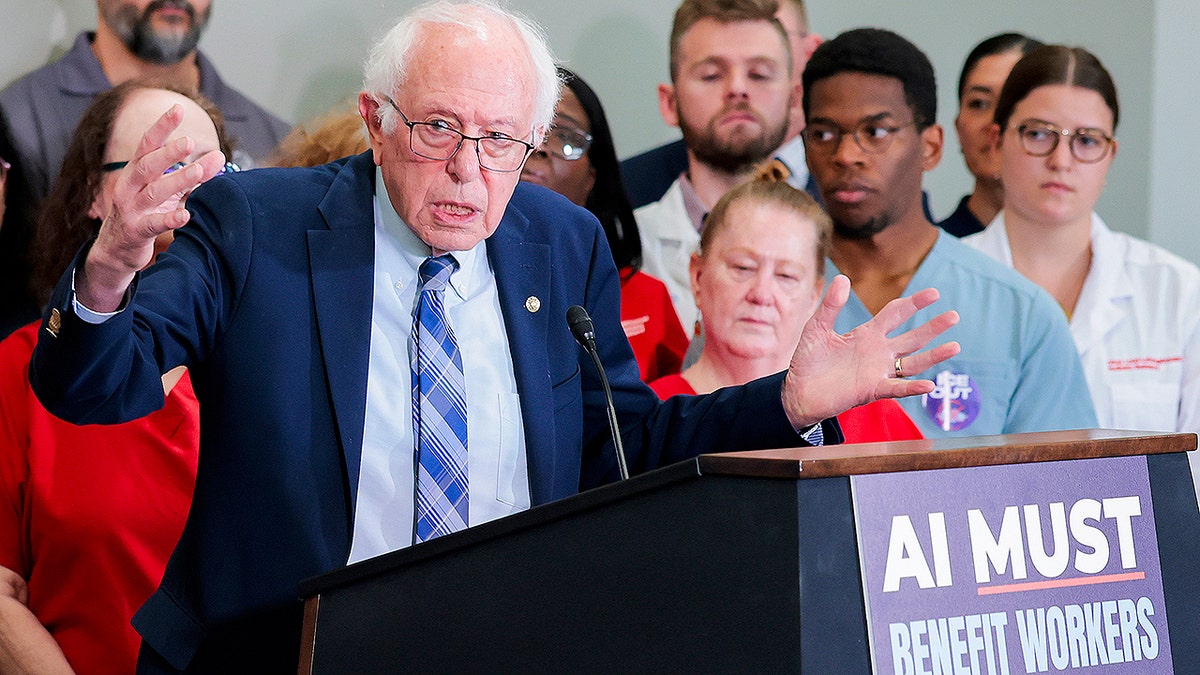
While the Trump administration pushes for technological advances, figures like Senator Bernie Sanders advocate for a different approach. In March, Sanders, along with Rep. Alexandria Ocasio-Cortez, proposed halting new data center construction until appropriate regulations are in place. This stance has spread among Democratic Socialists of America (DSA) members, many of whom support similar measures at local levels.
Sanders has also introduced legislation called the American AI Sovereign Wealth Fund Act, aiming to nationalize half of the AI industry and establish federal oversight of company decisions. His latest proposal seeks to ban the development of artificial superintelligence, potentially resulting in prison terms for research violations.
Implications of Resisting Technological Growth
The AI revolution presents genuine challenges, including job displacement and privacy concerns, but stifling innovation has its own risks. AI in drug discovery could yield treatments for diseases like cancer and Alzheimer’s. In robotics and logistics, AI could boost manufacturing, agriculture, and independent living for elderly and disabled individuals.
The DSA’s restrictive proposals may hinder these potential benefits. While Sanders argues for safeguarding average Americans’ interests, his strategies might impede the innovations that could drive societal prosperity.
The Global AI Race
America’s geopolitical standing could also be impacted by the far left’s vision. Like the U.S., China aggressively pursues AI advancements. The 2026 Stanford University AI Index shows the gap between American and Chinese AI models has narrowed significantly. Sanders’ proposals could result in China gaining an edge in AI leadership, jeopardizing America’s economic and global influence.
At the same White House meeting, President Trump highlighted this risk, warning that Chinese President Xi Jinping might take advantage of any American hesitance in AI development.
The potential for increased prosperity through the AI revolution is significant. It would be a significant misstep for America to miss out due to political fears of progress, especially with geopolitical competitors moving forward rapidly.
Donald Kendal serves as the director of the Emerging Issues Center at The Heartland Institute.
Leave a Reply