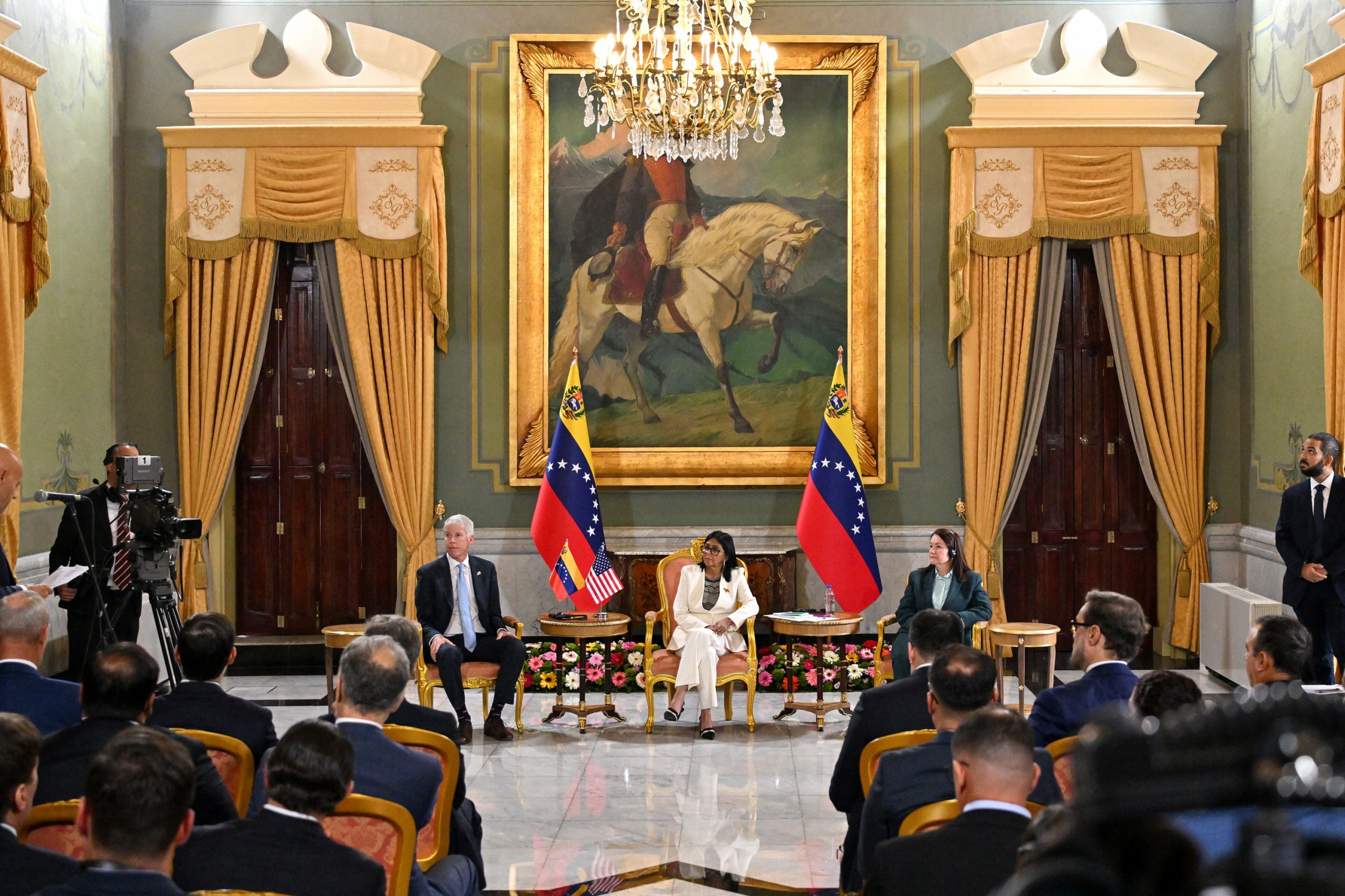
In August, former President Donald Trump announced what he called the “biggest oil deal in world history.” This agreement grants the United States significant access to Venezuela’s oil reserves. ProPublica obtained a copy of the deal’s 18-page strategic partnership agreement, signed by Secretary of State Marco Rubio and Defense Secretary Pete Hegseth for the U.S. government.
Corporate Firewall
The agreement is designed to prevent future changes by U.S. presidents and Venezuelan leaders, ensuring that the terms benefit a small group of individuals chosen by the Trump administration to control and profit from the deal. The Venezuelan government’s role and benefits to its people are not emphasized.
Investors and Transparency Concerns
The Trump administration’s partner is Alejandro Betancourt, a Venezuelan oligarch with a controversial background. Under the agreement, the U.S. takes a 35% stake in Betancourt’s firm, North American Blue Energy Partners (NABEP), through a Barbados-based parent company. This allows certain investors to remain anonymous, raising concerns about transparency and hidden wealth.
A spokesperson for NABEP, Terry Wade, defended Betancourt, claiming he and his associate Orlando Alvarado have never been charged with crimes. The criticism focuses on the choice of Betancourt and the potential lack of legal obligations for NABEP to pay Venezuela substantial royalties and taxes.
Long-Term Oil Production
The company must produce enough oil to become a significant source for the U.S., currently producing about 200,000 barrels per day. NABEP aims to increase production to 500,000 barrels daily by 2028. While the U.S. has priority to purchase this oil, the operational terms may conflict with Venezuelan laws limiting oil concessions to 25 years.
Legal and Governance Structure
The agreement grants the U.S. a heavily discounted rate on some of NABEP’s oil. It also assigns a U.S.-dominated board to govern the company, granting the U.S. more control. Required anti-money laundering controls and external audits fall under U.S. jurisdiction, with disputes settled in U.S. courts rather than Venezuelan.
NABEP’s unspecific internal measures, coupled with high projected returns for the U.S., create skepticism, especially regarding Betancourt’s legal history. Senate Democrats have voiced concerns and questioned the deal’s transparency and legality.
A Controversial Choice
Former diplomats and analysts criticize the choice of Betancourt due to his controversial background and lack of expertise in oil production. Betancourt is seen as leveraging connections rather than technical know-how, complicating U.S. foreign oil strategies.
The legal constraints European authorities imposed on Betancourt due to investigations add another layer of controversy. Senior Trump administration officials reportedly intervened to ease these restrictions, facilitating Betancourt’s participation in the deal.
Future Implications and Criticism
The agreement with Betancourt seeks to restore U.S. access to Venezuela’s oil while bypassing international oil giants. The U.S. government utilizes the Pentagon’s Office of Strategic Capital to potentially engage in this foreign investment, raising legal questions due to U.S. sanctions on Venezuela.
In the view of some analysts, the oil deal is likely to face scrutiny within the U.S. and Venezuela, especially if there are shifts in the U.S. political landscape. The deal’s long-term benefits for both countries and the ethical ramifications for private parties are points of contention.
Leave a Reply