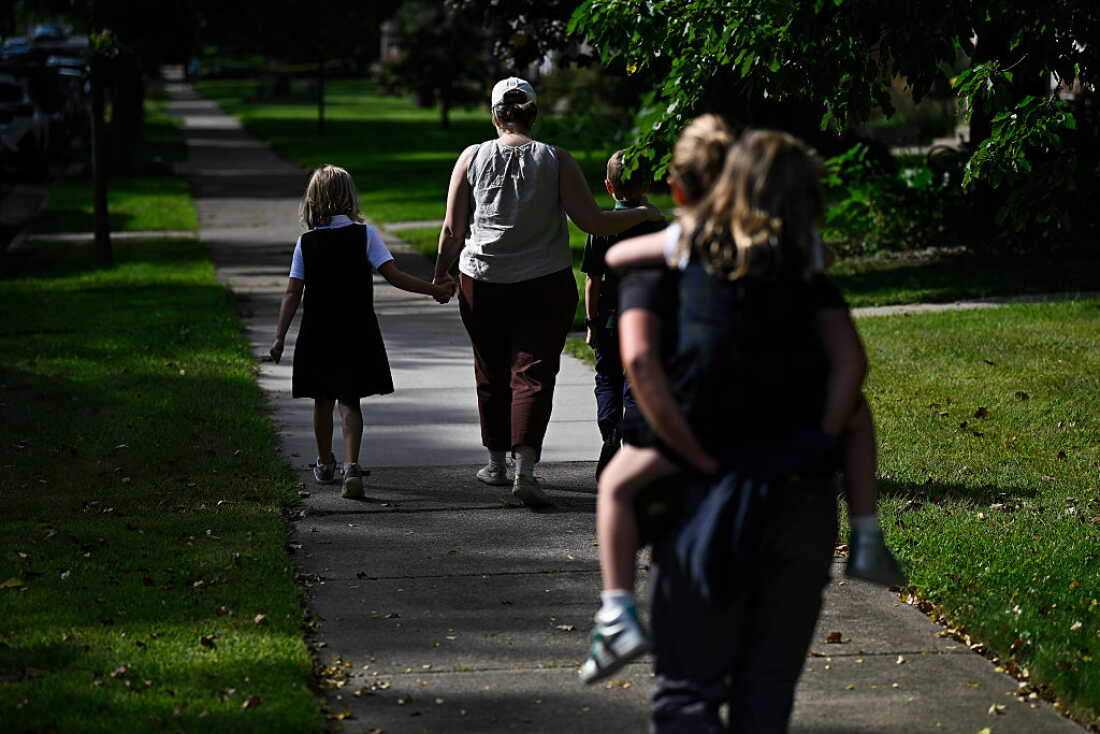
Families left Annunciation Catholic School in Minneapolis after a mass shooting occurred on August 27. Such events raise anxiety and fear among parents and children.
Despite reassurances, the reality is these incidents can happen anywhere, including schools, as noted by the American Academy of Pediatrics. For instance, CNN reported 44 school shootings occurred this year alone, while The Washington Post documented over 400 since the Columbine tragedy in 1999.
Engaging Children in Conversation
David Schonfeld, a pediatrician with the National Center for School Crisis and Bereavement, advises parents to understand what their children know before offering reassurance. Listening to children’s concerns is crucial.
His organization provides guidelines for communicating in the wake of such tragedies. Honest answers to questions about responsibility and prevention are key. Though schools are generally safe, the potential for danger exists.
A child’s response may vary based on age, personal trauma history, or connection to those affected. Victims being peers can heighten emotional impact. Patience and repeated conversations help children process these events, suggests Melissa Brymer from the UCLA-Duke University National Center for Child Traumatic Stress.
Maintaining Routines
The American School Counselor Association stresses the importance of routines. Even with anxiety, continuing daily activities can provide security.
Limiting media exposure is also recommended. Repeated viewing without new information can be detrimental.
Strategies for Coping
Parents should discuss coping mechanisms with their children post-tragedy. Books like Once I Was Very Very Scared by Chandra Ghosh Ippen aids in discussing fear. It portrays animals experiencing fear, each finding unique coping methods.
For older children, channeling emotions into action is beneficial. Schonfeld notes that anger towards individuals doesn’t resolve grief. Instead, involvement in anti-gun violence initiatives, like those by Parkland students, can foster positive change.
The involvement of both children and adults in finding solutions is vital.
Continuing the Dialogue
Schonfeld emphasizes ongoing conversations with children about difficult topics. Doing so prepares parents for future discussions and encourages children to share concerns.
Uncertainty persists, but engaging in open dialogue is a constant requirement.
Leave a Reply