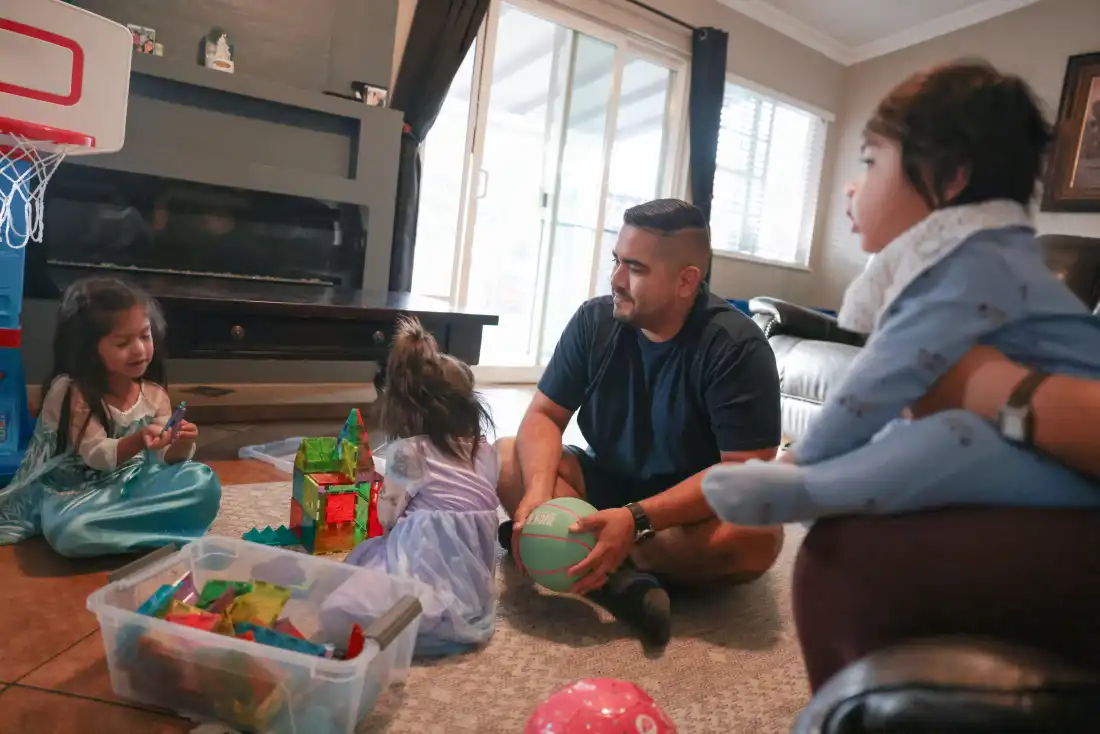
Karlo Campana enjoys playing Magnatiles with his daughters Gianna and Giselle while his young son Gianluca observes. Campana is among the increasing number of men in California making use of the state’s paid bonding leave program.
Usually surrounded by his three children under four, Campana finds himself engaged in activities like mini-basketball games with his daughters at their Southern California home while his son looks on. After his son’s birth in May, he took paid leave, continuing a practice he began with his daughters. This type of leave, distinct from maternity or disability leave intended for physical recovery after childbirth, is crucial for families to adjust without the burden of financial loss.
Campana, employed at an ad agency, valued this time to focus on family without work concerns. His wife benefits from the shared responsibility, easing feelings of isolation.
Although he jokes about mastering diaper changes after child number three, Campana cherishes the messy aspects of parenting. “These moments highlight the essence of parenthood,” he reflects.
Fathers participating in paid bonding leave reflect a cultural shift, with recent figures showing men filing about half of bonding applications in California. In specific states like Colorado and Washington, men now surpass women in these claims.
The trend coincides with government encouragement for increased birth rates, facing the challenge of affordability in raising children. Although there’s no national paid parental leave mandate, California is among 14 states with such programs. Participation by fathers is rising.
Molly Weston Williamson from Paid Leave for All acknowledges evolving gender roles and advocacy for paternity leave. California offers up to eight weeks of paid bonding leave within a year, on top of postpartum disability leave for mothers.
“Be present. Be there for your kids,” Campana advocates, learning from his father’s experience juggling multiple jobs.
Besides bonding, paternity leave improves health outcomes, reducing chances of postpartum depression and infant mortality.
California’s program, funded by payroll deductions, reflects broader societal changes. Williamson notes increased awareness and recent benefit enhancements as contributing factors.
California’s leave benefit can cover up to 90% of a worker’s salary, making it feasible for more families. Yet, further data is needed to fully comprehend these dynamics, such as eligibility differences and private leave offerings.
Economic pressures persist, as shown in the American Family Survey, with a significant portion of Americans finding child-rearing increasingly unaffordable. Initiatives aim to make family planning less financially daunting.
The Pew Research Center indicates a strong desire for paid leave among working parents, though availability remains limited.
This article is part of NPR’s collaboration with LAist and KFF Health News, focusing on health reporting.
Leave a Reply