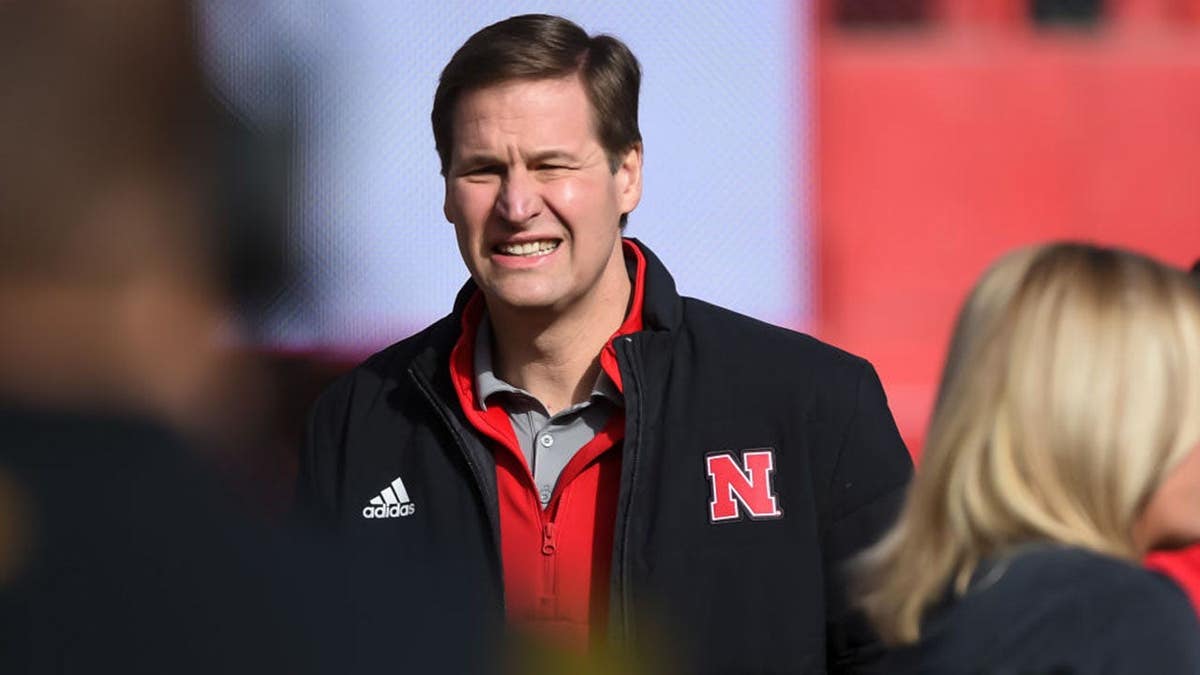
The Michigan athletic department confronts a significant issue with the appointment process of Trev Alberts as their new athletic director. This challenge could prove costly, influenced by the vetting process tied to Alberts’ controversial past.
Last week, Trev Alberts, previously the athletic director at Texas A&M, announced his departure to join Michigan. This decision was unexpected as Michigan’s President, C. Cybele Raver, worked closely with the Board of Regents to conduct the search for a new leader.
The situation took a turn with a disclosed report revealing potential issues linked to Alberts’ tenure as Nebraska’s athletic director. Allegations surfaced about his handling of a civil rights complaint filed in 2024 by a Nebraska women’s basketball player, claiming Alberts urged her departure without investigating a relationship with a coach.
Anxieties grow as Michigan stakeholders learn of Alberts’ deposition responses, where he expressed uncertainty about Nebraska’s policies on consensual relationships under their handbook. Alberts also acknowledged his limited knowledge on this matter during his time at Texas A&M.
Despite this contention, Trev Alberts stated he felt comprehensively vetted by Michigan, emphasizing communication between Michigan’s General Counsel and their counterparts at Texas A&M and Nebraska. He affirmed his compliance with university policies, highlighting his dedicated record supporting student-athletes.
The University of Michigan, amidst Sherrone Moore’s previous scandal, remains wary. Moore’s dismissal over a policy violation regarding relationships casts a shadow, intensifying scrutiny on Alberts’ past actions. The Board of Regents, in an urgent session, considered the implications of proceeding with Alberts.
The legal framework of Alberts’ Memorandum of Understanding (MOU) with Michigan becomes crucial. While Alberts’ legal team argues lack of conditional language on background checks, Michigan asserts a potential clause for withdrawal without financial obligations. The MOU specifies a binding contract upon execution, potentially complicating resolution.
Further complicating matters, Alberts owes around $4 million to Texas A&M, which Michigan agreed to settle. Now, negotiations intensify as both parties grapple with the interpretation of the MOU and the financial consequences.
This incident underscores Michigan’s ongoing public relations and policy challenges within its athletics department. As Texas A&M seeks a new director, Michigan faces the daunting task of managing its complicated recruitment saga. Such complexities remind observers of the unpredictable nature of college athletics leadership.
Leave a Reply