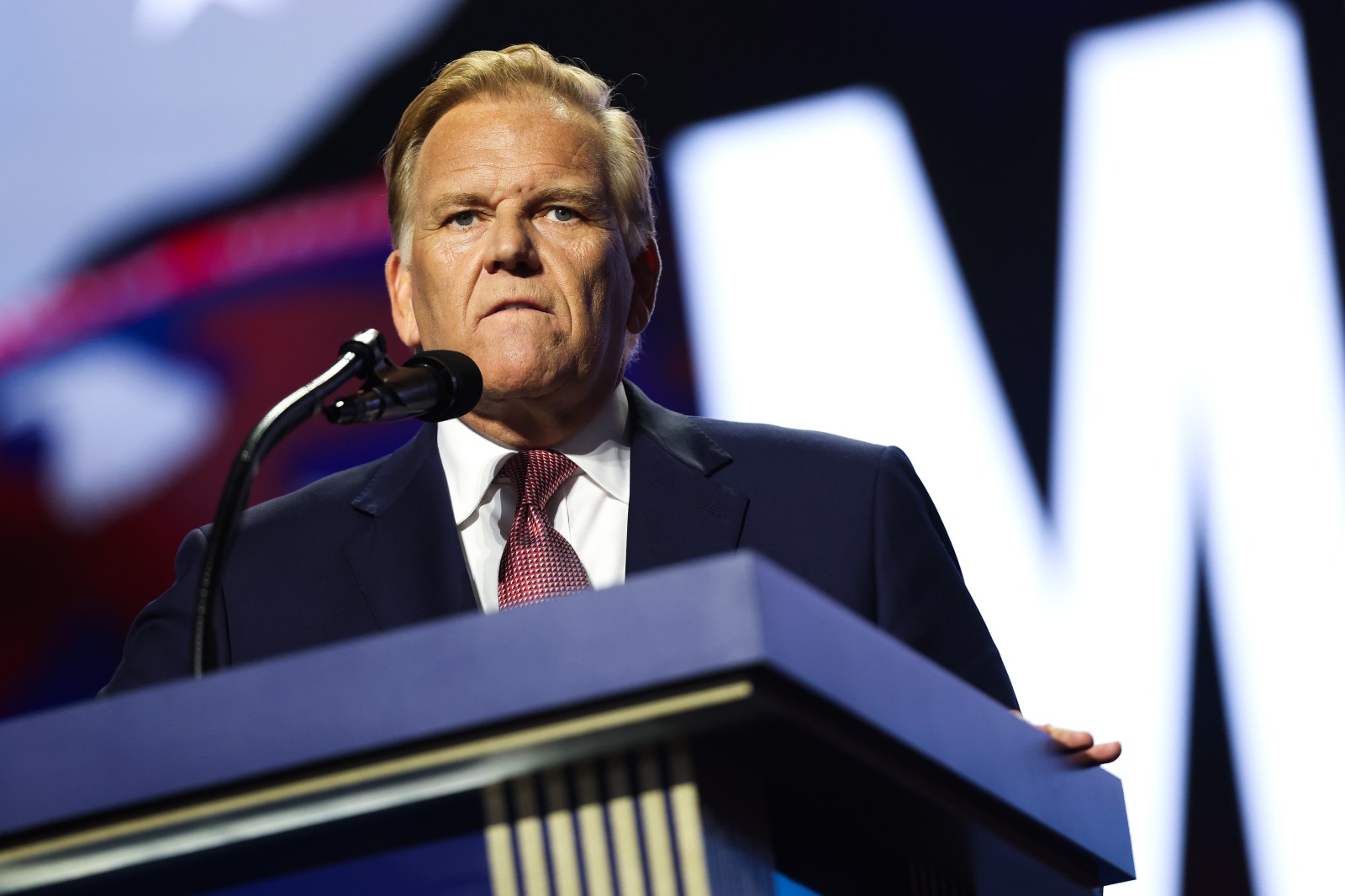
Republican Senate candidate Mike Rogers is under scrutiny for his past openness to dialogue with the Muslim Brotherhood. This comes as he intensifies attacks on his Democratic opponent, Abdul El-Sayed, over supposed ties to the group ahead of Michigan’s election on November 3.
During an appearance on NBC’s Meet the Press, host Kristen Welker pressed Rogers about President Donald Trump’s accusations against El-Sayed. She questioned the validity of these claims and reminded Rogers of his own 2012 comments that supported discussing issues with some Muslim Brotherhood members. Rogers sidestepped several of Welker’s questions, concentrating instead on alleged political links between El-Sayed and the Muslim Brotherhood, insisting the group threatens U.S. interests.
The debate occurs amid rising attacks on El-Sayed regarding the organization, with Trump also claiming the Democratic candidate supports it. El-Sayed denies any connection to the Muslim Brotherhood and refutes assertions that his heritage or religious beliefs call his patriotism into question.
Background on the Muslim Brotherhood
The Muslim Brotherhood, established in Egypt in 1928, is an Islamist movement. Some countries classify it or its branches as terrorist entities, while others do not. The U.S. government has labeled certain branches of the Muslim Brotherhood as terrorist groups. In January 2026, the U.S. designated the Egyptian and Jordanian branches as Specially Designated Global Terrorists and the Lebanese branch as both a Foreign Terrorist Organization and a Specially Designated Global Terrorist. In March 2026, the Sudanese branch was also designated as a terrorist group.
Rogers Confronted On Trump’s Allegations
Welker initiated the dialogue by addressing Trump’s recent statement calling El-Sayed a “Muslim Brotherhood jihadist” who “hates Jews and blacks and Americans”. Welker reminded Rogers that no evidence backs these claims and asked if he agreed with the president’s remarks. Rogers sidestepped direct answers, instead suggesting El-Sayed had obtained financial support from groups linked to the Muslim Brotherhood. “There’s a reason he is getting money from groups that support the Muslim Brotherhood, Hamas, and Hezbollah,” Rogers said.
Welker countered by highlighting that El-Sayed has consistently denied associating with the Muslim Brotherhood and publicly condemned the group. She cited a 2012 letter in which El-Sayed supported Egyptian protesters against former dictator Hosni Mubarak, distinguishing this from supporting the Muslim Brotherhood.
Welker pointed out the inconsistency in Rogers’ stance; he had previously shown willingness to engage with moderate Muslim Brotherhood members. In 2012, Rogers stated, “Do I think there are moderate Muslim Brotherhood individuals we are going to have to reach out to and talk to? Yes…” However, he voiced concerns about the group’s impact on regional security, stressing the importance of maintaining ties between Israeli and Egyptian intelligence services that the Muslim Brotherhood sought to disrupt.
El-Sayed’s Rebuttal and Campaign Strategy
El-Sayed launched a humorous campaign ad to counter the accusations, portraying Rogers as overly submissive to Trump. The ad depicts Rogers trying to align himself with the president, thereby mocking his reliance on Trump’s support.
The controversy has become a central issue in Michigan’s Senate race, with El-Sayed’s supporters condemning efforts to question his loyalty based on his Muslim faith and lineage. Meanwhile, Rogers continues to emphasize his credentials over what he terms El-Sayed’s radical political connections. Trump’s attacks have further intensified the political clash as Republicans aim to keep their hold on the Senate seat.
Attempts to sow doubt about El-Sayed’s affiliations have persisted as key elements of the campaign, reflecting broader themes in the political discourse.
Leave a Reply