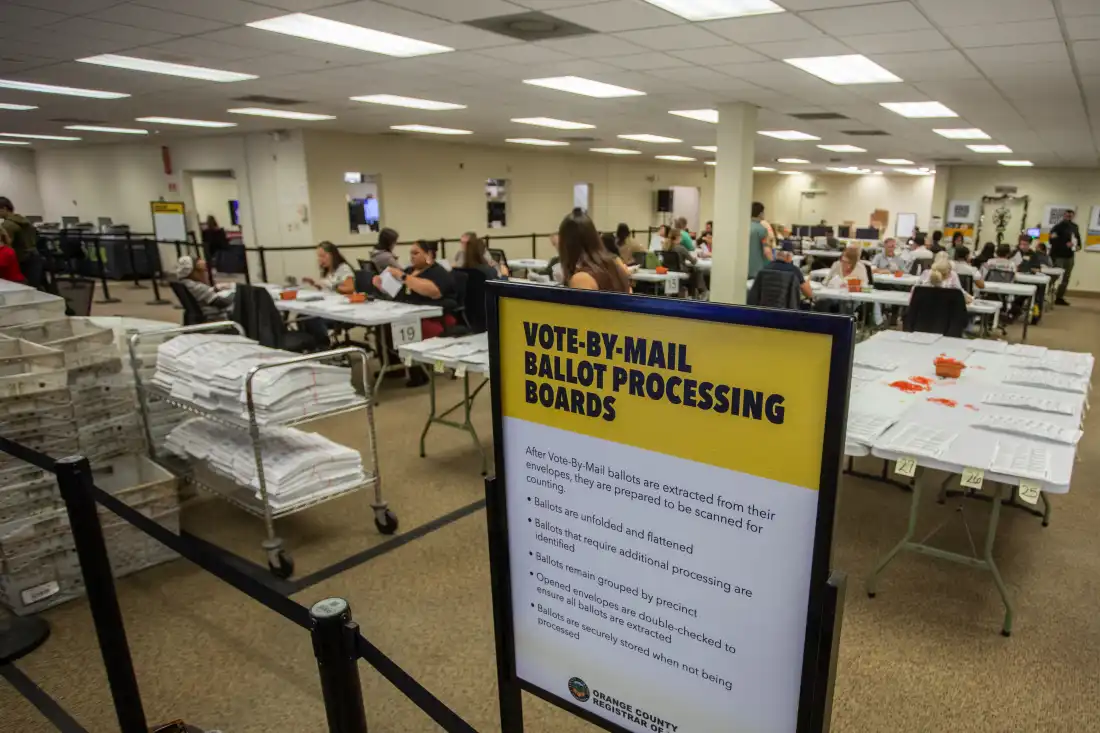
On October 28, 2026, officials at the Orange County Registrar of Voters facility in Santa Ana, California, prepared ballots for counting. This occurred amidst a legal battle regarding the midterm elections. A federal judge had denied an emergency request by the Department of Justice (DOJ) to segregate ballots they claimed involved noncitizens. The move was unprecedented and raised concerns about potential disruption in the electoral process.
DOJ’s Request and the Response
The DOJ sought to halt the processing of ballots from 20,000 individuals they believed were likely noncitizens. However, California’s state and local officials challenged the accuracy of the DOJ’s claims. Los Angeles County’s preliminary analysis indicated many on the DOJ’s list did not have active voter registrations, thus questioning the DOJ’s reliability.
U.S. District Judge David Carter, appointed by President Clinton, ruled against the DOJ. He stated that the federal government had never before tried to force state and local governments into changing their election procedures on such short notice. He expressed concern about the potential chaos and disenfranchisement of eligible voters.
Judge’s Concerns and Federal Government’s Actions
Judge Carter highlighted the dangers of segregating votes based on unproven allegations. He warned that such actions could undermine democratic processes and noted that the federal government could tackle illegal voting cases through prosecution without disrupting elections.
Additionally, DOJ officials pointed out recent prosecutions of dozens of individuals for voting or registering without citizenship. The DOJ’s lawsuit in California is part of a series of actions concerning various states’ election processes. These efforts included a request to review voters in Washington state and a lawsuit in Alaska related to a Senate race.
Legal and Political Reactions
California’s Attorney General Rob Bonta criticized the lawsuit as a threat to democratic values. He urged the judge to recognize DOJ’s actions as potentially harmful interference in California’s electoral process.
The DOJ intends to appeal Judge Carter’s ruling, which might bring the case before the U.S. Supreme Court. They argue that the matter is urgent due to ongoing ballot processing. Once ballots are separated from envelopes, retrieving ineligible votes is no longer possible. The DOJ claims votes by noncitizens dilute citizens’ votes, although such occurrences are deemed rare by audits and investigations.
Dispute Over Accuracy
The DOJ’s list of alleged noncitizens remains disputed. Los Angeles County examined a sample and found many listed as U.S.-born. Nicolas Bartell, a senior official from U.S. Citizenship and Immigration Services, countered this, stating their review indicated none were born in the U.S. However, four individuals might have claims to citizenship.
Kassra Oskooi, a political scientist from the University of Delaware, argued the methodology used by USCIS was likely unreliable. He was involved as an expert witness in the case, supporting voting rights groups challenging the DOJ’s claims.
Leave a Reply