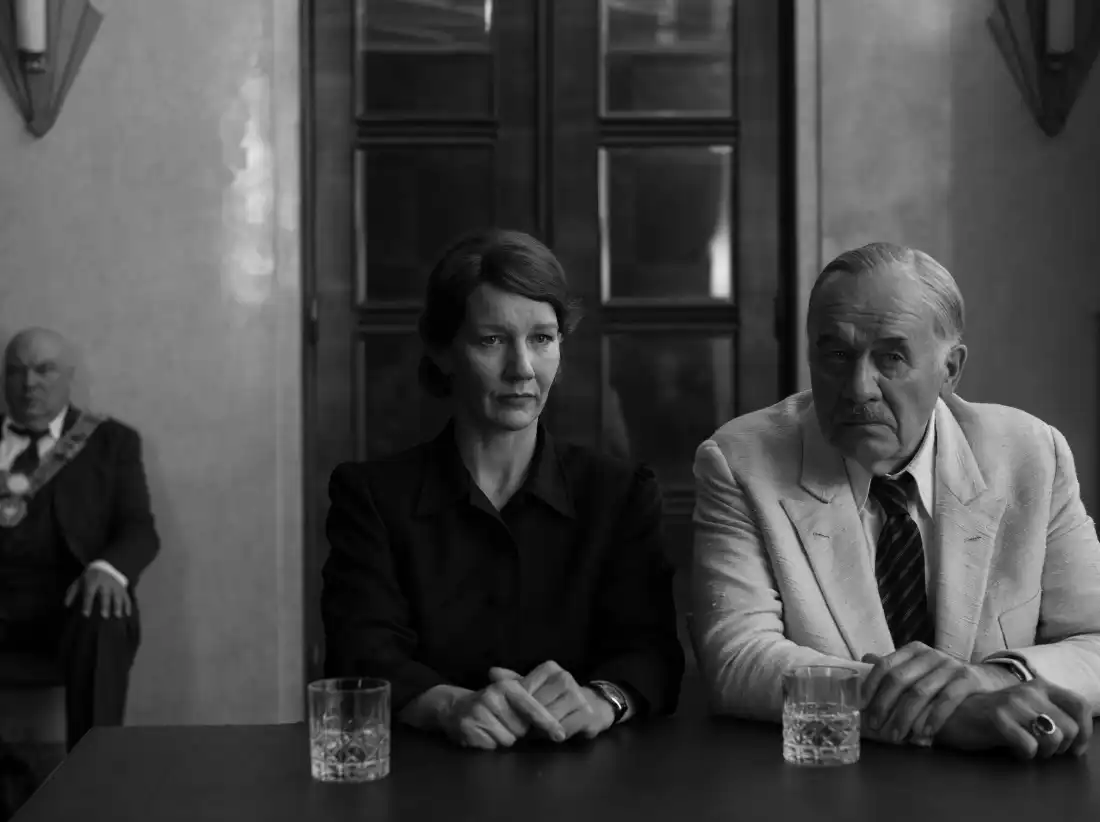
Fatherland presents a rich portrayal of Thomas Mann’s return to Germany in 1949 after spending 11 years in America to avoid the Nazi regime. Directed by Paweł Pawlikowski, this film offers a captivating look at this historical moment, weaving personal drama with a depiction of post-war Germany’s complex political landscape. The film is part of Pawlikowski’s trilogy set in mid-century Europe, accompanied by the Oscar-winning Ida.
Characters and Plot
Thomas Mann, played by Hanns Zischler, is central to the movie’s narrative. Sandra Hüller plays Erika, Mann’s daughter. Their relationship forms the backbone of the story. Erika seeks to bridge the gap between her distant father, who remains overshadowed by his own towering success, and her brother Klaus, portrayed by August Diehl. The latter is a talented, struggling writer. Erika urges Klaus to join them for Mann’s visit to accept the Goethe Prize, yet Klaus is resentful of their father’s overbearing presence.
On the journey, Erika adopts roles beyond that of a daughter. Acting as Mann’s assistant, she manages his public appearances and bolsters his presence. Historians note Mann’s real-life travel companion was his wife, but Pawlikowski explores the dynamic between father and daughter, emphasizing Erika’s integral yet constrained role.
Post-War Germany Depiction
The film artfully engages with Germany’s divided post-war spirit. Archival footage and dramatized scenes merge to highlight the contrasting conditions between West and East Germany. In the American-influenced West, Mann’s lectures attract past Nazi sympathizers and American officials, while in the East, Soviet oversight frames his public engagements. These settings underscore the ideological tug-of-war for Mann’s endorsement and legacy.
Mann’s speeches tread a nationalist middle ground, focusing on a cultural ideal inspired by Goethe. Yet, his personal connection to this ideal is more complex, depicted through family tensions and stoicism.
Personal and Historical Themes
The film manages an intricate balance between personal grief and historical narratives. When a family tragedy strikes, Mann chooses not to interrupt his schedule, straining his relationship with Erika. These moments reveal Erika’s resilience and past accomplishments as an anti-Nazi writer and activist. Despite internal conflicts, Mann opts for emotional suppression, seeking solace in his work and culture.
Fatherland concludes with a moment of vulnerability from Mann, accompanied by Johann Sebastian Bach’s music, offering a rare glimpse into the deeply personal struggle beneath his imposing public persona. Pawlikowski’s meticulous approach yields a film with the precision of a finely crafted narrative.
Leave a Reply