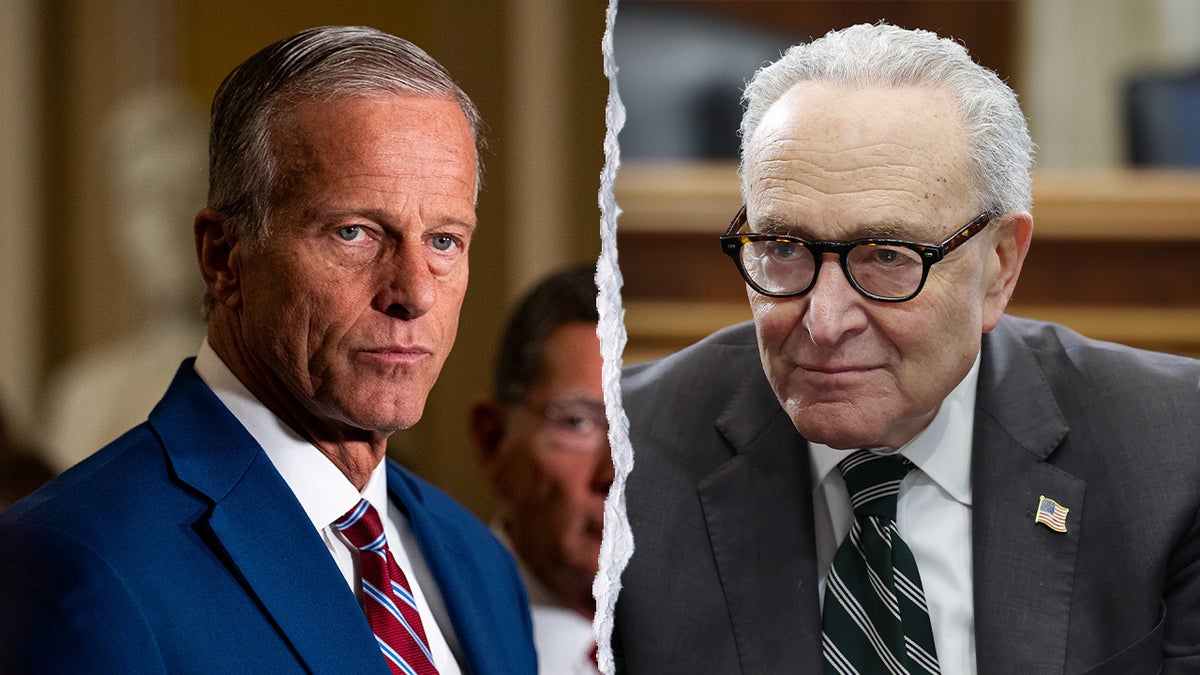
In Fremont, Nebraska, Senate Majority Leader John Thune from South Dakota shared a humorous take on his role in supporting candidates. Thune remarked, ‘I’ll come out for you or against you, whichever helps you the most.’ This comment came as he participated in a roundtable in Nebraska alongside Senator Pete Ricketts, who is in a close race against independent Dan Osborn.
This visit is one of many Thune has made across the U.S. since the Senate paused for the campaign season. Thune has been traveling to key states such as Georgia, South Carolina, Florida, and others, marking significant road time. In contrast, Senate Minority Leader Chuck Schumer from New York has opted for virtual events, relying on prominent figures like former President Barack Obama and Vice President Kamala Harris to campaign in contested areas.
Recently, Schumer held a virtual fundraiser supporting Florida state Representative Angie Nixon, highlighting his strategic shift to online events. Nixon is the Democratic Socialists of America-associated candidate running against Florida Senator Ashley Moody.
In races from Michigan to Mississippi, candidates have chosen to distance themselves from Schumer. Scott Colom, a district attorney in Mississippi competing against Senator Cindy Hyde-Smith, openly stated his reluctance to support Schumer if elected. He criticized the party’s representation being led by figures from the same borough, urging for more rural voices to reflect diverse values within the Democratic Party.
Other candidates, like Abdul El-Sayed in Michigan and Adam Hamilton in Kansas, have explicitly expressed they would not back Schumer if elected.
Republican leaders have pointed to this division within the Democratic Party. Senator Bernie Moreno from Ohio observed that Republican candidates do not oppose Thune’s leadership, while many Democratic candidates have pledged not to support Schumer.
Thune remains committed to his campaign efforts, stating, ‘We’re getting out and about — it’s whatever we can do to help.’ He highlighted a perceived identity struggle within the Democratic Party, suggesting that the rise of socialist elements was creating challenges for their leadership. Thune argued that this shift might alienate mainstream voters, potentially impacting the Democrats negatively in the elections.
Thune concluded that the Democratic Party’s drift to more leftist policies could hinder its success, even in a political climate that might otherwise favor them.
Alex Miller contributes to Fox News Digital, focusing on the U.S. Senate.
Leave a Reply