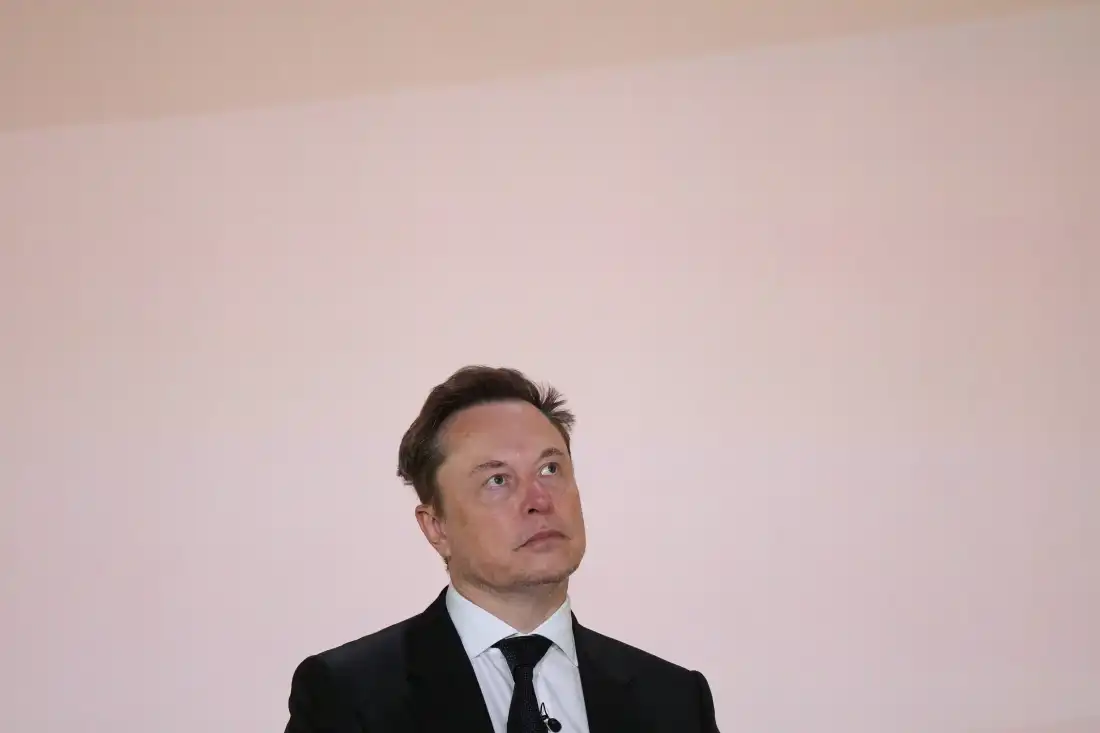
Elon Musk attended an event on September 29, 2026, in Washington, D.C. to launch the America.gov website. His influence has been notable, with significant donations of over $400 million to Republican causes before the midterm elections. This figure surpasses donations from other major donors like Michael Bloomberg and George Soros combined, sources such as The Washington Post and CNN report.
Recently, Musk’s company SpaceX restricted Ukraine’s access to the Starlink satellite system, affecting Ukrainian drones. Tech journalist Kara Swisher and Musk critic stated that no private individual, even as wealthy as Musk, should make such wartime decisions. David Nasaw, a history professor from City University of New York, concurs, highlighting Musk’s unparalleled power derived from being the first trillionaire. He has notably impacted areas with ventures like DOGE, which disrupted the U.S. Agency for International Development.
Musk’s enterprises, including SpaceX and Tesla, have accrued more than $30 billion from federal contracts, subsidies, loans, and tax credits. Nasaw describes these arrangements as an alliance facilitating Musk’s financial gain and political influence. NPR sought Musk’s response but received no comment. Nasaw believes the democratic system struggles to regulate figures like Musk, urging Congress to consider raising taxes on billionaires and curbing campaign spending to protect democracy.
Conversely, Richard White, a Stanford history professor, argues that Musk’s influence is not historically unique, referencing J.P. Morgan’s sway during the Gilded Age. In 1895, Morgan helped avert a financial crisis, positioning himself as an influential figure, until government intervention broke up his monopolistic endeavors.
Critics of Musk abound, yet Marian Tupy from the Cato Institute praises the innovation driven by non-conformists like Musk. Tupy supports unrestricted political spending as a constitutional right, despite acknowledging its contentious nature among the ultra-wealthy. He contends that affluent individuals provide valuable insights for economic growth, though this does not guarantee electoral success, as Musk experienced in the Wisconsin Supreme Court race.
During Trump’s tenure, Musk prospered, but Richard White suggests that a Democrat-led government could challenge Musk’s ventures, especially if SpaceX relies on federal funding. Democrats have hinted at potential investigations if they secure the House in the upcoming midterms. Musk responded on his platform with strong words about finding those influencing such conflicts.
Historian H.W. Brands highlights the historical tension between democracy and capitalism in America, noting the inequality-based capitalism often eclipsing democracy’s principle of equality. Industrial titans like Morgan and Carnegie epitomized the wealth disparity of the past. As with the early 20th century’s progressive push to curb corporate influence, Brands believes a new wave of democratic reform may be on the horizon, akin to previous efforts to balance the scales.
Leave a Reply