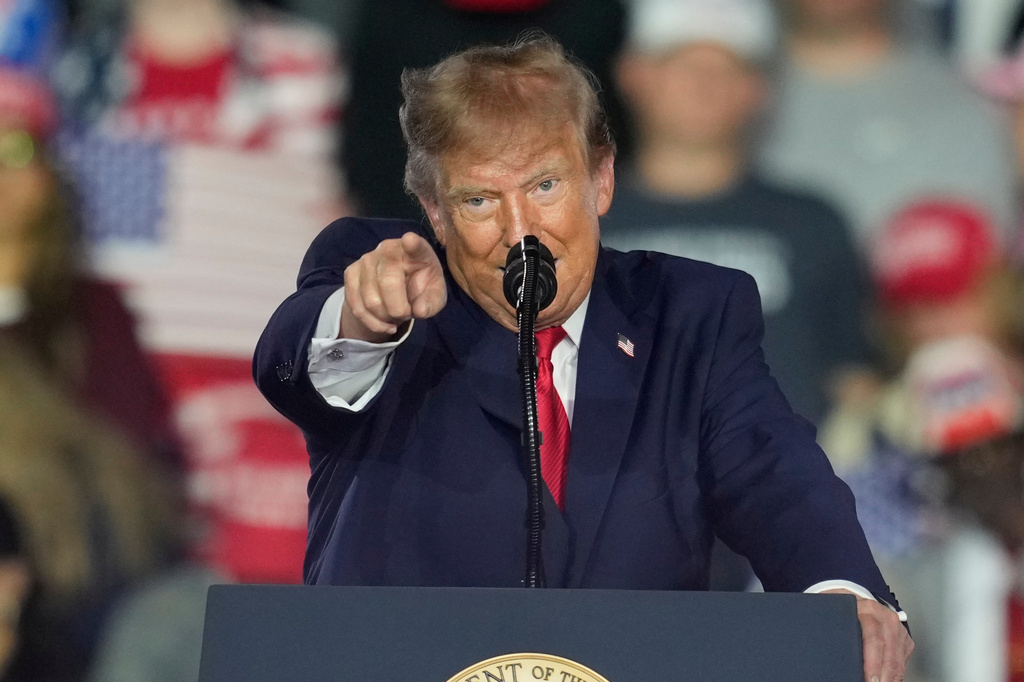
President Donald Trump pointedly addressed supporters during a campaign rally at the Five Flags Event Center in Dubuque, Iowa, on Sunday, Nov. 1, 2026. The political landscape in America has been markedly shaped by fear-based strategies, particularly affecting discussions about identity and inclusivity.
I am keenly familiar with the rituals of American football fandom. Saturdays are often marked by my reactions to Ohio State’s games, while Sundays bring the emotional highs and lows of supporting the New York Giants. The availability of NFL Sunday Ticket and various streaming services allows me to watch many games. Political campaigns inevitably interrupt this experience every election cycle.
Such campaigns frequently provoke a key question: Are Make America Great Again (MAGA) supporters fearful of those who differ from them? Concerns often arise around two groups: Transgender and Muslim Americans. Republican narratives focus less on issues like the Iran conflict, tariffs, or corporate behavior. Over $180 million has fueled messaging that positions transgender individuals as a threat to normalcy.
My personal experiences reveal a different reality. Raised in New Jersey, educated at Harvard, and now residing in California, I’ve encountered only a handful of transgender individuals. These interactions resulted in friendships rather than any transformations in my identity. The fear of transgender people appears exaggerated compared to real-life interactions.
Similar fear tactics target Muslim-Americans. Political ads often suggest electing Democrats leads to Sharia law. Despite such warnings, historical data contradict these claims. For example, during President Barack Obama’s eight-year tenure, these dire outcomes did not materialize.
Local experiences, such as visiting Little Arabia in Anaheim, showcase a vibrant community devoid of the threats depicted in political messaging. Yet, advertisements continue to paint a fearful picture, suggesting candidates like Abdul El-Sayed in Michigan would usher in chaos.
Since 9/11, anti-Muslim rhetoric has hindered efforts to counter genuine extremism. Overgeneralizing makes it difficult to address true threats effectively.
The 2024 elections demonstrated significant support for Donald Trump among young men. Various reasons underpin this support, with perceptions about masculinity playing a substantial role. Claims of societal challenges for men are not entirely unfounded. Men face higher suicide rates, delayed marriage, and increasing difficulty in homeownership. Educational attainment trends further complicate income dynamics, with more women earning college degrees.
Blame often falls on feminist movements or progressive agendas, although the reality is less straightforward. The dialogue around toxic masculinity frequently turns into broad critiques of masculinity itself, leaving men feeling targeted.
Even corporations have engaged in discussions about masculinity, as exemplified by notable advertisements. However, Republican alternatives to these narratives have been inadequate. Influencers on the right focus on cultural elements such as comic book characters or women in media, diverting attention from substantive issues.
Republicans capitalize on these sentiments, promising an understanding of masculine challenges. Many men were drawn to these assurances, aligning with perceptions of traditional manhood.
However, falling for fear-driven rhetoric may not be a valid expression of masculinity. Expanding interactions with diverse groups could foster a more peaceful society. Data suggests young men desire such adaptability. More than financial success, social adaptability is key to thriving. Succumbing to fear obstructs progress and risks marginalization.
Franklin D. Roosevelt advised that the only true fear should be fear itself. Current MAGA rhetoric advises fearfulness toward others. Reflecting on which attitude truly embodies strength and courage is crucial.
Joslin Joseph, an award-winning commentator and Iraq war veteran, provides this analysis. A Harvard and Ohio State graduate, he resides in Anaheim, California.
© 2026 Nexstar Media Inc. All rights reserved. This content may not be reproduced or redistributed.
Leave a Reply