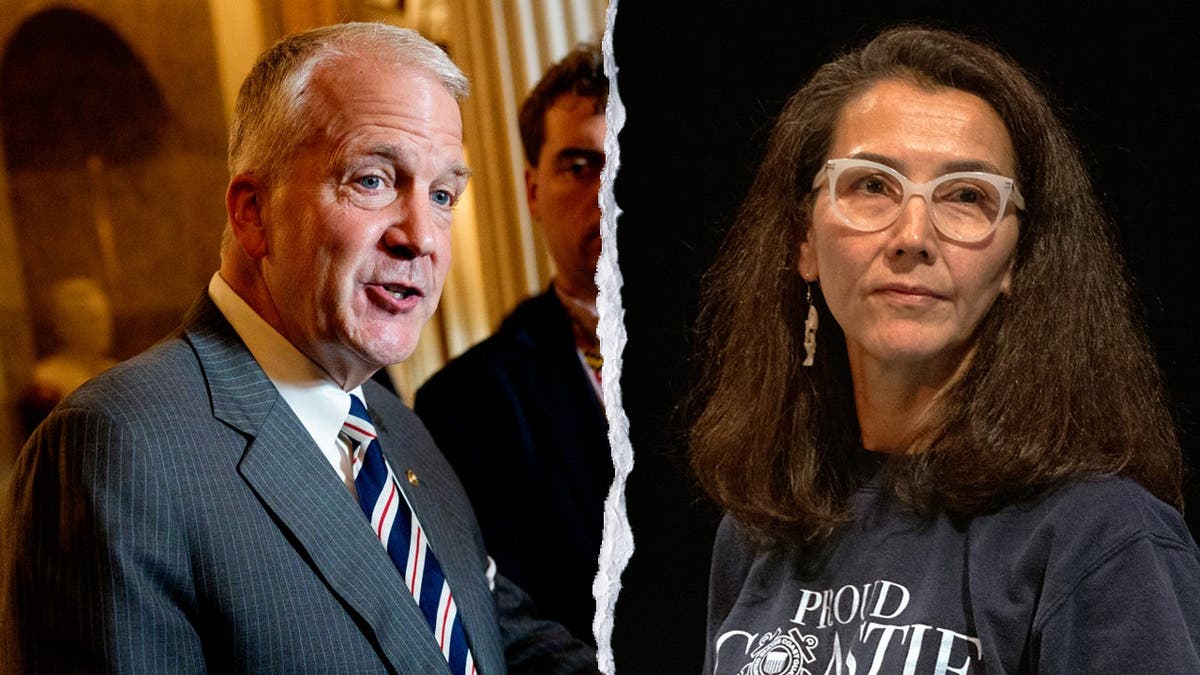
The Alaska Senate race remains unresolved with Republican Sen. Dan Sullivan and Democrat Mary Peltola separated by fewer than 700 votes. Finn and Dunleavy have addressed the impact of the same-name candidate Dan J. Sullivan, who garnered thousands of votes. This has kept the race closely monitored and unresolved.
Alaska’s Senate race is set to reveal another batch of ballot results on Tuesday night. This follows Monday’s release that expanded Democratic nominee Mary Peltola’s lead over incumbent Republican Sen. Dan Sullivan to 2,517 first-choice votes. As of midday Tuesday ET, Peltola holds 48.6% (106,321 votes) compared to Sullivan’s 47.5% (103,804 votes) in the ranked-choice voting system. This system may activate if neither candidate surpasses the 50% threshold.
The controversial race involves the “Decoy Dan” scheme reported by The New York Times. Republican Gerald Heikes is at 2.2% (4,865 votes), while independent Daniel J. Sullivan Jr. is at 1.7% (3,651 votes). About 75–76% of the expected votes are in, with many early, absentee, and questioned ballots yet to be counted.
Cheryl Bruce, campaign manager for Peltola, stated, “After every vote is counted, it is clear that Mary Peltola will be elected Alaska’s next United States Senator.” She highlighted a 68-30 margin of current votes, showing significant support in Anchorage and Chevak. Bruce added that Peltola aims to continue prioritizing Alaska in the Senate once all votes are accounted for.
The recent ballot drop added nearly 5,000 ballots and marked a shift from a previous 637-vote lead by Peltola. The incumbent Sullivan speculates that if Peltola fails to reach 50% and the ranked-choice voting proceeds to further rounds, the Republican could benefit from secondary voting preferences.
Alaska’s voting system dictates that if no candidate achieves a majority of first-choice votes, the lowest-ranking candidate is eliminated. Votes are then redistributed based on voters’ preferences until someone crosses the 50% mark. This situation currently favors the other Dan Sullivan, potentially aiding Peltola in overcoming the threshold.
The official ranked-choice voting tabulation is planned for November 18, post the overseas absentee deadline. Governor Mike Dunleavy mentioned that this aligns with the state’s timeline that he described as “confusing” and “slow,” with major ballot updates anticipated on November 13 and November 18.
Dunleavy is also probing the “Decoy Dan” strategy involving Daniel J. Sullivan Jr., suspected by some Republicans to divert votes from Sen. Dan Sullivan. The Division of Elections and the Department of Justice are examining related concerns.
In parallel, other state elections remain dynamic. Democrat Jonathan Kreiss-Tomkins leads the governor’s race with 49.6%, while Republican Bernadette Wilson trails at 28.9%. For the U.S. House, Rep. Nick Begich, R-Alaska, is ahead with a 49.19% first-choice vote. Ballot Measure 2, aiming to repeal open primaries and ranked-choice voting, faces opposition with 52.3% voting against the repeal, signifying the system’s continuation.
If Democrats clinch both seats, the party will secure a 56-44 majority in the Senate, following a victory of 9-0 in seat flips during these midterms. The certification process is set for November 25.
Eric Mack contributes as a breaking news reporter, focusing on politics, elections, and government affairs.
Leave a Reply