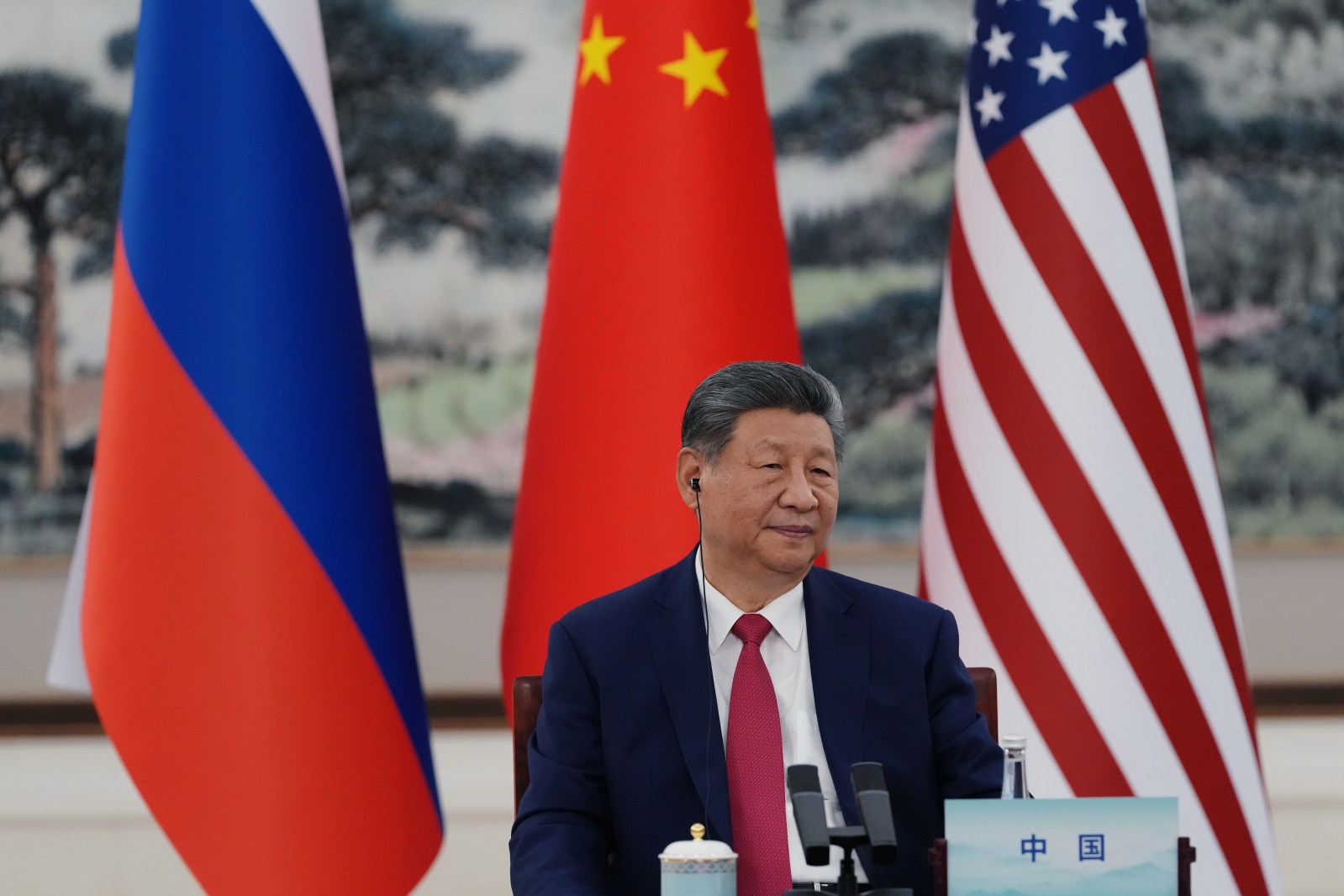
Republicans with hawkish views might have disapproved of the scenes from the Asia-Pacific Economic Cooperation (APEC) summit in China. During this event, Donald Trump emphasized his relationships with Xi Jinping and Vladimir Putin. Democrats who oppose authoritarianism could soon use these images to criticize Trump in the last years of his presidency. Both parties should realize that Trump is aware of this and appears uninterested in their concerns.
At the summit, television cameras captured an unusual sight. Xi greeted Trump with a hug on the Shenzhen tarmac. Trump then assisted Xi onto an escalator, indicating their close rapport. Hardliners in the U.S. felt uneasy as Trump positioned Xi as the central figure in a trilateral photo. Additionally, his warm demeanor towards Putin during their talks raised eyebrows.
Trump aims to build a distinct presidential legacy, undeterred by traditional speeches or postures. He values orchestrated political pageantry and great power symbolism. As Trump remarked, “President Xi and I have formed an outstanding personal relationship. Some people are unhappy when they hear that. I’m very happy about it. And some people actually are thrilled.” Xi acknowledged Trump’s comment, while Marco Rubio, Trump’s Secretary of State, showed no visible reaction.
Interestingly, Chinese organizers barred a Bloomberg reporter from questioning Trump about Jensen Huang during the trilateral meeting. Trump remained passive, not addressing the American press’s exclusion in respect to Xi’s orchestration. Prior to this, Trump praised the summit’s preparations, stating that “every move was perfectly executed.” It marked his willingness to defy expectations about the geopolitical and economic challenges involving China that have affected U.S. markets.
Jennifer Kavanagh, a Defense Priorities senior analyst, stressed the significance of such meetings, even if they lack substantial dialogue. They are vital for building strategic stability between global powers. She supported Trump’s effort, emphasizing that dialogue is not a reward, but essential for maintaining stability. Trump’s visit aimed not at projecting power but in developing the groundwork for stability.
During his second term, Trump worked to improve Putin’s image. After Russia’s actions in Crimea and Ukraine, Putin emerged once again from global isolation. But Trump’s most notable success might be strengthening Xi’s position. Despite external pressures, Xi maintained ties with Putin for strategic reasons, altering the balance in Sino-Russian relations.
The Kremlin, historically the senior partner in Eurasia, now sees an unfamiliar dynamic. Previously, Soviet influence introduced Marxist-Leninist ideas to China, yet China’s Communist Party now outlasts the Soviet Union. Xi’s approach has positioned China as a leader, while Putin adapts to a reduced role.
Americans may slowly change perceptions of China, but many remain wary of Trump’s affinity for Xi. Trump insists he’s corrected the “very lopsided” economic relations with China, benefiting American farmers through trade negotiations. In return, he overlooks China’s actions, like aiding Iran or potential espionage.
Xi reciprocated with gestures, seating Trump at the main APEC tables and advocating for a nuclear-free world despite China’s nuclear ambitions. Trump is no conventional politician. He anticipates Democrats’ electoral gains and persistent pressure to intensify U.S.-China tensions.
Ryan Hass from the Brookings Institution predicts that U.S.-China tensions in 2027 will escalate. He foresees Congress challenging presidential diplomacy, fewer summits, and compounded tensions. Nevertheless, Shenzhen demonstrates Trump’s distinctive approach and commitment to his vision of global peace, disregarding potential impacts on future Republican leadership. He echoes Barack Obama’s sentiments during his final State of the Union: “I have no more campaigns to run.”
Leave a Reply