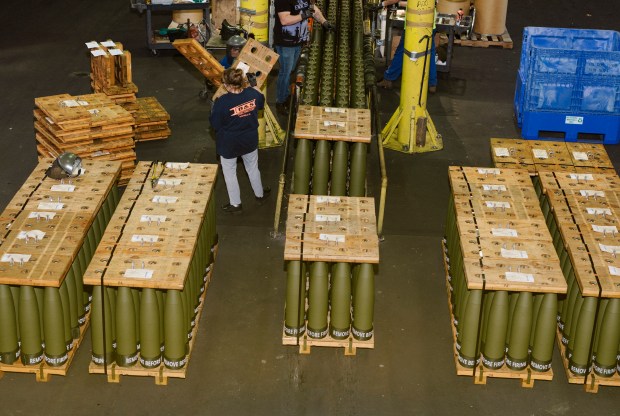
The U.S. Army had scheduled an event that seemed akin to a disaster movie scenario. Planned explosions threatened to shatter windows, and there were government advisories for mass evacuations, urging people to stay indoors. Toxic clouds of dust were anticipated to spread extensively. Army officials, in documents, admitted they were left with no alternative but to detonate 68 drums of hazardous lead azide at a southeast Iowa ammunition depot.
Initial computer models showed a potential plume of brain-damaging lead could travel over 100 miles, reaching western Illinois. “There are a lot of unanswered questions,” stated Michael Cheusse, city administrator of Aledo in Mercer County, Illinois, expressing concerns over the potential drift of lead particles into rural areas.
In response, environmental groups filed a lawsuit against the Army on Thursday to halt or postpone these detonations. These were expected to last at least four hours outside Middletown, Iowa, less than eight miles from the Mississippi River. Following the backlash from officials and the public, the Army delayed the detonation according to Acting Army Secretary Adam R. Telle. “Public safety is the Army’s top priority,” he noted, announcing the postponement until November 23, citing a forecasted temperature drop risk.
Lead azide, used in explosives to trigger bombs and rockets, is being phased out due to concerns about its volatility and toxicity. The Army’s documents reveal that the degradation of lead azide at the Iowa plant had reached a critical stage, making it unsafe to move. “Destroying it in place is the only responsible option,” Army officials claimed, asserting this approach restores military-industrial readiness.
The response from officials varied. U.S. Sen. Tammy Duckworth criticized the planning and communication of the operation. “Families were abruptly told to avoid the area without clear guidance,” she remarked. U.S. Rep Eric Sorensen advised residents to take safety precautions, such as closing windows and remaining indoors.
Bruce Lanphear, an expert in lead poisoning from Simon Frasier University, emphasized the long-term harm of even minimal lead deposition. Although the Army committed to monitoring lead concentrations, Lanphear remained skeptical about the effectiveness of the efforts.
The Army pledged to deploy air monitors and check soil for lead exposure. However, recent policy changes under President Donald Trump’s administration have relaxed key environmental protections, leading to further scrutiny.
Since lead remains unsafe at any level, Illinois officials have outlined plans to monitor pollution, although details remain undisclosed. Winds forecasted from the south suggested the potential northwest drift of dust from the planned Iowa detonations. According to Army documents, detonations would be canceled if winds exceeded 15 mph.
Leave a Reply