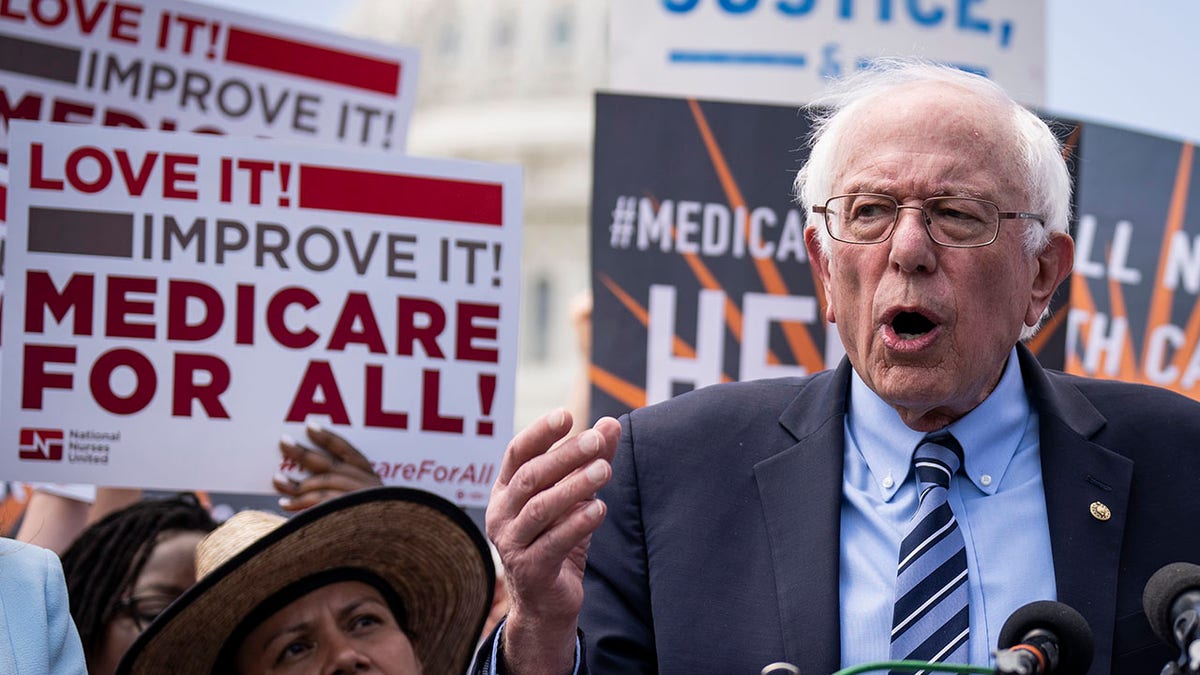
Imagine if a politician offered to eliminate all your health insurance costs. No premiums, no deductibles, no copayments, and healthcare for all through government funding. This proposal, often associated with Medicare for All, seems inviting. But we must consider the financial realities.
The Reality of Costs
Consider that doctors and hospitals aren’t providing services for free. The government lacks a magic solution to print money without consequences. In a Medicare for All system, healthcare might appear free at the point of service, but costs show up elsewhere, often in taxes.
There’s a growing concern about the financial implications of this model.
The $30 Trillion Concern
Let’s examine the numbers. The Congressional Budget Office (CBO) estimates a single-payer system could increase federal healthcare spending by $1.5 trillion to $3 trillion annually by 2030. Over a decade, that totals up to $30 trillion. To put this in perspective, the federal government collected about $5.4 trillion in revenue in 2026.
This plan would add significant financial responsibility to a government already $40 trillion in debt. Supporters of Medicare for All argue that while private insurance premiums and out-of-pocket costs may disappear, the healthcare bills are merely redirected through taxes.
Potential Tax Impact
The Committee for a Responsible Federal Budget reviewed the financial necessities of adding $30 trillion in federal spending over ten years. Their modeling suggests options like a 32% payroll tax or a 25% income surtax. These are not definitive Medicare for All plans but illustrate the scale of taxation that might be required.
A family’s financial outcome would depend on various factors, including income and health needs. Some might save, while others could incur higher taxes. Clear details on funding are essential to assessing personal financial impact.
Demand vs. Supply in Healthcare
If more people can access healthcare without financial concern, demand could rise. This may assist those not currently receiving care. However, increased demand necessitates more healthcare professionals, where shortages exist in communities.
Expanding coverage without growing medical capacity can result in longer service waits. If government spending controls reduce reimbursements, hospitals and physicians face new hurdles. Promising appointments doesn’t create more doctors instantly.
Changes to Existing Insurance Systems
Half of Americans might have employer-sponsored health coverage by 2026. Medicare for All would overhaul this, with mixed reactions likely. Some may welcome the change; others might lose their preferred plans, networks, or benefits. Employers would also need to adjust significantly.
Adding this financial responsibility adds to an already $40 trillion debt. Medicare itself isn’t free today; beneficiaries pay Part B premiums, deductibles, and often buy additional coverage. A system without premiums or deductibles would be more generous than traditional Medicare but would carry a cost.
The Economic Reality
The debate on Medicare for All often skips the financial challenge of delivering affordable, high-quality healthcare without bankrupting families or the system. The U.S. spent roughly $5.3 trillion on healthcare in 2024. Addressing prices, administrative inefficiencies, drug costs, and access are vital.
A single-payer system might lower some expenses, but savings and a smooth transition aren’t certain. It’s not about who deserves care but whether Washington can finance and manage an expanded system without new financial issues. Beware of promises of free services involving trillions in costs. Always question where the financial responsibility lies.
Leave a Reply