Cognisee’s AI innovations aim to bridge America’s skilled labor gap. By capturing the expertise of retiring workers, the company creates digital mentors for emerging talent in manufacturing, aviation, and healthcare. Founder Ahmer Inam stresses this approach enhances efficiency without replacing human roles.
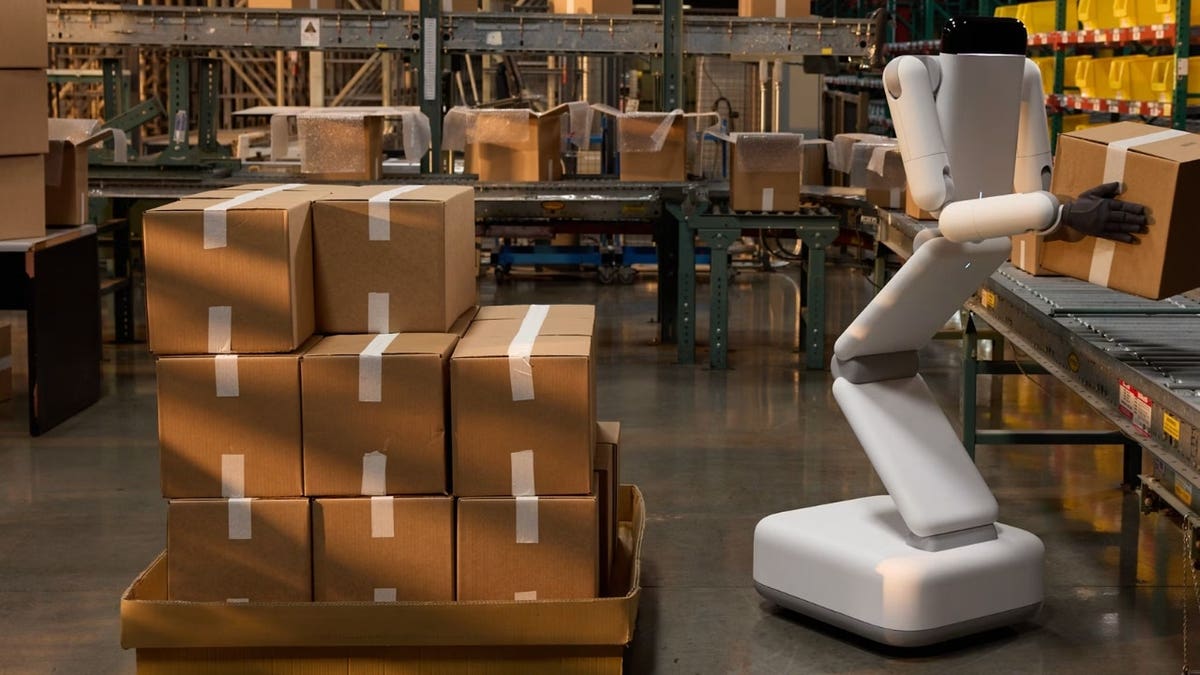
Genesis AI is advancing general-purpose robots like Eno. These robots learn tasks by observing humans, with investment totaling $500 million, raising Genesis’ value to $3.5 billion.
Funding and Development
Genesis AI’s $500 million funding round, led by Premji Invest, Khosla Ventures, and Eclipse, includes support from tech giants like NVIDIA, AMD Ventures, and more. This backing aims at expanding robotic training and AI capabilities while boosting production and research.
Eno’s Unique Approach
Unlike humanoid robots, Eno focuses on task efficiency. It combines skilled hands and an adaptable body, powered by the GENE AI model, enabling complex movements and task execution through observed human activity.
Training Tactics
Genesis uses electronic gloves to gather human movement data, a key part of training robots like Eno. These gloves map human finger actions directly to robotic hands, capturing intricate movements and pressures.
Additionally, Genesis integrates cameras recording tasks from the workers’ perspective, offering comprehensive views for training.
Simulation Benefits
Genesis leverages a simulation platform, Genesis World, for testing robots, enhancing training while reducing costs. This accelerates skill acquisition in a controlled, repeatable environment.
Current Capabilities and Future Prospects
Today, Genesis demonstrates tasks like meal preparation and equipment handling through its test robot, with full integration into Eno anticipated soon. The company initiated pilot projects in 2026, with industrial deployments set for 2027.
Determining the Workforce’s Future
Employees volunteer in these training programs, aware of how data is used, which Genesis owns. Despite participatory nature, the technology’s impact on jobs remains a critical concern. Genesis assures volunteers and sees robots as productivity enhancers.
Yet, questions about workforce adaptations persist as Genesis aims to expand into various sectors, including hospitality and healthcare.
Challenge and Impact
Genesis AI’s longer-term challenge revolves around assuring reliable robot operations in dynamic real-world settings. Businesses will demand proven, reliable results before committing to broader implementation.
Implications for Workers and Industry
Robots like Eno may redefine job roles in manufacturing and laboratories, automating repetitive tasks and reshaping skill requirements.
Outside these industries, robots could eventually assist with domestic tasks and healthcare, pending further development and testing.
Leave a Reply