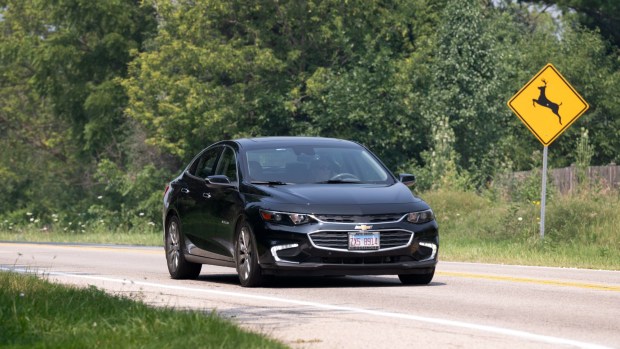
Suburban drivers should be particularly careful about deer encounters in the coming weeks. Research from the University of Illinois highlights mid-November as a peak period for deer-vehicle collisions. This coincides with the end of the peak mating season and shorter daylight hours, increasing crash risks.
Data from the Illinois Department of Transportation (IDOT) reveals Cook County has experienced the most deer-related crashes since 2021, with 559 incidents last year alone. McHenry and Kane counties followed, with 391 and 372 collisions respectively. Overall, 14,529 deer-vehicle collisions occurred throughout Illinois last year. These incidents resulted in seven human fatalities and 677 injuries.
Maria Castaneda, IDOT spokesperson, noted that despite Cook County’s urban setting, its 70,000 acres of forest preserves boost the likelihood of deer encounters. She emphasized the adaptability of deer in various environments, from rural to urban locations with sufficient forest cover.
Molly Hart from the AAA Auto Club Group advises drivers to remain “extra vigilant” during dawn and dusk when deer are most active. She stated, “Deer are breeding right now, so they are out and about. Drivers often have only seconds to react when a deer enters the roadway. Slowing down, scanning the roadside, and staying focused behind the wheel can help reduce the risk of a serious crash.”
According to Hart, drivers should avoid swerving when encountering a deer in their path: “Swerving can lead to more severe crashes with trees, poles, and guardrails. The natural instinct is to swerve, but try to brake firmly and stay in the lane.”
Castaneda also pointed out the unpredictability of “deer in the headlights” and advised extra vigilance. Her main advice is to “go slow.”
The Forest Preserves of Cook County initiated a “deer management” program in the 1980s in response to concerns that a large deer population harms native vegetation and ecosystems. David Gorchov, a biology professor at Miami University in Ohio, mentioned that the Midwest’s deer overpopulation stems from reduced natural predators and abundant food supplies. He pointed to declining populations of wolves and mountain lions as factors in this growth.
In case of a collision with a deer, Castaneda advises pulling over safely, calling law enforcement, and remaining in the vehicle until help arrives. “It’s an injured animal; you don’t know what could happen,” she said. “Plus, you don’t know who else could be on the road. You want to remain safe.”
Leave a Reply