The European and Japanese space mission has achieved a significant milestone. The BepiColombo spacecraft has reached Mercury after an extensive eight-year journey, marking an important step in its mission to study the planet nearest to the Sun. BepiColombo began circling Mercury on November 21, and the mission includes two separate spacecraft that will eventually orbit and study the planet simultaneously.
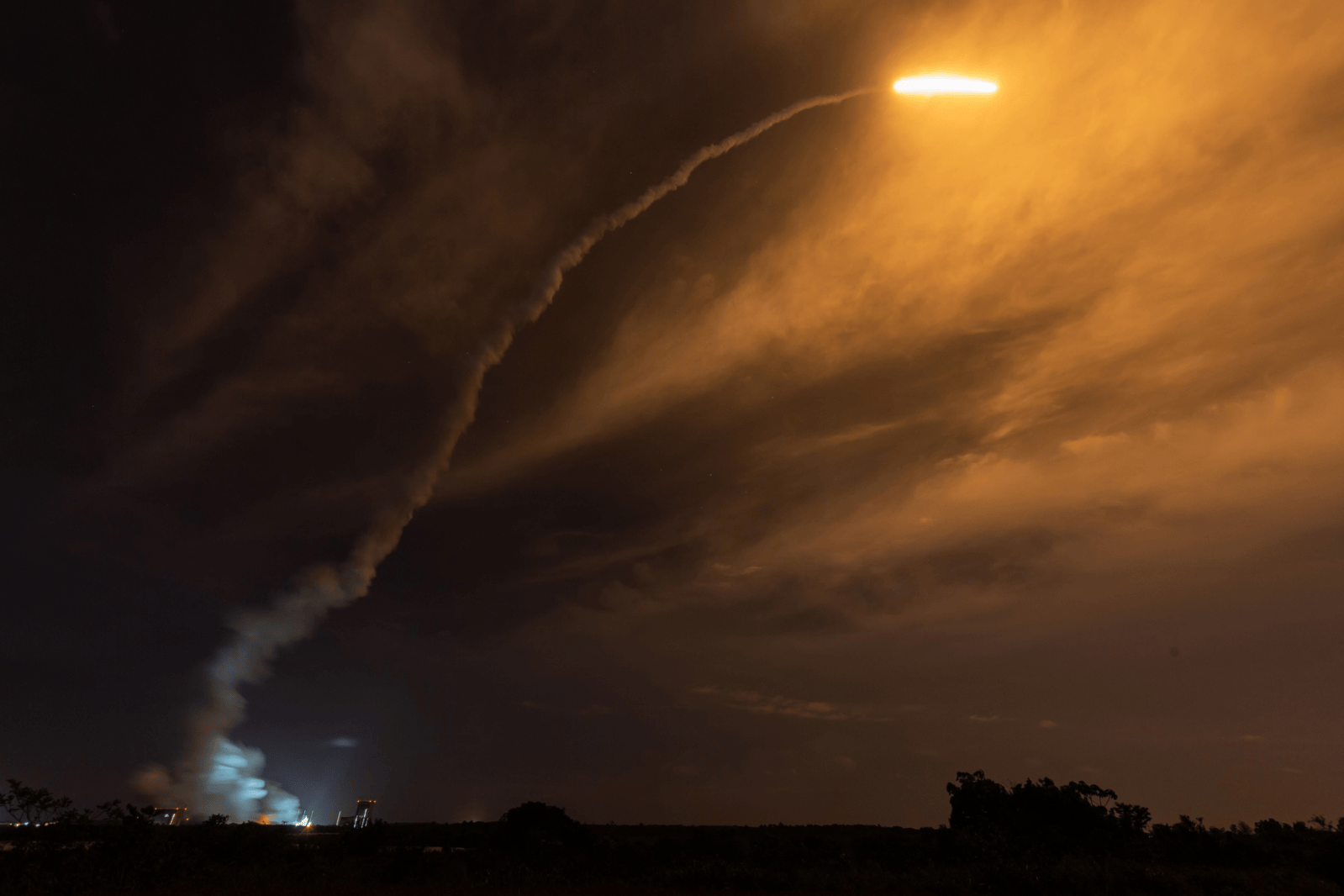
This joint mission is a collaboration between the European Space Agency (ESA) and the Japan Aerospace Exploration Agency (JAXA). Launched from Europe’s Spaceport in Kourou, French Guiana, on an Ariane 5 rocket on October 20, 2018, BepiColombo traveled through the inner solar system following a carefully calculated route rather than heading directly to Mercury.
During its journey, BepiColombo performed flybys of Earth, Venus, and Mercury, using the gravitational forces of these planets to adjust its speed and trajectory, allowing it to conserve fuel. The ESA’s journey tracker notes that the spacecraft traveled approximately 10.2 billion kilometers, or 6.35 billion miles, a distance covered through its circuitous path through space rather than directly from Earth to Mercury.
Challenges of Reaching Mercury
Despite being closer to Earth than numerous other planets, traveling to Mercury presents unique challenges. As a spacecraft approaches Mercury, it increasingly encounters the Sun’s strong gravitational pull. Slowing down sufficiently to enter Mercury’s weak gravitational field is necessary to prevent the spacecraft from speeding past or further into the Sun.
Reaching a stable orbit around Mercury requires more energy than a mission to Pluto, which is much more distant. To achieve this, BepiColombo conducted multiple planetary flybys and employed specialized engines that provided continuous propulsion over extended periods, gradually adjusting the spacecraft’s speed.
As BepiColombo neared Mercury, it fired small engines to decelerate, thus enabling Mercury’s gravity to capture it into an orbit. This orbit ranged from as close as 590 kilometers to more than 11,000 kilometers away from the planet.
The Harsh Environment of Mercury
Mercury remains largely unexplored, primarily due to the severe conditions near the Sun. The intensity of sunlight around the spacecraft is roughly ten times greater than around Earth, while Mercury’s surface can reach temperatures of about 430 degrees Celsius, hot enough to melt lead.
Scientific Goals of BepiColombo
BepiColombo is composed of two separate scientific spacecraft. ESA’s Mercury Planetary Orbiter (MPO) will focus on Mercury itself, analyzing its surface and core. Meanwhile, JAXA’s Mercury Magnetospheric Orbiter (Mio) will study Mercury’s magnetic field and surrounding environment.
By employing two spacecraft that operate concurrently around Mercury, scientists aim to take simultaneous measurements from various locations. This method should assist researchers in determining whether observed changes stem from Mercury itself or from the solar wind.
JAXA emphasizes that the combined use of MPO and Mio will enable scientists to distinguish between Mercury’s own magnetic field and external influences. These findings are expected to offer insights into Mercury’s origin and evolution, as well as provide valuable data on the formation of rocky planets like Earth.
Next Steps in the Mission
Although BepiColombo has entered Mercury’s orbit, the mission’s research phase is not yet underway. The spacecraft will remain connected until the scheduled separation of MPO and Mio on December 9-10. After separation, each will establish its individual orbit in preparation for the start of its scientific objectives in March 2027.
The primary research phase for both spacecraft is planned to commence in April 2027. At this time, the mission will shift from the journey phase to its core goal—unveiling the mysteries of one of the solar system’s smallest and hottest planets.
Leave a Reply