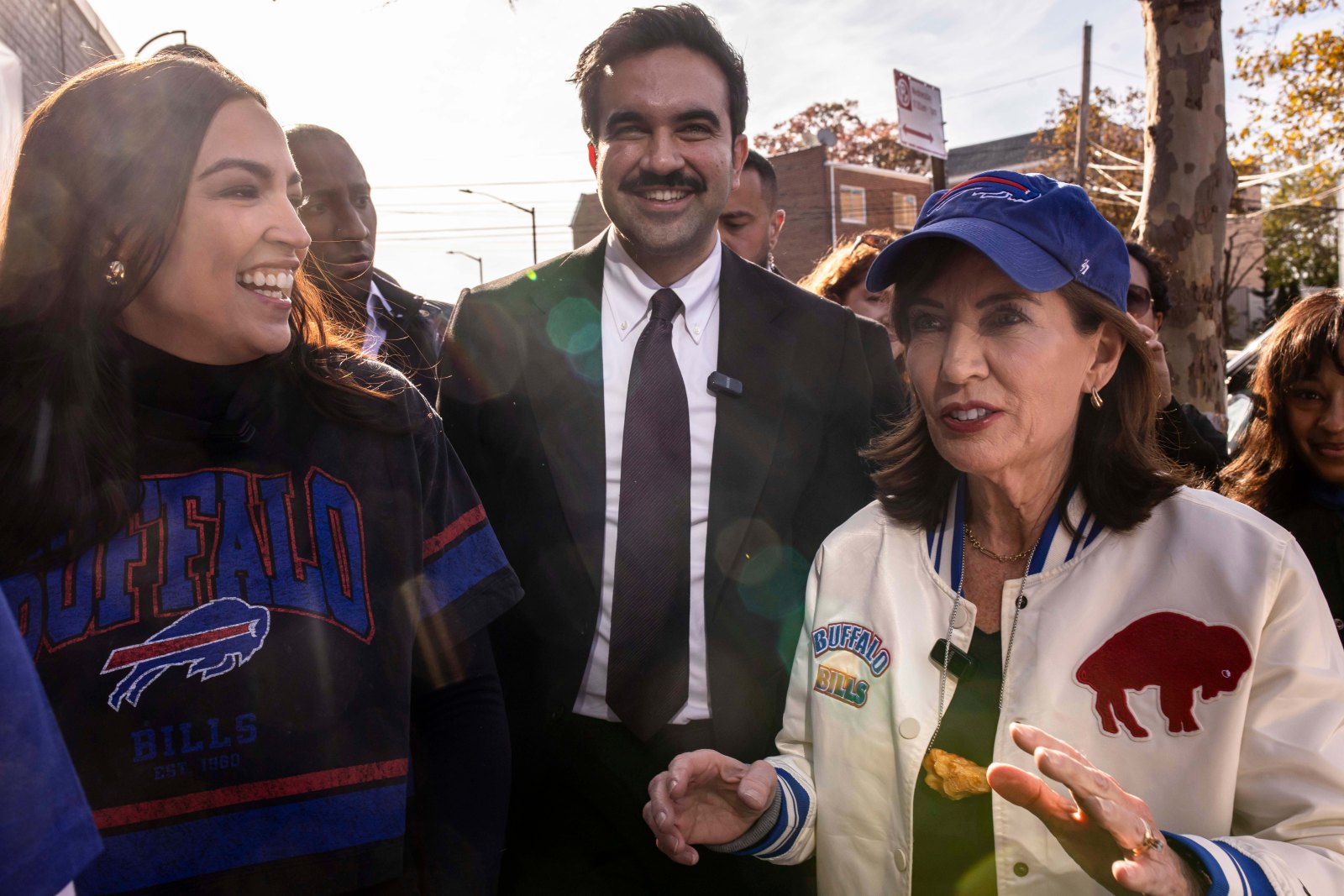
When New York City Mayor Zohran Mamdani appeared in a video on November 3 to discuss men’s health and a $4 million investment in prostate cancer care, viewers noticed something unexpected: his mustache. The mayor had introduced it two days prior, replacing a familiar neatly trimmed beard with a solitary strip of hair. This change drew comparisons to silent-film villains or a young Charlie Chaplin.
Mamdani explained his new look as part of Movember, a campaign to promote men’s health. Movember suggests that an unusual appearance attracts attention, starts conversations, and encourages donations. The attention to Mamdani’s mustache indicates the first goal might be working.
Reactions varied widely. Some admired the look on Instagram, while others were less impressed. Comments ranged from comparing him to “Super Mario in disguise” to linking his style to local vendors. Some even reached for Western pop culture, making comparisons to Saddam Hussein. Conservative commentator Will Chamberlain suggested an intentional resemblance to Iraq’s former Baathist rulers.
Despite diverse reactions, the mustache serves a broader purpose. Facial hair has held varied political significance throughout history.
Historical Context of Mustaches
The Ottoman Empire provides a historical example of political symbolism linked to facial hair. Avner Wishnitzer, a professor at Tel Aviv University, noted that mustaches once distinguished a new political generation from the established order. Traditionally, beards symbolized maturity and authority, while younger reformers favored mustaches.
Following the 1908 revolution, mustaches became common among ambitious reformers in the Ottoman establishment. Even Sultan Mehmed V adopted the style, followed by Mehmed VI.
Wishnitzer emphasized that Mamdani’s grooming choices are unlikely connected to Ottoman history. However, the historical example shows how ordinary grooming preferences can gain political significance.
Political Symbolism in Turkey
In modern Turkey, mustaches carried explicit political symbolism, especially during the ideological conflicts of the 1970s. Different political factions adopted distinctive styles. Ultranationalists preferred long, downward-curving mustaches, while leftists favored fuller styles. Religious conservatives opted for closely trimmed mustaches. These distinctions often carried serious implications. Political tensions made appearing like the previous establishment inconvenient, leading many to shave off distinguishing mustaches.
Facial Hair and Political Judgment
Facial hair can impact political judgments even without intended ideological messages. A study on U.S. congressional candidates found that politicians with facial hair were perceived as more masculine and less supportive of feminist positions, although no difference appeared in their voting records.
Another study in Economics & Politics indicated that Australian participants associated facial hair with lower honesty and competence in Swiss politicians. These studies highlight how appearance-based judgments can influence political perceptions, regardless of intent.
Pierce Dignam, a sociology professor at the University of Central Florida, noted the importance of personal presentation in politics. Conforming to group appearance norms can signal political alignment.
Mamdani explained his mustache as raising awareness for men’s health, with no evidence of a broader political statement. However, as history shows, politicians cannot always control the interpretations of their appearance. The mustache may gain significance based on public perception.
Leave a Reply