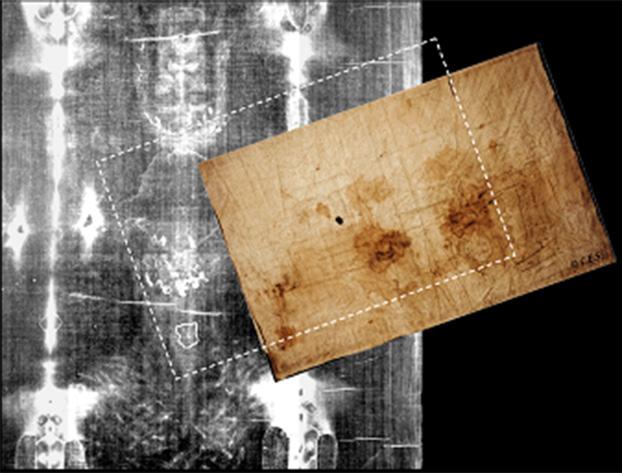
Spanish scientists have investigated two artifacts linked to Jesus Christ’s burial: the Sudarium of Oviedo and the Shroud of Turin. Research suggests both may have covered His body post-crucifixion. The findings, reported in the Journal of Cultural Heritage, provide insight into this enduring mystery.
Analyzing the Sudarium of Oviedo
The University of Oviedo led the study, focusing on the Sudarium, a 33×21-inch bloodstained cloth believed to have covered Jesus’ head. Researchers used a model head with fake blood to replicate bloodstain patterns. They discovered that altering the head’s position created stain patterns similar to those on the Sudarium. This finding implies that bodily fluids could settle differently based on head position and pressure from bandages.
An intense nine-hour examination of the original Sudarium on July 2 added evidence to support this hypothesis. Techniques like 3D scanning and X-rays revealed consistency between wrinkle patterns and the idea of the Sudarium being secured to Jesus’ head with bandages or cords.
Comparing with the Shroud of Turin
Pedro Peinado, the study’s lead author, explores similarities between the Sudarium and the Shroud of Turin using computer analysis. He notes that stains on the Sudarium may correspond to head wounds depicted on the Shroud, possibly indicating that both artifacts once enveloped the same individual. However, some differences in stain patterns may arise from changes in body position.
Challenges in Verification
The research must contend with dating discrepancies; radiocarbon tests from 1988 date the Shroud to 1260-1390 AD, while the Sudarium appears to be from as late as the 8th century, both postdating Jesus’ death. Additionally, a 2015 study described similar limestone deposits on the Sudarium and Shroud, linking them chemically to rocks from Jerusalem.
Even if Peinado’s analysis proves a connection, it would only show that both cloths covered the same person, not definitively identify Jesus. Despite this, Peinado points to specific injuries, Jewish burial customs, and the Gospel as supporting evidence for Jesus being the individual in question.
Skepticism and Alternative Views
Bible scholar Jeremiah Johnston adds that undisturbed blood clots on the Shroud suggest Jesus’ body vanished without being unwrapped, stirring debate among skeptics. These interpretations continue to fuel discussions about the authenticity and significance of these religious artifacts.
Leave a Reply