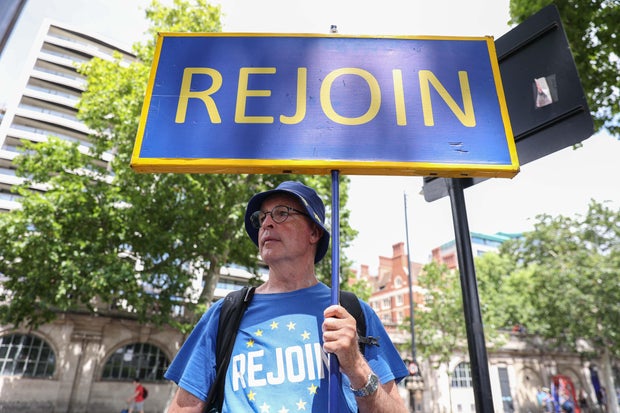
As of June 23, 2026, a recent survey by YouGov reveals that most Britons now view the UK’s decision to leave the European Union (EU)—commonly referred to as Brexit—as a mistake. The survey coincides with the 10th anniversary of the Brexit referendum.
One pro-EU campaigner expressed regret over Brexit, citing both economic drawbacks and the loss of freedom of movement, impacting families and creating divisions within the UK. According to another observer, Brexit has split the nation without yielding beneficial outcomes.
On June 20, 2026, demonstrators participated in London’s National Rejoin March, advocating for the UK to rejoin the EU. Political instability has plagued the UK since the Brexit vote, with seven prime ministers struggling to manage the aftermath. The economic impact has been severe, compounded by challenges such as the COVID-19 pandemic and geopolitical conflicts in Ukraine and the Middle East.
The Office for Budgetary Responsibility reports a drop in British productivity, imports, and exports. Government data analysis indicates that the UK’s economy suffered a 6% decrease due to Brexit. London Mayor Sadiq Khan, a previous EU supporter, noted that the long-term consequences are worse than anticipated.
Divided Sentiments on Brexit
Though some Brexit supporters now express ‘Bregret,’ two-thirds maintain their initial stance. According to YouGov, 30% of Britons believe the decision to leave the EU was correct. They argue that the poor execution by successive governments, not the decision itself, should be blamed.
Nigel Farage, a prominent figure in the Brexit campaign and leader of the Reform UK party, defended the decision as justified, claiming that the establishment failed to respect the people’s desire to depart from the EU.
Economic and Migration Effects
A key Brexit campaign promise was to regain control over UK’s borders. However, after Brexit, the UK faced labor shortages, prompting then-Prime Minister Boris Johnson to relax some immigration policies, resulting in increased non-EU migration.
Simon Boyd, a Brexit campaigner and steel manufacturer, expressed disappointment over the situation but urged others to focus on potential opportunities post-Brexit, comparing rejoining the EU to boarding a doomed ship.
The Prospect of Another Referendum
The public sentiment against another referendum is strong among many Britons, despite statistical shifts. In 2016, 51.9% voted to leave the EU. However, some demographic changes are emerging as the younger, more pro-EU generation becomes eligible to vote.
Pollster Peter Kellner noted that six million people have died since 2016, with older voters predominantly supporting Brexit, thus affecting future voting demographics. Recent polls by More in Common and YouGov show considerable support for the UK rejoining the EU in some form.
Despite Farage’s anti-EU stance and his party’s electoral success, other politicians remain cautious. Andy Burnham, a potential future prime minister, hopes for a return to the EU eventually but stresses the nation is not ready to revisit the debate.
Leave a Reply