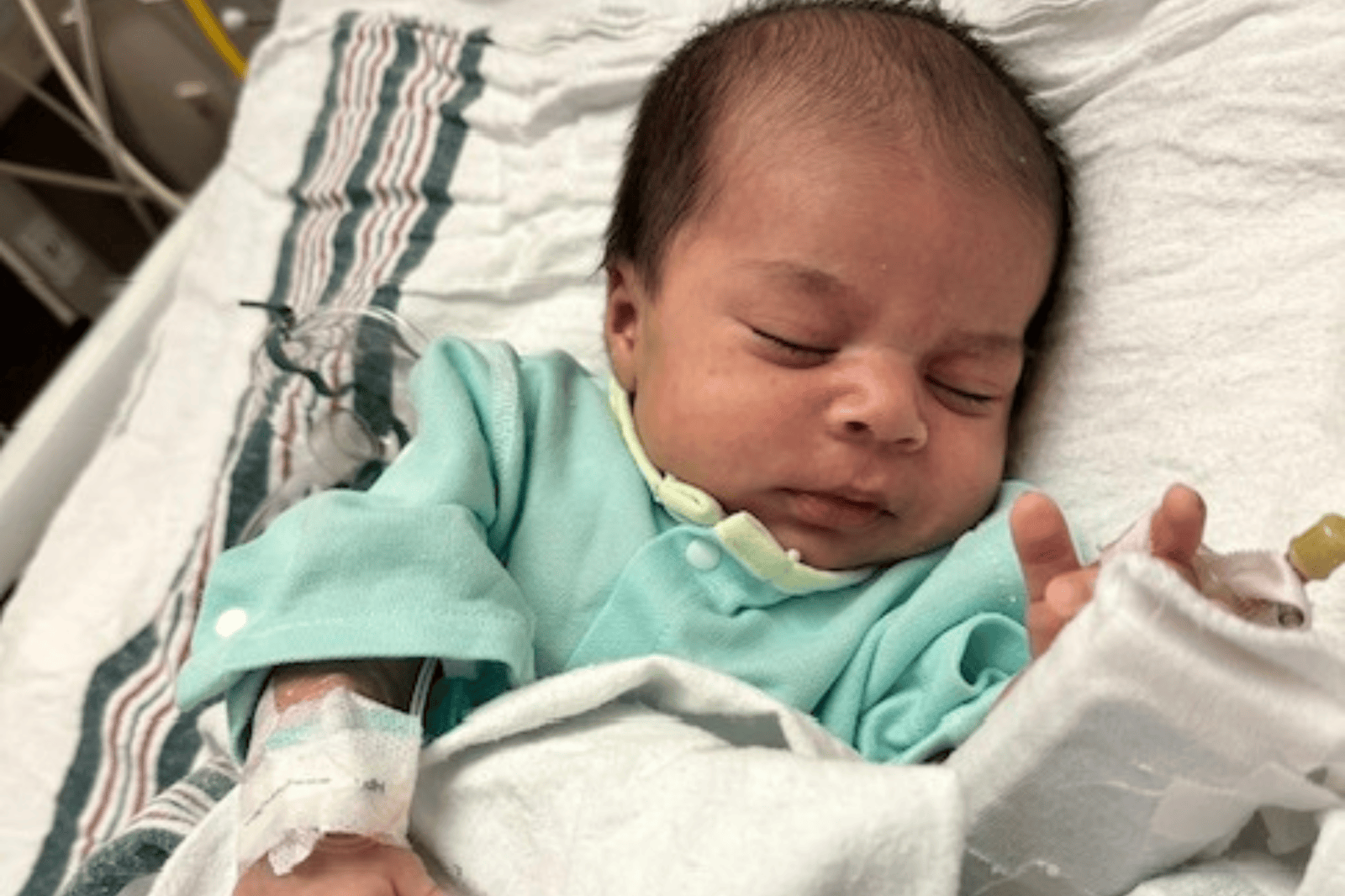
From the birth of my daughter, Leiah, it was clear something was amiss. Born on December 2, 2024, doctors noticed unusual gurgling sounds, hinting at fluid in her lungs. They took immediate action but decided her condition seemed stable. As a new mother, I observed her closely. Over the next few days, Leiah’s breathing raised more concerns as it grew heavier and faster. On one occasion, unable to dismiss the feeling of unease, I found myself watching her sleep rather than resting.
At her first pediatric checkup, I voiced my worries. The pediatrician reassured me, noting such issues could occur in babies with fluid in their lungs. I left hopeful that she would outgrow her symptoms. Yet, the unsettling feeling persisted. On another sleepless night, I told my fiancé, Richard, that we needed further medical opinions since my instinct warned me something was off.
On Christmas Eve, we went to the emergency room. We explained Leiah’s symptoms and the doctors immediately acted. A CT scan was ordered to investigate the issue. The results were alarming, revealing an 8-centimeter mass in her chest. The term ‘mass’ was new to us, inducing fear as the reality of the situation set in.
Leiah was transferred to Children’s Hospital Los Angeles that night. Noticing a sign for the “Oncology Floor,” I inquired about its meaning. Cancer treatment was suggested, casting a shadow over our spirits. Christmas turned into a series of tests and waiting for answers.
On December 27, Leiah underwent a biopsy and had a PICC line placed. Doctors explained the tumor was pressing against her right lung, causing carbon dioxide buildup and necessitating high-flow oxygen for breathing. Overwhelmed, I waited outside the surgery room, praying the biopsy wouldn’t confirm cancer.
Unfortunately, the diagnosis was neuroblastoma, a rare cancer forming from immature nerve cells. The news was crushing, and questions about her treatment began. Her future seemed uncertain until the tumor’s response to chemotherapy became known.
The diagnosis and post-birth recovery period were overwhelming. Leiah couldn’t breastfeed due to her condition. Using an NG tube, she was given fortified formula to assist weight gain. However, chemotherapy made her appetite decline.
The early days of motherhood shifted to learning medical concepts and engaging with healthcare providers. Leiah endured six chemotherapy rounds, transforming hospital stays into routine life. Chemotherapy had risks, including hives and breathing issues, along with frequent infections from her PICC line.
Doctors evaluated the chemotherapy risks. Encouraging tumor shrinkage meant avoiding unnecessary continued exposure. On June 2, 2025, Leiah rang the bell, symbolizing chemotherapy’s end, a moment etched in memory.
Today, Leiah thrives with no visible signs of her battle. Her tumor reduced significantly, now less than half its size. Recent scans showed progress, with another scheduled post her second birthday.
To parents in similar situations, trust your instincts, ask questions, and advocate fiercely for your child. Blaming yourself isn’t helpful, a lesson emphasized by doctors. Embrace the moments when strength wavers. Leiah symbolizes hope beyond the fear. There’s life and happiness ahead.
Breanne Cruz, residing in Santa Paula, California, shares life with her fiancé, Richard, and their daughter Leiah, diagnosed with neuroblastoma soon after birth. Breanne shares their journey through TikTok, spreading awareness about parenting a child with cancer.
Leave a Reply