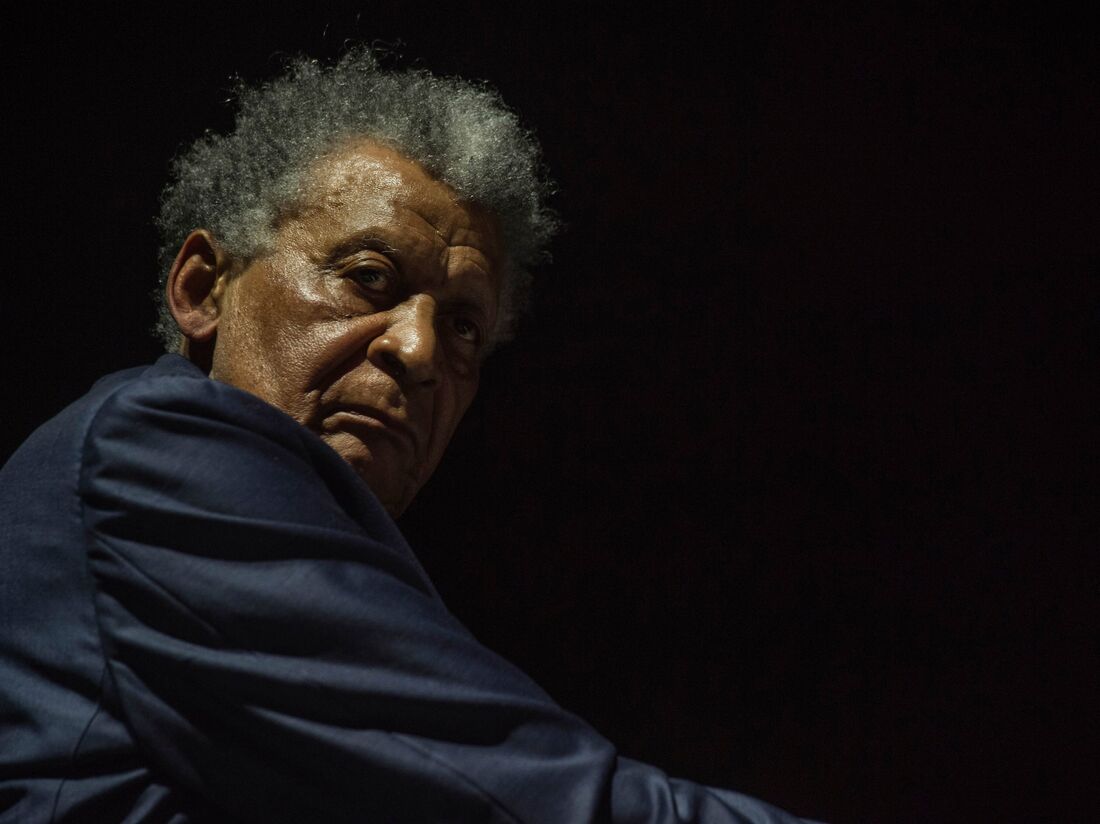
Abdullah Ibrahim, a South African jazz pianist revered by Nelson Mandela as his nation’s Mozart, has passed away at the age of 91 in Germany following a brief illness. His partner, Marina Umari, expressed that Ibrahim’s love for South Africa remained steadfast throughout his life, regardless of his global travels.
Ibrahim’s career, spanning eight decades, brought bebop to South Africa and forged connections with influential artists like Duke Ellington. This bond led to Ellington producing one of Ibrahim’s early recordings. In his later years, Ibrahim inspired a new generation of jazz pianists with his enduring influence.
Born as Adolph Johannes Brand in 1934, Ibrahim began piano lessons at seven, influenced by his mother, a church pianist. By age 15, he turned professional under the name Dollar Brand. In the late 1950s, he formed the Jazz Epistles with trumpeter Hugh Masekela; the group released the first jazz album by an all-Black South African ensemble. Despite their apolitical music, the group faced government harassment post-Sharpeville massacre in 1960, prompting Ibrahim’s move to Europe.
In 1963, through his future wife Sathima Bea Benjamin, Ibrahim met Duke Ellington, marking the start of a fruitful collaboration. Ellington produced “Duke Ellington Presents the Dollar Brand Trio,” propelling Ibrahim into the European jazz scene. He became known for performances that transcended mere technique, offering a meditative, intimate experience that captivated audiences worldwide.
His performances acquired a meditative, hushed mystery of spiritual communing,said pianist Vijay Iyer to NPR.
Ibrahim married Benjamin in 1965, moving to the U.S. and performing at the Newport Jazz Festival. In 1966, he led Duke Ellington’s orchestra on several U.S. tour dates. A 1967 Rockefeller Foundation grant allowed him to study at Juilliard, where he mingled with jazz luminaries like Max Roach and Ornette Coleman. Converted to Islam in 1968, he embraced the name Abdullah Ibrahim and melded jazz with South African rhythms.
His composition “Mannenberg,” created in South Africa in 1974, resonated deeply, with reports suggesting it reached Nelson Mandela in prison. Mandela later dubbed Ibrahim as South Africa’s Mozart. The song earned a place as a symbol of resistance, especially after the 1976 Soweto uprising.
Throughout the 1980s, Ibrahim’s prominence grew internationally, both as a solo performer and with his band, Ekaya. Performances at venues like New York’s Sweet Basil showcased his artistry, inspiring peers such as Kenny Barron to create tributes. Barron described Ibrahim’s music as “lyrical and blissful,” akin to a spiritual experience.
Ibrahim’s influence persisted into the new century, shaping emerging jazz pianists. Artists derived inspiration from his unique compositional style and personal expression. Pianist Nduduzo Makhathini highlighted Ibrahim’s emphasis on authenticity in musical expression.
Ibrahim scored films like “Chocolat” and “No Fear No Die,” and was the subject of documentaries. His contributions earned him the NEA Jazz Masters Fellowship in 2018. Reflecting on his career in 2019, Ibrahim attributed his artistic philosophy to advice from Duke Ellington, emphasizing the timelessness of music.
Leave a Reply