At the Automate Show in Chicago, humanoid robots showcased advancements in AI and robotics. Jeff Burnstein, President of the Association for Advancing Automation, highlighted AI’s role in enabling diverse tasks across hospitals, factories, and warehouses. Robotics, he said, boosts competitiveness and contributes to job creation.
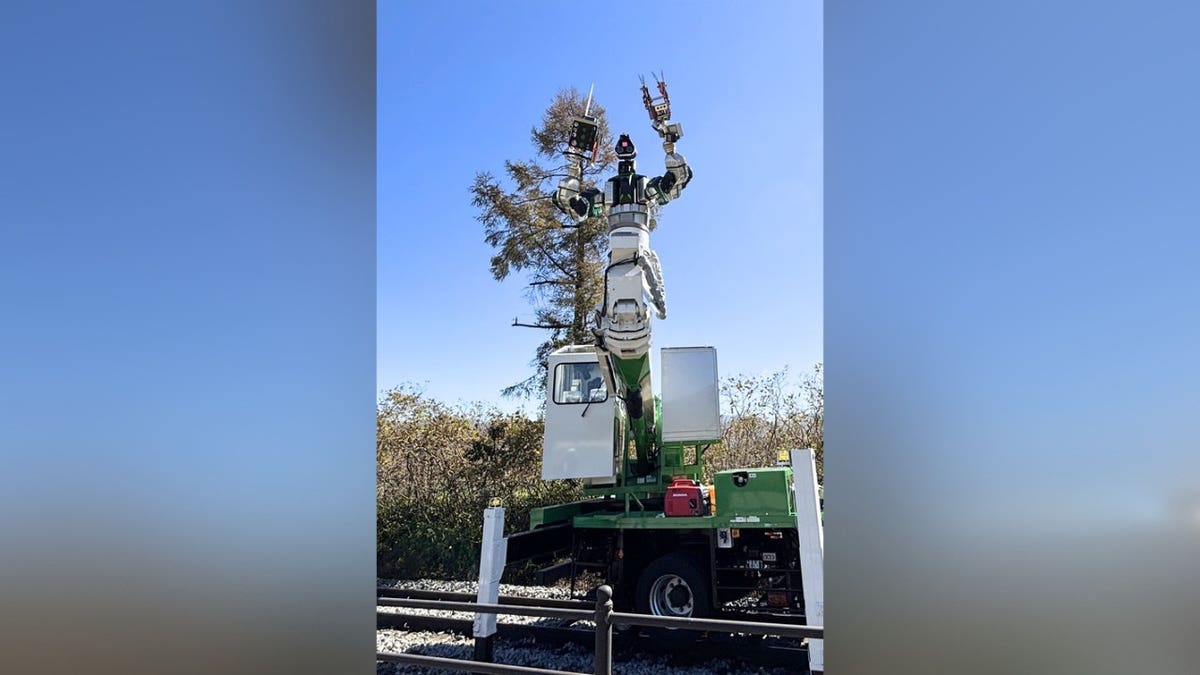
In Japan, a towering chainsaw robot is actively cutting back branches near train tracks. This sight is both intimidating and impressive, demonstrating practical applications of robotics. The JR East railway company employs this robot to tackle maintenance tasks that traditionally require workers to handle heavy cutting equipment at heights. Now, a human operator controls the robot from a safer location.
The chainsaw robot, known as ZIZAI ZX-3, operates along the Koumi Line in central Japan. It grips a branch with one arm while sawing it with another. Mounted on a specialized maintenance vehicle, it can access heights that would be dangerous for humans. Nippon Signal, the manufacturer, delivered the ZX-3 to JR East, and it began full-scale operations in October.
A trained operator guides the ZX-3’s movements, highlighting the necessity of human oversight during such tasks. The robot handles the physical work, allowing workers to stay safer. Nippon Signal aims to equip the ZX-3 with additional tools for various maintenance tasks in the future.
Railway companies face significant challenges keeping tracks clear. Overgrown branches pose risks, with workers often operating near electrical infrastructure. JR East, dealing with a skilled labor shortage, sees robots as a solution, enabling safer, less demanding work environments. Daytime maintenance work, since 2022, sometimes requires temporarily canceling trains but offers improved working conditions.
JR East invests in AI and robotics for its operations. The company explores AI for inspections and maintenance, including infrastructure inspection by robots. This raises questions about future autonomy. Could robots one day identify and cut branches independently? Currently, the ZX-3 relies on human control, with no timeline for full autonomy announced.
These technological advancements promise infrastructure maintenance changes. For commuters, efficient maintenance equipment can reduce delays caused by vegetation. The implications extend to other sectors like utilities and construction, as remote-operated machines mitigate risks.
While robots offer new efficiencies, skilled operators are crucial. They ensure safe operation and oversight. The ZX-3 demonstrates how robotics aids in hazardous work, distancing humans from immediate danger.
Observing these developments encourages consideration of their impact. The human operator remains essential, balancing machine strength with human expertise. The pace at which automation may expand roles traditionally requiring human involvement is worth monitoring.
Leave a Reply