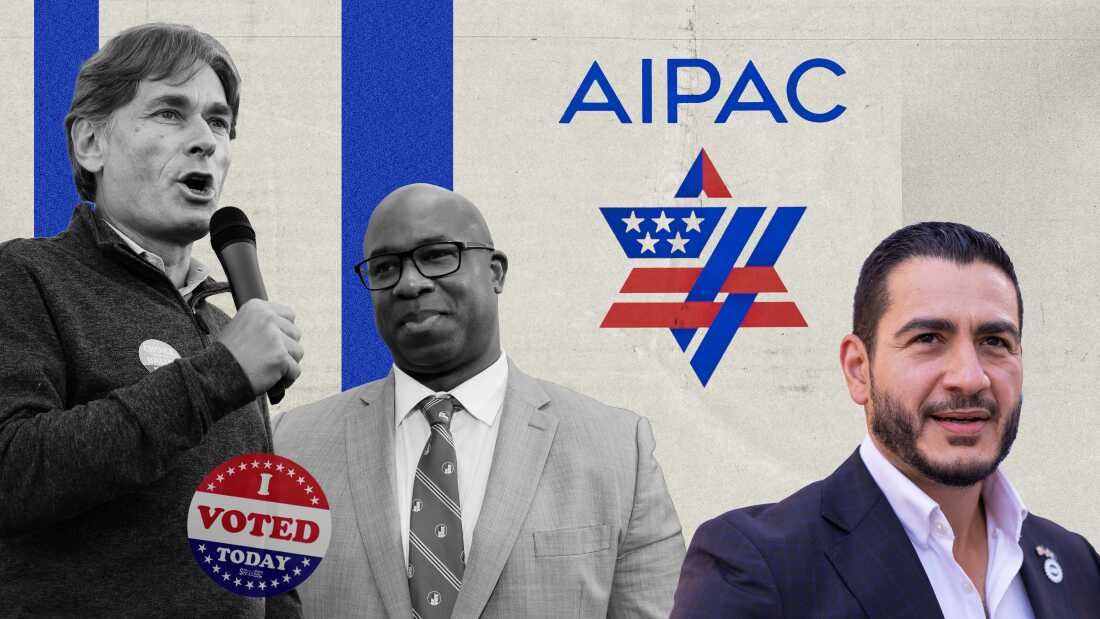
The American Israel Public Affairs Committee (AIPAC) has gained significant attention in recent election cycles. Some Democratic candidates have chosen to refuse contributions from the group. In Michigan’s Democratic primary for the U.S. Senate, Abdul El-Sayed criticized his opponent, Rep. Haley Stevens, for accepting AIPAC support. El-Sayed’s win highlighted the growing influence of the Democratic left, showing increased skepticism toward both AIPAC and the role of money in politics.
AIPAC focuses on strengthening the U.S.-Israel alliance. Since its founding in the early 1950s, it aimed to build strong bipartisan support in Congress for policies that benefit this partnership. Ken Toltz, a political activist, mentioned that AIPAC traditionally avoided endorsing candidates.
However, AIPAC created a political action committee and super PAC before the 2022 election cycle. This change was attributed to political polarization, vocal opposition toward Israel, and rising campaign costs. In a 2022 interview, AIPAC’s then-CEO Howard Kohr stated their aim to defend their allies and oppose detractors.
“Before the ’22 election cycle, few knew about AIPAC. Now, awareness has increased, but understanding remains mixed,” said Toltz.
Decreasing Support for Israel
Criticism of AIPAC has grown as support for Israel has waned among some Democrats. This shift partly results from conflicts such as the Gaza war. A Pew Research Center survey indicated that 60% of U.S. adults view Israel unfavorably, a rise from 53% the previous year. A Gallup poll highlighted that more Americans sympathize with Palestinians than Israelis, 41% to 36%. In July, over 100 House Democrats voted to cut aid to Israel, signaling a significant shift in support.
Toltz viewed this as alarming, suggesting AIPAC’s spending has tarnished its image. Criticism has led some to view AIPAC endorsements as potentially detrimental.
AIPAC’s Long-Term Strategy
AIPAC takes a long-term view for success. Patrick Dorton, spokesperson for United Democracy Project (AIPAC’s super PAC), emphasized seeking a large pro-Israel bipartisan majority in Congress. This mission guides their involvement in various election races.
The group’s efforts against the Iran nuclear deal, along with endorsing certain Republicans, have contributed to friction with some Democrats. A key point was AIPAC’s campaign in New Jersey’s special House primary. Their strategy seemed to backfire when their efforts led to the election of Analilia Mejia, a progressive critical of the Israeli government.
United Democracy Project boosted its spending from $26 million in its initial cycle to $62 million recently, with significant sums in Michigan’s U.S. Senate primary. Super PACs often use regional names that obscure connections to larger groups. This approach is common in political fundraising.
Misperceptions and Challenges
There are misconceptions about AIPAC’s funding. It’s inaccurate to label it as a front for foreign interests. Van Jones, a political analyst, stated that criticism against AIPAC is permissible, but portraying it as a foreign entity is misleading and harmful. AIPAC, he noted, is an American organization supporting American values.
The ongoing political debate has intensified around AIPAC, potentially posing some of the toughest challenges since its inception.
Leave a Reply