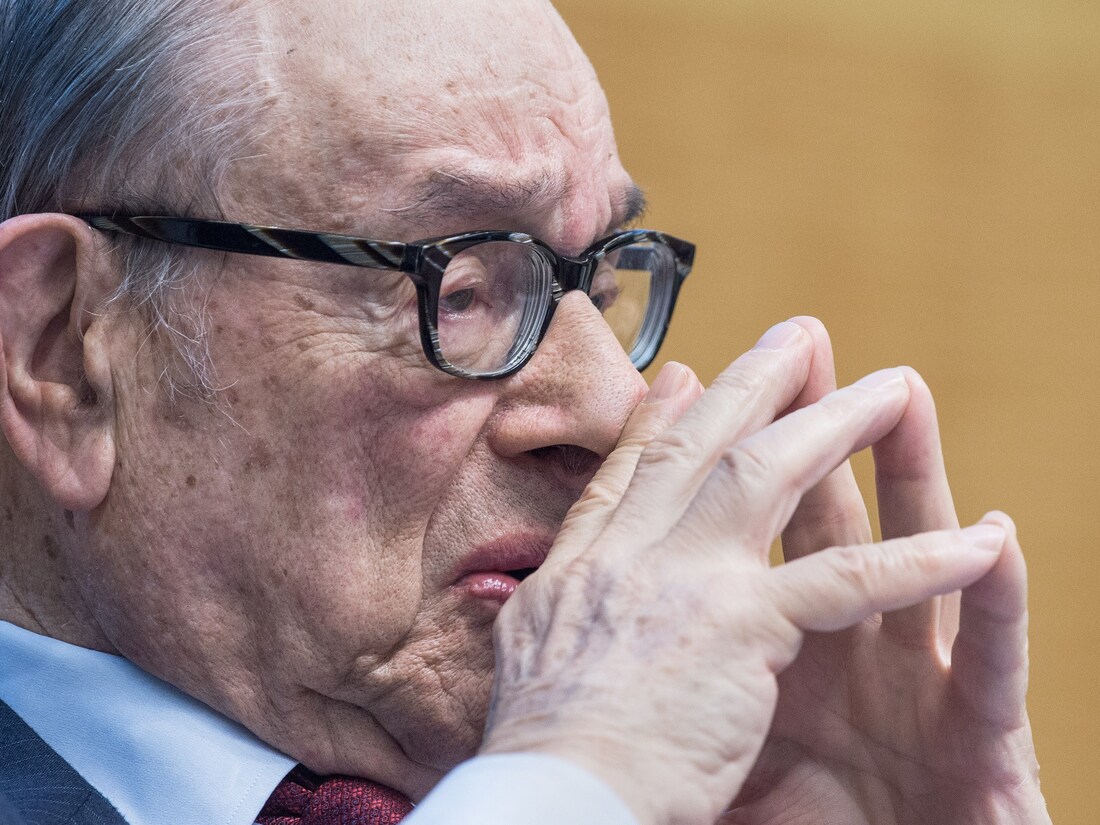
Alan Greenspan, the man who led the Federal Reserve for nearly twenty years and navigated through some of the most prolonged economic booms in U.S. history, passed away on Monday at his home in Washington at the age of 100. His leadership in the 1990s earned him celebrity status among central bankers, as he became a household name whose remarks were closely followed by many Americans.
Under his guidance, the Federal Reserve operated through an era of falling unemployment without succumbing to the traditional urge to hike interest rates as a precaution against inflation. Greenspan’s unique monetary strategies kept interest rates low, allowing the economy to prosper for over a decade. However, critics argue that these same policies contributed to the dot-com bubble, and later, the subprime mortgage crisis.
“How do we know when irrational exuberance has unduly escalated asset prices,”
Greenspan once questioned during a speech in 1996, indicating his awareness of the dangers posed by rapidly increasing stock prices. Despite temporary market reactions, his influence continued to grow. During his tenure, Greenspan adopted a libertarian approach toward regulation, influenced by his association with Ayn Rand and her views on capitalism. He believed banking regulation was largely unnecessary as he trusted that self-interest would deter financial institutions from excessive risk-taking.
Yet, the global financial crisis in 2008, which occurred two years after his departure from the Fed, challenged these beliefs. Greenspan admitted to a flawed understanding of market self-regulation during a congressional investigation, acknowledging that the evidence which supported his views for decades had unraveled.
His private economic activities even before joining the Fed also came under scrutiny. In the 1980s, Greenspan vouched for Lincoln Savings and Loan’s management, which later collapsed at taxpayers’ expense, an episode known as a precursor to the 2008 crisis.
Though his legacy as a brilliant economic leader is secure, it is equally overshadowed by episodes of financial instability. Economist Vincent Reinhart acknowledged Greenspan’s courage in reassessing his assumptions but noted the implications are profound on his broader career.
His life intertwines economic brilliance with lessons in regulatory prudence, making him a central figure in financial history. While Greenspan’s policies contributed to substantial economic growth, they also reveal the risks of regulatory oversights. His legacy remains multifaceted, defined by both the economic prosperity he shepherded and the crises he inadvertently stoked.
Leave a Reply