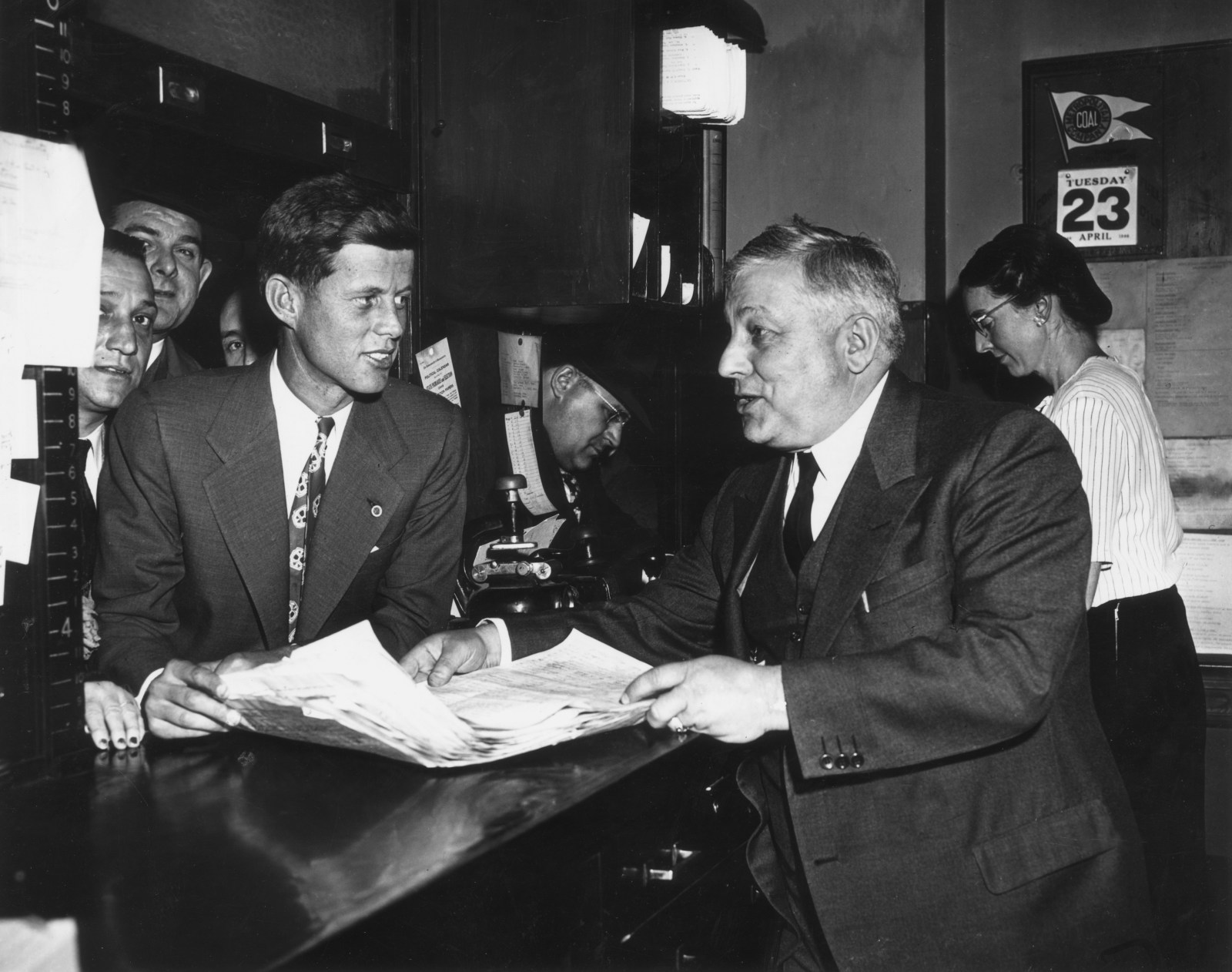
The situation with two candidates named Dan Sullivan in Alaska’s U.S. Senate race draws an unusual parallel to John F. Kennedy’s first congressional campaign in 1946. During Kennedy’s campaign, two men sharing the name Joe Russo ran against him in the Democratic primary. This kind of name confusion reappears in today’s Alaska Senate race.
Current Alaska Dispute
The Trump administration has initiated legal action to prevent certification of Alaska’s Senate election if incumbent Republican Dan Sullivan loses. The concern is that voters might confuse him with another candidate, Daniel J. Sullivan Jr., who is also on the ballot. Alaskan officials have asked a federal judge to dismiss this lawsuit. The November 3 election plays a crucial role in determining Senate control.
In June, the Alaska Supreme Court allowed Daniel J. Sullivan Jr.—a retired teacher running independently—to stay on the ballot. Election officials distinguish the two candidates by listing the senator’s party affiliation and using the full name for the challenger. The state’s ranked-choice voting system permits voters to rank both candidates. On October 22, the Justice Department filed a lawsuit seeking to prevent certification if the incumbent loses and if votes for the challenger could have changed the result. Alaskan officials have countered, arguing that the federal government does not have the right to intervene in the state’s election certification. They also pointed out that discerning voter intentions could breach ballot secrecy.
The controversy poses questions on whether a similarly named candidate should lead to federal involvement in election certification.
Kennedy’s 1946 Challenge
Eighty years earlier, John F. Kennedy faced a name confusion issue during his congressional run in Massachusetts. Among his opponents was Joseph Russo, a prominent Boston city councilor who immigrated from Sicily and became a notable political figure. There was also a second candidate with the same name, allegedly added to the ballot to divide support for the established Russo.
Kennedy’s campaign has since faced allegations of political maneuvering, with accounts suggesting that campaign manager Joseph Kane paid the second Russo, a janitor, to enter the race. Although Joseph P. Kennedy Sr., JFK’s father, reportedly approved this tactic, it’s unclear if JFK knew about it.
According to the West End Museum, the second Russo, a 27-year-old janitor, supposedly agreed to run in exchange for favors like housing assistance. Despite this maneuver, Kennedy won the nomination overwhelmingly, securing 22,183 votes compared to the city councilor’s 5,661 and the janitor’s 773. He proceeded to win the general election, launching his illustrious political career.
The elder Russo continued in public service, serving as the chairman of Boston’s Election Commission. He seemingly bore no resentment against Kennedy, often speaking of their past contest with pride.
Historical and Legal Implications
The episodes in Alaska and from Kennedy’s campaign highlight how similar candidate names can prompt controversy in American politics. While Kennedy’s situation involved allegations of political manipulation, Alaska’s case raises questions about election certification and federal involvement. Both illustrate potential complexities arising from candidate name similarities.
Leave a Reply