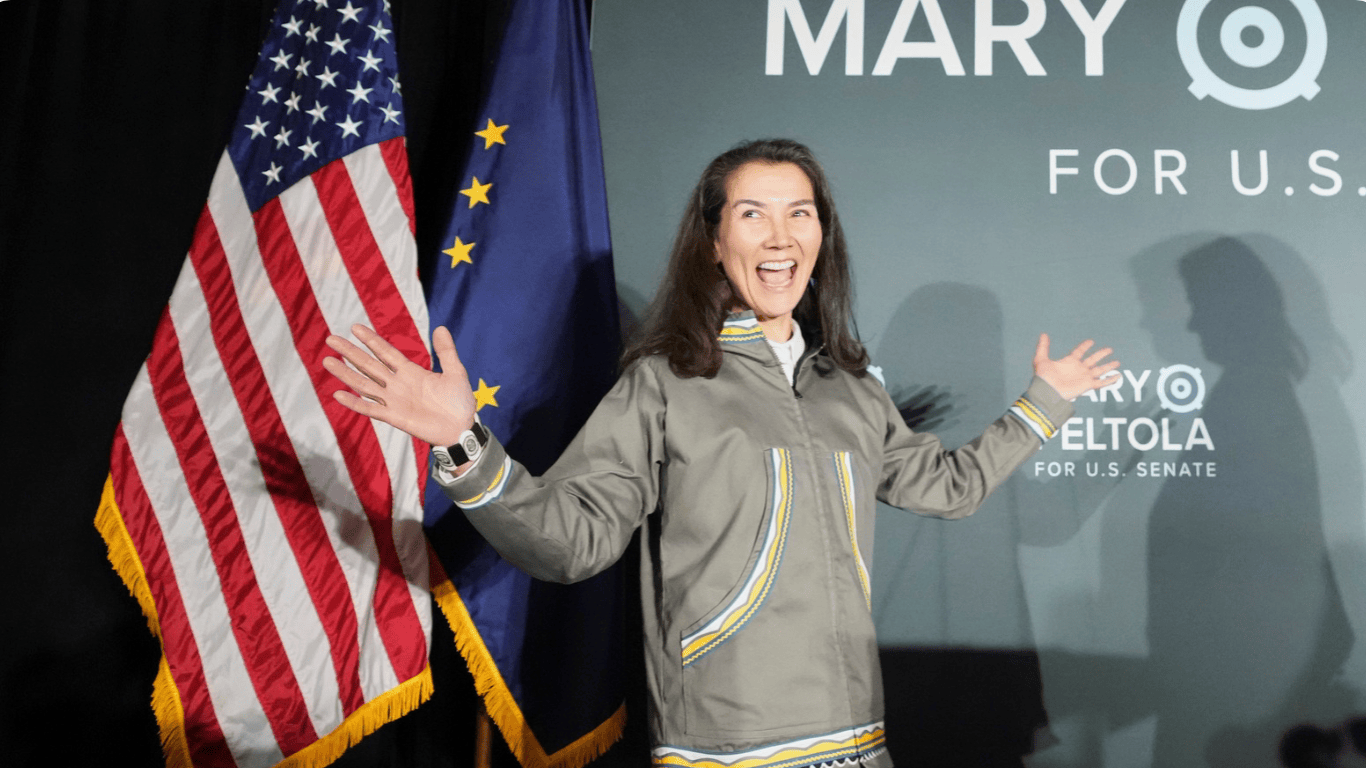
Alaska’s ballot counting process is methodical and spans vast distances. Democrat Mary Peltola is 157 votes away from a majority in the election for the state’s U.S. Senate seat. The Division of Elections’ unofficial report shows Peltola with 140,637 first-choice votes, or 49.94%, compared to Republican Senator Dan Sullivan’s 129,424 votes or 45.96%. Republican Gerald L. Heikes received 6,002 votes, while another candidate, Daniel J. Sullivan Jr., drew 4,652 votes. Write-ins accounted for 872 votes. The Associated Press reports that 97% of the vote is counted, but the race has not been called yet.
Alaska has a unique way of handling close elections. A candidate needs over half of first-choice votes to win outright. If no candidate achieves this, the election moves into ranked-choice tabulation on November 18. The last-place candidate is eliminated and ballots are reallocated to the second choices of their voters. This continues until a candidate reaches a majority.
The Challenge for Peltola
Peltola has a small margin to cover. With each counted ballot, the requirement for a majority increases. The Associated Press doesn’t detail the number of outstanding ballots. Their estimate suggests a few thousand Senate votes remain. Peltola needs about 52% of these remaining votes to surpass 50% in first choices.
This estimate assumes AP’s percentage pertains to the Senate contest and that every remaining ballot includes a Senate vote. Ballots mailed from abroad are still arriving until November 18.
Sullivan’s Prospects
Sullivan faces a difficult situation. He trails by 11,213 votes. Analysis indicates his deficit surpasses remaining votes when relying only on first-choice counts. To win, Peltola must not secure a majority, allowing the race to hinge on voters’ ranked preferences. These preferences could alter the outcome in subsequent rounds.
Ranked Choice Dynamics
Newsweek analyzed the Division’s cast vote record using RCTab 2.0.1. This included 282,698 ballots, with 1,059 ballots ranking no candidate in the Senate race. Inactive ballots from overvotes and skipped rankings were also noted.
The procedure eliminates one candidate at a time; if a ballot has no second choice, it becomes inactive.
The write-ins dropped first, followed by Sullivan Jr. and Heikes. This process transferred many votes to Peltola and Sullivan. Newsweek’s analysis shows Peltola with 143,127 votes or 51.83%, against Sullivan’s 132,985 votes or 48.16%, leading by 10,142 votes. This model does not denote the state’s official result; it leaves out hand-counted ballots and those yet to be tallied.
The official state tabulation, including remaining ballots, begins on November 18. Sullivan’s campaign suggests a narrow path to victory under ranked choice. Early projections varied, leaving uncertainty on the final outcome.
Controversy and Legal Aspects
Sullivan’s camp does not admit defeat. They are waiting on the complete ballot count. The race has faced legal scrutiny, particularly concerning Sullivan Jr.’s alleged role in vote-splitting. Allegations suggest Peltola’s involvement in recruiting him to confuse voters, a claim her campaign denies.
The Justice Department attempted to block certification if Sullivan lost, arguing ballots for Sullivan Jr. diverted from the incumbent. This lawsuit was dismissed, respecting voters’ rights to a secret ballot.
Upcoming Developments
On November 18, Alaska will begin formal ranked-choice tabulation if needed. All overseas ballots will have arrived by then. The final results could influence the Senate’s balance of power, especially since Democrats have secured overall control. Peltola’s win would mark a historic Democratic Senate seat for Alaska, a first since 2014.
Leave a Reply